Field note
A yes withdrawn within the hour
Run five checks before any route or price: material, dimensions, battery, brand and certificates. Wednesday was the heaviest day of the week for eligibility questions: products a supplier will happily sell that cannot legally or physically leave China for the buyer's market. The defining exchange was an oversized solid-wood furniture piece bound for the United States — offered sea freight, then declared unshippable by any mode within the hour, because raw timber needs inspection and fumigation certificates the supplier could not provide. The contradiction cost more credibility than an immediate no would have. Around it sat watches, sportswear, batteries, candles and a fragrance, all asking the same question in different shapes.
For regulated goods such as batteries, cosmetics and liquids, see what special-goods shipping actually covers.
Eligibility is the first question, not the last
The clean version of the check ran all day. Watches copying a luxury design — some printed with another brand's logo — were refused with the concrete customs risk named, not a vague policy line. A factory disclosed that it holds no authority to sell into European and American markets; the desk surfaced the disclosure instead of quietly using the factory. Branded sportswear and branded kit components were redirected to unbranded equivalents before any money moved. And a heavy battery-powered item was talked out of a catalogue proactively, because direct shipping from China fails too often at that weight with that battery.
A candle inside a gift set for Germany was flagged at quote time as needing a slower restricted-goods channel. An alcohol-based fragrance was re-routed through bulk freight to an EU warehouse once the China-direct price barely beat local retail. A separate regulated, medical-adjacent enquiry reached sourcing before its destination certificate requirements had been checked. For a product in that category, ask for the destination document and route-eligibility check before treating a sourcing quote as shipment approval.
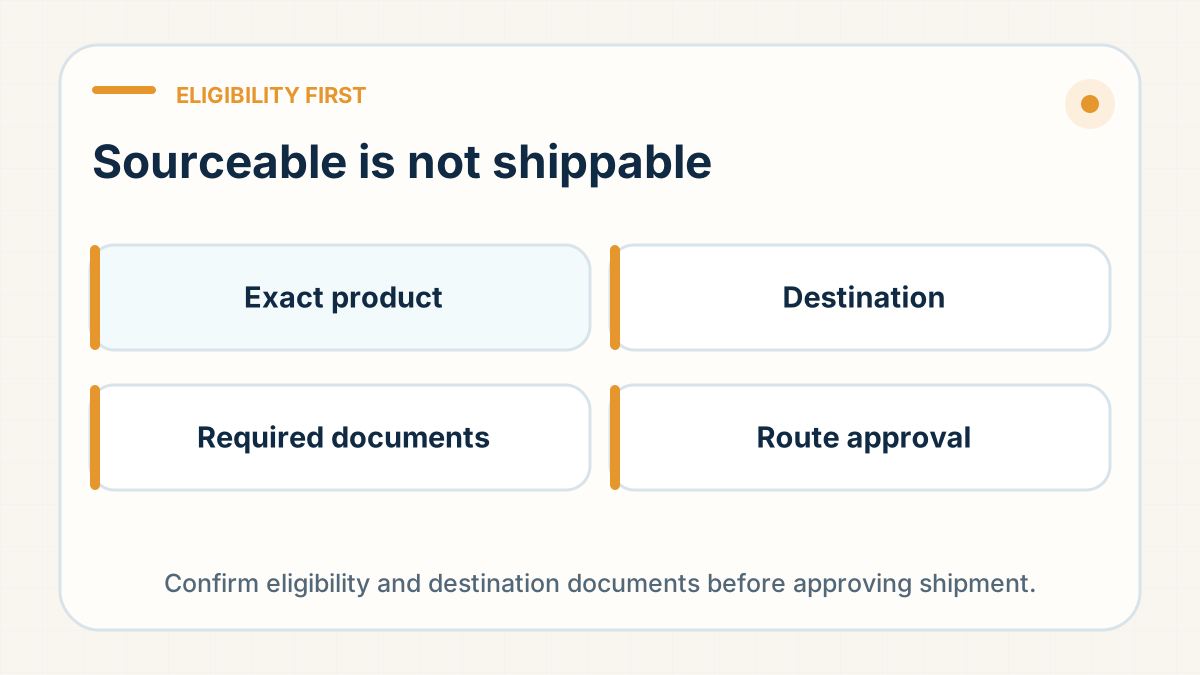
Check the material, dimensions, battery, brand and required documents against the destination and proposed route. A product being available to source does not establish that the carrier will accept it or that its destination requirements are met.
A price without its label is half a quote
A prospect burned the previous day by an ambiguous quote received a fresh one labelled only "product cost + shipping cost" — and had to ask, again, whether taxes and customs duties were included door-to-door, then asked that every future quote spell out everything it contains. The desk's quotes are all-in almost always, with any separate line stated on the quote, but the label has to travel with the number: a seller planning a UK launch with a Gulf backup market got a clean per-lane delivery matrix, yet still had to chase which speed tier the prices already sent belonged to, and a first-orders client paid an invoice without ever learning whether it covered the Express or the Standard service.
None of this is about hidden fees; it is about labelling. Every price needs its legend — what it includes, the lane it belongs to and that lane's transit window — in the same message as the number. How to read a landed-price quote sets out the labels to demand before accepting any quote.
The delivery clock starts at the factory, not the airport
When a prospect marvelled that the Express lane can put a parcel with a customer within days, the team corrected the picture unprompted: after payment, the factory needs several days to get goods into the warehouse before international transit even starts. For an aggressive launch promotion, the honest fix is pre-purchasing a batch into the warehouse so that dispatch takes about a day. The same decomposition — a short inbound leg plus the lane's transit window — was spelled out for a beauty quote into the DACH region, a personalised item to Israel and the written recap of a late-night onboarding call with a pre-launch US seller.
The failure mode was on display too. An order paid late on a Friday evening showed no movement until the client chased, because nobody had said at payment time that factories do not ship on weekends. A factory stockout stretched another dispatch past a week before the client escalated. The transferable rule: quote time-to-door as legs, state the inbound leg at the moment of payment, and volunteer the cause of a delay before the client discovers it.
Material, dimensions, battery, brand, certificates — then the route
Before approving shipment, confirm the product and destination checks, any missing documents and the proposed route. If a requirement cannot be met, ask for the reason and any available alternative. For an eligible product, confirm the quote inclusions, lane and transit window, including the factory-to-warehouse time before payment.
For an eligible product's transit window, see delivery times by service.