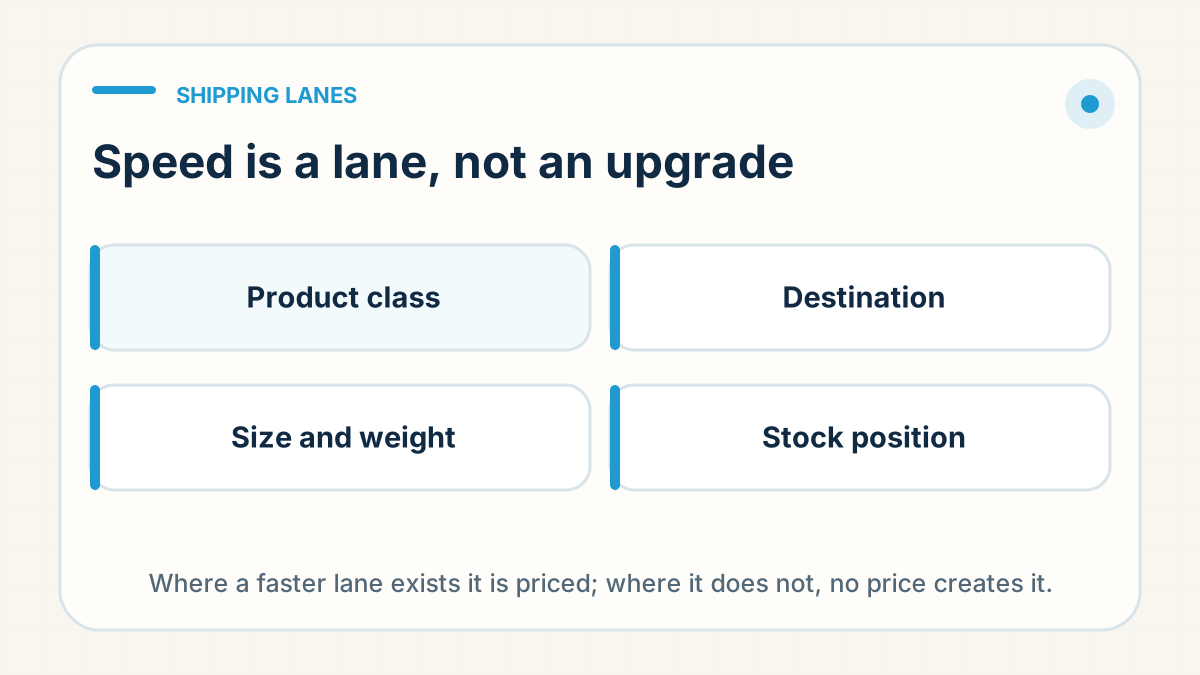
A faster lane is a property of the product and the destination together, not an upgrade a seller can buy. Where one exists it is quoted per item, as a paid option with its own transit band beside the standard one; where none exists, pressing harder does not create one. The useful question is never what express costs, but which of these items has a second lane at all.
Can I pay for faster shipping from China?
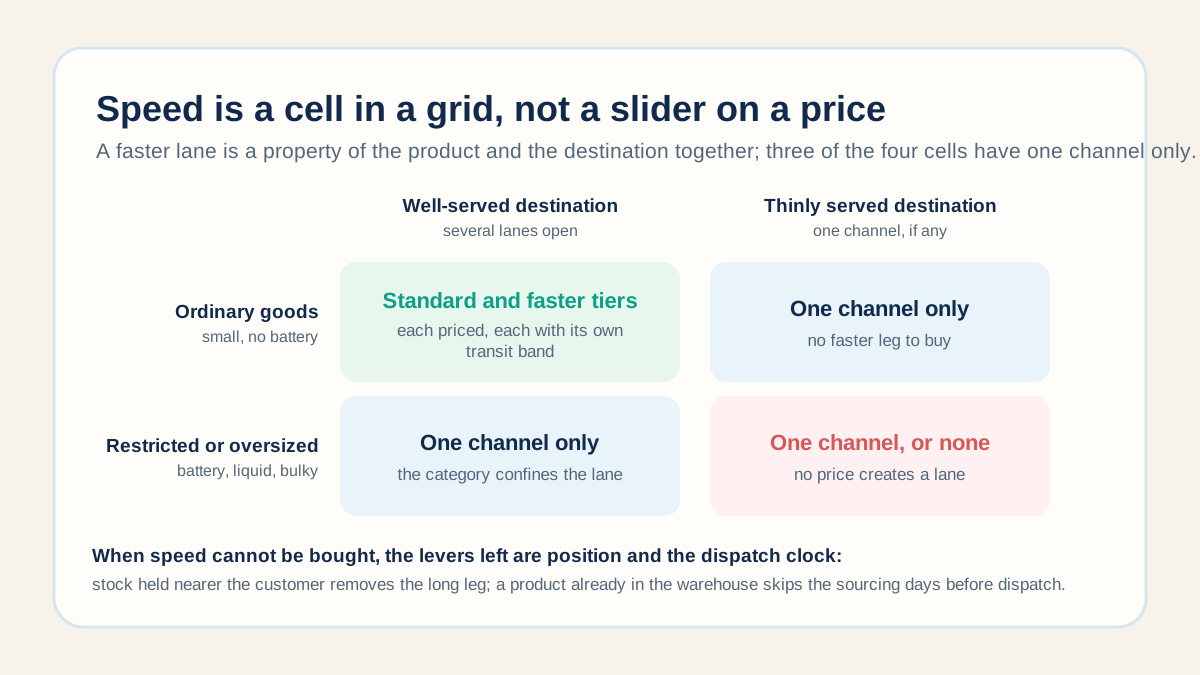
Sometimes, but only where a second channel already exists for that exact product to that exact country — a check rather than a negotiation, though one you may have to make twice: a faster channel can be absent from the first quote even where the lane has one. Two figures for one country are two lanes, each with its own band, not a cheap and a premium version of one service.
One pet-accessory sourcing request bound for France in early September 2026 came back item by item: a handful of smaller items carried a standard band of six to ten working days and a faster channel at three to five for a priced uplift stated on the quote; two bulky items in the same request carried none at all. Ask product by product, and where the first reply names no faster option, ask once more.
Why does my product only have one shipping option?
Because its category qualifies for one channel, and that channel has one speed. A restricted or special-category item — a cosmetic, say — travels on a service built to accept that category, and category services are thin: one option, one band. A cosmetics line quoted in early September 2026 got the whole answer at once: classified as a special cosmetic product, movable only on channels that accept cosmetics, and no faster option on them when asked. A second account that week got the same answer in shorter form on an unrelated special-category item: longer transit, no faster channel for now.
The classification comes out of a screen on composition, category and destination, run before any service is named — the same reason a shipping route is never chosen by carrier name. Ask which category your item was classified under; that word decides how many lanes you get.
Why is there no express lane to my country?
Because some destinations have no faster service on sale at any price, for any product. In the first days of September 2026 the desk checked for a quicker option for a seller restarting a Hungary-facing store, and found no expedited service for that country. A week later a Mexico-bound seller got the same answer: eight to twelve working days standard from the warehouse, plus a couple of days to move the goods out of the factory, and no express option. A destination verdict is perishable — a service open this month can close or change its terms next — so re-ask whenever you add a country, the way a destination lane actually gets decided, before your shipping page promises anything there.
Does size change what speed is available?
Yes, and often inside one product family rather than between categories. A large bathroom fixture quoted to the United States in early September 2026 carried a six-to-twelve working-day band and no faster option, explicitly because of its size. A home-décor line quoted to Germany that month made the point twice: the large finished set drew a longer band than the country's published standard, with nothing above it; the smaller version of the same product drew the published six-to-ten band and, when the seller asked again, a priced express channel with a shorter band — that one item's quoted figure, not the country's published express band.
What the lane reads is the packed parcel, not the product name, so the bulky variant of a fast product is a different shipping decision in the same listing photo. Get its packed dimensions and weight before you build an offer around speed.
Can I upgrade an order I have already placed?
Rarely, and not by urgency alone. Twice on one eyewear account inside a week in September 2026 the answer came back the same way: the faster service would not take that order, leaving only the standard lane. A week after its own special-category refusal, that second account wanted a made-to-order garment out at once — an order taken in their own store, not placed with this desk — and the factory could not compress production further.
Those refusals belong to different clocks: the lane, decided by product, parcel and destination; production, decided by the factory and by whether the goods exist yet. Where pushing does open something faster it can be a different, much more expensive route, not the standard lane moving quicker. Establish which clock your urgency lands on before you promise your customer anything.
What should I put on my storefront if there is no fast option?
The sum of the legs, not the outbound band: production, plus the inbound leg to the warehouse, plus the outbound lane — and a quote usually names production and the outbound lane while leaving the inbound transfer to be asked for, the decomposition set out in a delivery time is a sum, not a number. One custom home-décor order in September 2026 was spelled out only when the seller pressed for a total: a short production window, a couple of days inbound, then the published six-to-ten outbound band. The honest storefront number was the stack.
As of September 2026, across the 143,000-plus orders fulfilled between 1 May and 14 August 2026, this desk's median from payment to carrier handover was 1.7 days, published in where a summer of dropshipping orders went: the part of the clock a fulfilment partner controls, and the smaller part of the wait. Dispatch and delivery are separate measurements, and that median is one desk's record over one summer, not a promise for your lane. The published bands by country and lane sit in the shipping-times reference.
What shortens delivery when speed cannot be bought?
Position, not price. The lever left is where the goods sit when the order arrives. That was the desk's own advice on a bulky made-to-order item in September 2026: once order volume is consistent, hold the goods at the warehouse, and the preparation leg — the long pole on anything custom — shortens.
Moving stock forward is a cash and risk decision before it is a speed decision; the three models are compared in dropship, pre-stock or overseas warehouse. The cheaper first move: sell the variant that already ships on a thicker lane.
What do you need from me to check whether a faster lane exists?
Three facts on top of the lane check itself, because speed is decided per item, not per order.
- Which variant you will sell, and its packed size and weight, not the bare product's.
- How many pieces travel in one parcel, since a bundle can cross a cap a single unit clears.
- The delivery window you have already promised, so the answer can be measured against something.
The product itself, its composition and the kind of destination address belong to the lane check, already set out in what a lane verdict needs. What makes it a speed question is the closing line: the price of the faster channel where one exists, beside the named standard lane and its band. One channel only is a usable answer — sell the honest window, or move the goods nearer the customer, rather than pay for a speed nobody on that lane sells.
Need a route or order checked for a specific order?
If a specific order's tracking has you or your customer worried, send us the order number on WhatsApp (wa.link/dropship) and we'll check what's actually going on.
Check Order on WhatsApp →