Field note
The day kept asking for one number
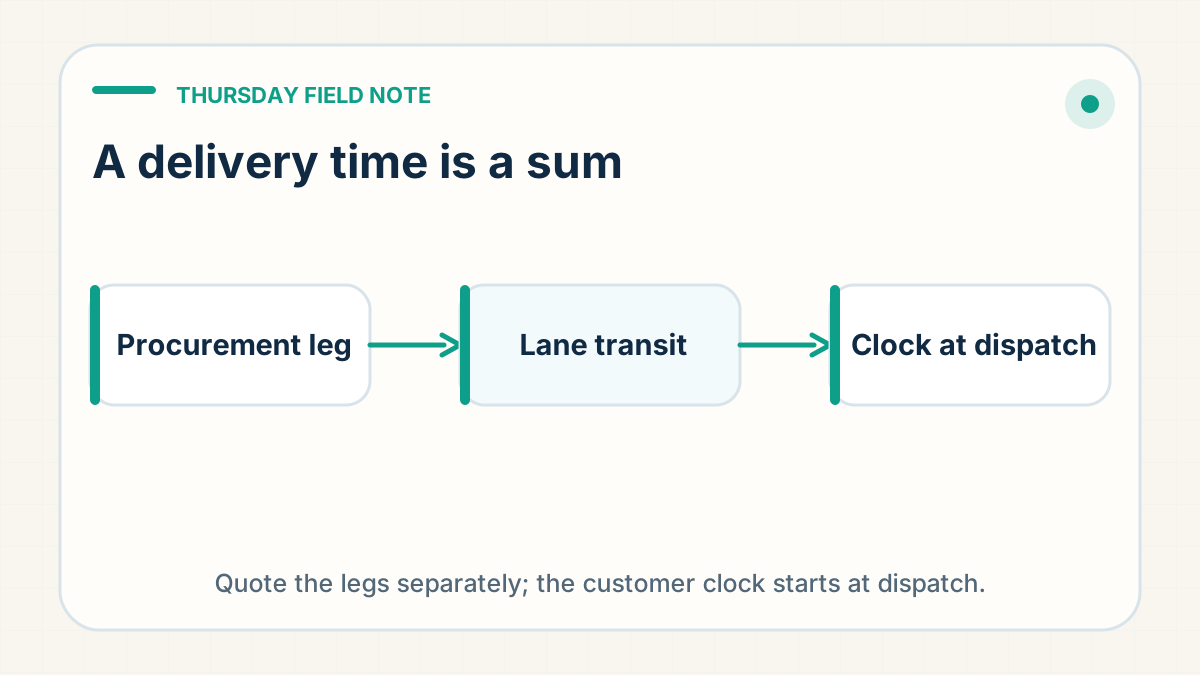
Quote a delivery time as its legs, a procurement window then a named lane, and start the customer's clock at dispatch. Thursday ran heavy, and it kept asking for one number. Prospects in France, the UK and Canada wanted a single delivery figure; requests for engraving, no-minimum branding and name-brand goods wanted a single yes; sellers with contested shipments wanted a single reassurance. The replies that worked refused the format, splitting each total into parts the other side could check: a promise into its legs, a refusal into its alternative, a status into its evidence.
A delivery time is a sum, not a number
Eight conversations asked some version of "how long will it take" — among them a first-orders client in France fielding delivery complaints and a homeware prospect in the UK who had promised her customers a tight window. Every durable answer had the same shape. Procurement to the warehouse is one leg, a few working days. Warehouse-to-door transit is a second leg, and it belongs to a named lane — Standard or Express. And the clock the end customer watches starts at dispatch, not at checkout.
Two prospects ran into confusion because they had glued the legs into one figure and could not reconcile the ranges they had collected. The fix, both times, sat in the same message as the prices — quote the procurement leg and the lane transit separately, and say which clock starts when. The split also sells: one client compared the lanes variant by variant and found the express premium in a band of a euro and change per item, small enough to consider making Express the storefront default. It also surfaces hard limits — a battery-carrying electronics accessory has fewer channels and no expedited option, disclosed at quote time, when it is still useful.
The same discipline applies to cut-offs: same-day dispatch only ever describes goods already in the warehouse; an item still to be bought ships after procurement — purchased by the next working day. Before displaying any delivery promise, make sure you can decompose it; what each stage of a delivery estimate actually covers separates preparation, dispatch, transit and clearance the same way.
A finished "no" has the alternative attached
The desk said no repeatedly on Thursday, and nearly every no arrived with a priced path stapled to it. A jewellery client asking for one-off engraved personalisation heard that the supplier does not support it — and, in the same message, got the real route: private production at a three-figure minimum per design, a small mould fee, about a week of production, with unit-price bands for both destination countries. A client in Hungary wanting a logo with no minimum for a one-week test got a straight "that MOQ does not exist", then the staged path: neutral packaging first, branding once volume stabilises.
The same ladder went to a UK prospect blocked by a four-figure unbranded MOQ, and to a homeware brand steered from from-scratch custom development to private label on existing moulds. That staged route is the packaging ladder, the working answer to four branding requests in one day.
Even the flat refusals carried a pivot. Name-brand earbuds bound for South America and replica tracksuits for Germany were declined outright, but each refusal came with unbranded alternatives in the same product family. When sourcing failed entirely, the no still carried two fallbacks: a shipping-only service if the seller has the item made elsewhere, and custom manufacture stated plainly — minimums in the low hundreds, lead time in weeks. Judge an agent — and your own replies to your customers — by whether the no carries the alternative's numbers: a bare no stalls you, and a bare yes lies to you.
Answer with the artifact, not the assurance
When a seller contested a status, adjectives settled nothing; documents did. A seller with an open chargeback asked whether the goods had really shipped — what closed the question was not "yes, we sent it" but the origin sorting-centre scan with its timestamp. A "please ship it again" request was checked against invoice and tracking history first: the reshipment had already been arranged under an earlier confirmed invoice — the seller had simply forgotten — and the check prevented a double shipment and a billing dispute. A parcel reported stuck at customs before a hard deadline turned out, once the raw tracking events were read back with dates, to have cleared days earlier — a display problem, not a customs problem.
The counter-example proved the rule: a delivered-successfully template went out on top of a proof-of-delivery photo showing the neighbouring house number, and it cost an apology and an extra round trip before the resend-or-refund offer that should have opened the reply. When a label and a status disagree, "label created" isn't the same as shipped sets out what each scan event does and does not prove.
Break the total into parts the reader can check
Three controls from one day. If your product page shows a single delivery number, rewrite it as legs — a procurement window, then a named lane — and start the customer's clock at dispatch. If your next reply is a no, staple the alternative's numbers to it before you send: an MOQ band, a fee, a lead time. And when a status is disputed, stop trading assurances — pull the scan, the photo or the invoice line, read it against the order, and send that.