From the operations archive
The tracking number existed while the parcel could still be stopped
Two customers changed their minds while their orders were moving through the warehouse queue. The seller could already see shipment records, which made the cancellations look too late. Physically, the units might still have been unpurchased, picked, packed, labelled, manifested or waiting for carrier collection. Those stages have very different chances of recovery.
Treating label creation as dispatch would give a quick no and perhaps send unwanted parcels across borders. Treating every tracking number as easily cancellable would be equally misleading once a container or carrier handoff had closed. The team needed the warehouse state, not the existence of an electronic record, before promising an outcome.
They located the parcels against the cut-off and acted on the least reversible request first. The lesson carried into customer messaging: “label created” means shipment data was prepared; “carrier accepted” is evidence that custody changed. A useful system records both. That distinction gives cancellations a fair chance and prevents the storefront from announcing movement before the physical parcel has begun it.
Case scope: This is an anonymised composite of client situations. Markets and product families are broadened, and identifying details are removed. Read the dated field note: Back to full speed: a new add-on request and two orders we raced to cancel.
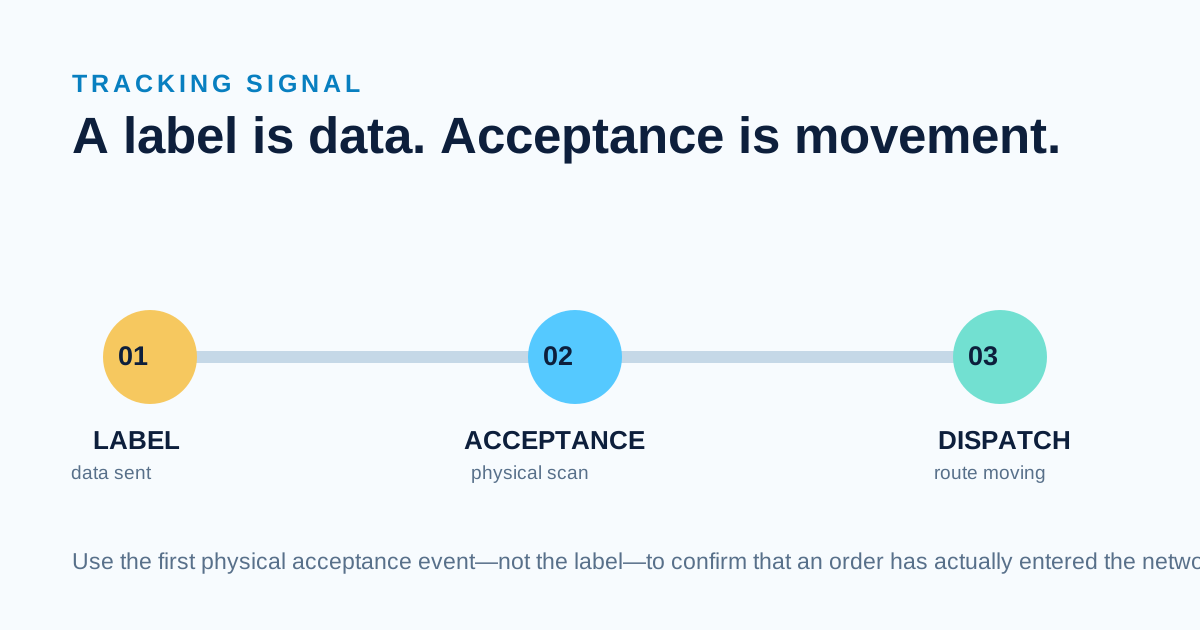
A tracking number can appear while an order is still being checked, picked, packed or waiting for collection. The number is useful, but it records that shipment data was created—not necessarily that the parcel changed hands.
What "label created" confirms
The seller or fulfilment system has prepared an electronic shipment record. Depending on the workflow, the physical parcel may still be inside the warehouse and a cancellation or address correction may still be possible.
What proves carrier custody
Look for a physical acceptance, collection, origin-facility or movement event. Event names vary by service, so the useful question is whether the scan records a physical handoff rather than another data update.
How an accountable seller should communicate it
Do not announce dispatch solely because a label exists. Record the warehouse state and the first meaningful carrier event separately, then tell the customer what is confirmed, what is still waiting and when the next check will happen.
If the scan stays unchanged
Check the release record, collection manifest and route expectation before assigning blame. A quiet label can reflect a warehouse delay, a missed collection, a scan delay or another handoff issue. The evidence should decide which party acts next.
Keep the warehouse state separate from the customer message
Internally, record the most specific state the evidence supports: awaiting product, awaiting packing, ready for collection, collected without an acceptance event, accepted or moving. Externally, translate that state into plain language without exposing supplier detail or upgrading an intention into a completed handoff. This lets support, warehouse and seller teams use one timeline while giving the customer an update they can understand.
Use a timed escalation instead of repeated guessing
Set the next check against the service's normal first-scan window and name who owns it. If acceptance should already exist, compare the warehouse release evidence with the carrier manifest before deciding whether to rebook collection, trace the parcel or correct the customer update. The useful control is not checking the same page more often; it is moving to a different evidence source when the expected milestone fails to appear.
Treat label creation as an electronic record, not a physical handoff
Treat label creation as an electronic record, not a physical handoff. Describe an order as dispatched only when warehouse release and an appropriate carrier-acceptance or movement event support that statement, with a timed escalation if the expected first scan never appears.
Need a route or order checked for a specific order?
If a specific order's tracking has you or your customer worried, send us the order number on WhatsApp (wa.link/dropship) and we'll check what's actually going on.
Check Order on WhatsApp →