Field note
A new offer and two cancellations ran on different clocks
The week restarted with two very different clocks running in the same inbox. One early-stage seller wanted to add a small accessory to an offer and needed sourcing, packing and landed-cost checks before advertising it. Elsewhere, customers had changed their minds on live orders and the sellers wanted the parcels stopped before the warehouse handoff.
The add-on could wait for a reference, an actual packed-size check and a meaningful quote. The cancellations could not. Once purchasing, picking, labelling or manifesting crossed its cut-off, the request would stop being an edit and become a return or after-sales case.
The warehouse cutoff would not wait for the sourcing brief
Treating every message as equally urgent would have been the failure. A guessed accessory quote could distort a future margin, but a late cancellation could send an unwanted parcel across a border, trigger a refund, and leave nobody able to recover the shipping cost. The most reversible request had to wait while the least reversible one was located physically.
Work the irreversible orders first
When operations speed up, a new product add-on request and a time-sensitive cancellation can arrive at the same time. They need different handling, even if they share the same inbox.
The cancellation path needs an immediate status check; the new request needs a clear brief before anyone can price or promise it.
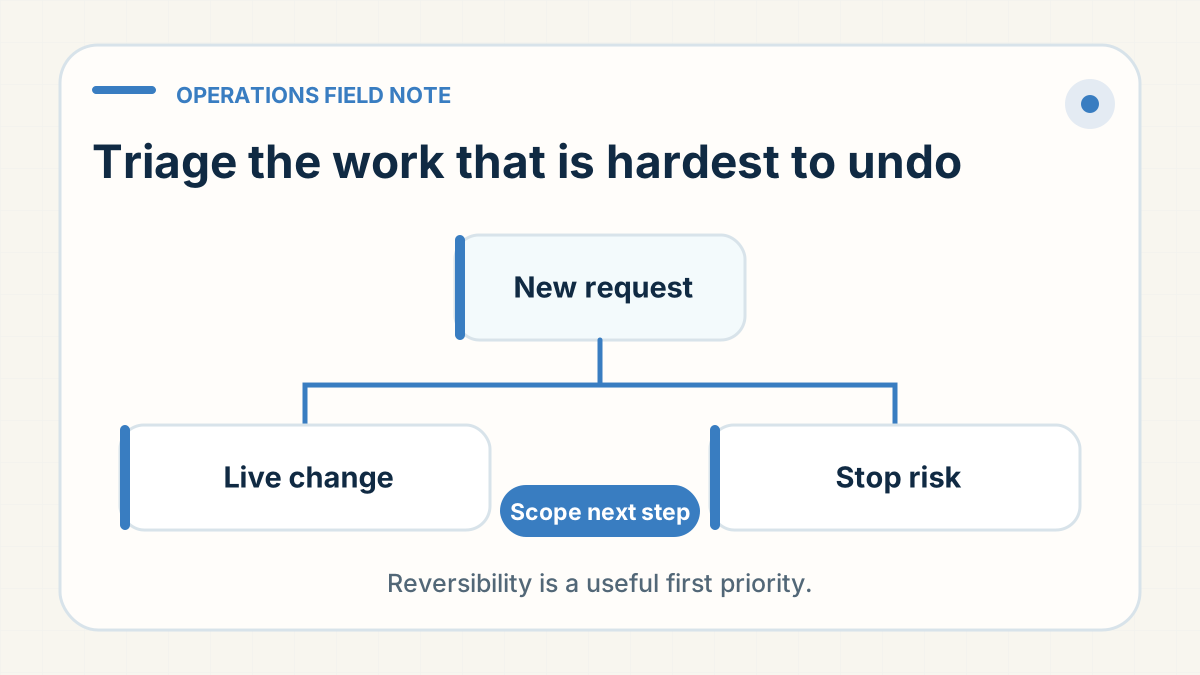
Triage by reversibility: stop the action that will be hardest to undo, then scope the new work properly.
The cancellations and product test kept separate states
The cancellations were handled as status checks first: had the units been purchased, packed, labelled or handed over? The new accessory went into a separate sourcing brief instead of being bundled into the rush. The broader lesson was concrete: triage by the cost of waiting, not by which message looks newest.