Back to blog
Sourcing Tips

Found It Cheaper? How We Compare a Rival Price Like-for-Like

6 min read
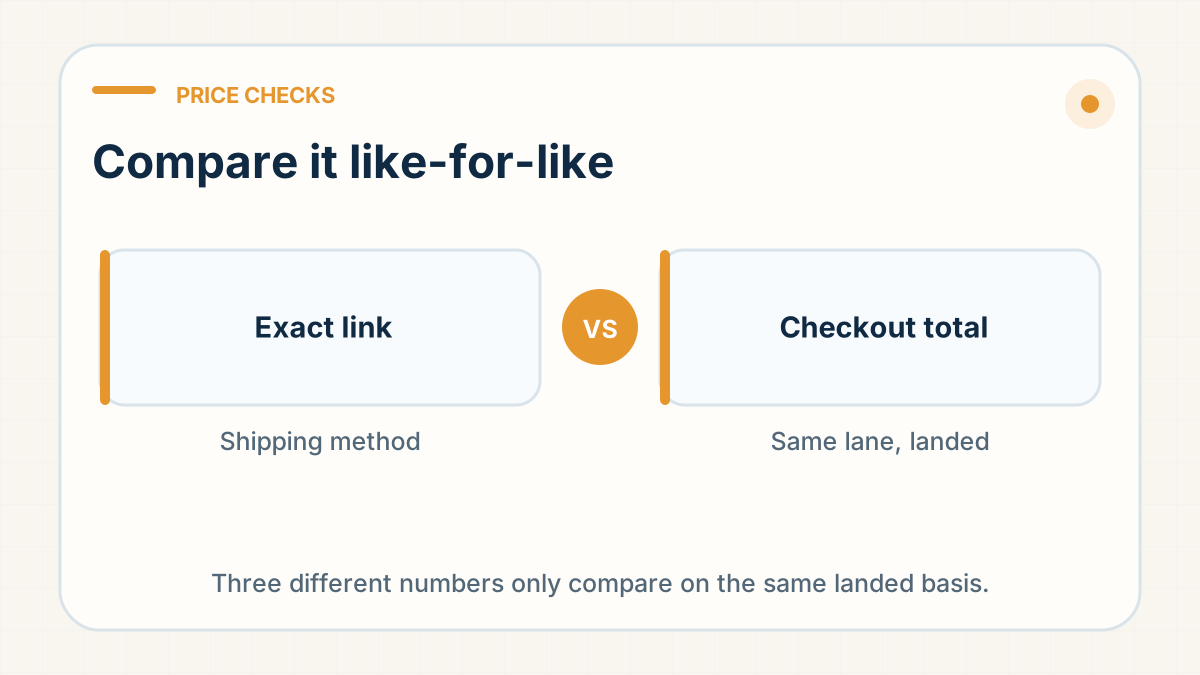
Compare it like-for-like. Three different numbers only compare on the same landed basis.

A cheaper price is a claim until it survives a like-for-like check, and most do not. Send the exact link, the rival's shipping method and a checkout-total screenshot, and the desk re-prices the same variant, landed, on the same lane — then either requotes lower or tells you plainly that the standing quote is the best it has secured. What never moves a price is asking the same question twice.

A marketplace listing, a local shelf price and a rival quote each hide something different. All three go through one evidence pack, then the same-variant, landed, named-lane test, before either outcome is reached.

The three price challenges: a marketplace listing, a local shelf, a rival quote

Every "found it cheaper" message is one of three comparisons, and each fails like-for-like in its own way. A marketplace listing carries pricing a cross-border quote cannot copy: new-user discounts, promotional subsidies, sometimes a seller shipping domestic stock. A local shelf price is a different supply chain altogether — that item was imported in bulk, cleared and distributed before it reached the shelf, so its shipping cost per unit bears no relation to a single parcel travelling from China to one customer. And a rival quote is only a rival quote if it prices the same variant, includes the same costs and names its shipping lane. Most, on inspection, describe a different parcel.

Why is your quote so much higher than the listing I found?

Almost always because the two numbers do not buy the same thing. A listing shows the sticker before the platform's promotions resolve and before shipping, tax and delivery to your customer's door are added. The desk's quote is all-in by standing rule: product, packing and handling, and shipping in one figure, with any separate line — branded packaging, a special shipping channel, the EU per-HS-code customs line — stated on the quote itself, never added afterwards. So the honest comparison is not sticker against quote; it is checkout total against quote, for the same variant, delivered to the same country.

Three items settle almost every price challenge: the exact link, the rival's shipping method, and a screenshot of the checkout total. The link pins the variant — size, colour, model — so the recheck prices the product you mean, not a lookalike. The shipping method tells the desk which lane the rival figure sits on, and whether it sits on one at all. The checkout total is where discounts, subsidies and delivery charges resolve into a real number. Without those three, the only honest answer available is that the standing quote is the lowest the desk has secured; with them, the sourcing team can recheck specification, cost and shipping like-for-like.

Like-for-like means same variant, landed, same lane

Two offers compare only when both describe the same variant, landed at the customer's door, on a named lane. Anything less is a comparison between a parcel and a picture of one.

Three price challenges meet one test — same variant, landed, named lane — and the quote either drops or holds, honestly.

Landed means the whole journey sits inside the number: product, packing, shipping, duties and tax. That is the figure to set against a rival, because landed cost is the number that decides whether a product pays at all. And the lane must be named on both sides: two transit figures for one destination are Standard and Express, not a contradiction, and every desk quote says which lane it is on. How to read a landed-price quote sets out the five labels a comparable quote carries.

What actually moves a price: volume, lane, packaging — not asking twice

Volume, a slower lane and simpler packaging move prices; repeating the question does not. As of August 2026, across the desk's order flow, supplier negotiation typically reopens at consistent bulk volumes in the roughly 200–500 unit band — below that, most quotes already carry a slim margin, and the figure on the table is the best one available. A seller with a hard target gets a straighter answer by naming it: the desk can then say which lever — quantity, speed or packaging — could reach that number, or that none can.

Is this the lowest price you can offer?

It is the lowest the desk has secured at your current volume — and with evidence, it gets rechecked rather than defended. Both outcomes happen. In the same review week, one challenge sent the sourcing team back to the factory, which renegotiated and requoted meaningfully lower; another recheck confirmed the standing quote as the best secured, and the desk said exactly that, with renegotiation left open at volume. What it will not do is invent a discount to win the message and recover it somewhere else later — the all-in rule cuts both ways.

The honesty clause

If the rival number truly is cheaper for the same variant landed, the desk says so. Sometimes it is: on a small share of comparisons the recheck ends with the desk confirming that local supply genuinely is the better route for that product, and saying so plainly instead of quoting around it. An answer like that costs an order and keeps a client. The alternative — matching a number the parcel cannot honour — resurfaces later as a delivery or quality failure, which costs more than the truth did.

Why a low-tens bulk order can land near retail

Small bulk changes the arithmetic, because shipping consolidates while the product price falls. A recurring version of the price challenge is a retail-marketplace purchase of tens rather than one, bought at a price no single-parcel quote could touch. Standing practice on those is the same every time: flag the promotional subsidies, ask for the order screenshot, then re-price the same variant as a low-tens bulk order, landed — and that figure often lands near the retail benchmark. One consignment, one delivery charge spread across the batch: the comparison a single-parcel quote loses, a low-tens bulk order can win. If your challenge is really a volume purchase, say so; it is a different quote.

Send the evidence pack, then decide on the landed pair

Before asking for a match, capture the exact link, the shipping method and the checkout total, and put the rival number and the quote on the same landed basis. Then choose between the three honest outcomes: take the requote, accept the hold, or buy where it is genuinely cheaper. What a desk quote includes — and what is always stated on it rather than added afterwards — is set out on the pricing page.

Evidence boundary: a composite drawn from reviewed operations conversations between 23 and 28 August 2026. Product families, destinations and volume bands are generalised; no client, rival or supplier is identified, and no individual quote is reproduced.

Need a product checked before you spend on ads?

Send us the product link and destination on WhatsApp (+86 178 4666 9989). We will help you assess sourcing, packing and shipping before you commit.

Get Sourcing Quote on WhatsApp →