From the operations archive
Ownership was less important than custody
Sellers looking at an unfamiliar label often ask two linked questions: what is 4PX, and why does another company appear when the parcel nears the customer? The concern is reasonable. A customer has paid one store, sees several logistics names and wants to know whether the shipment is legitimate. Corporate ownership can provide context, but it does not reveal who physically holds a particular parcel today.
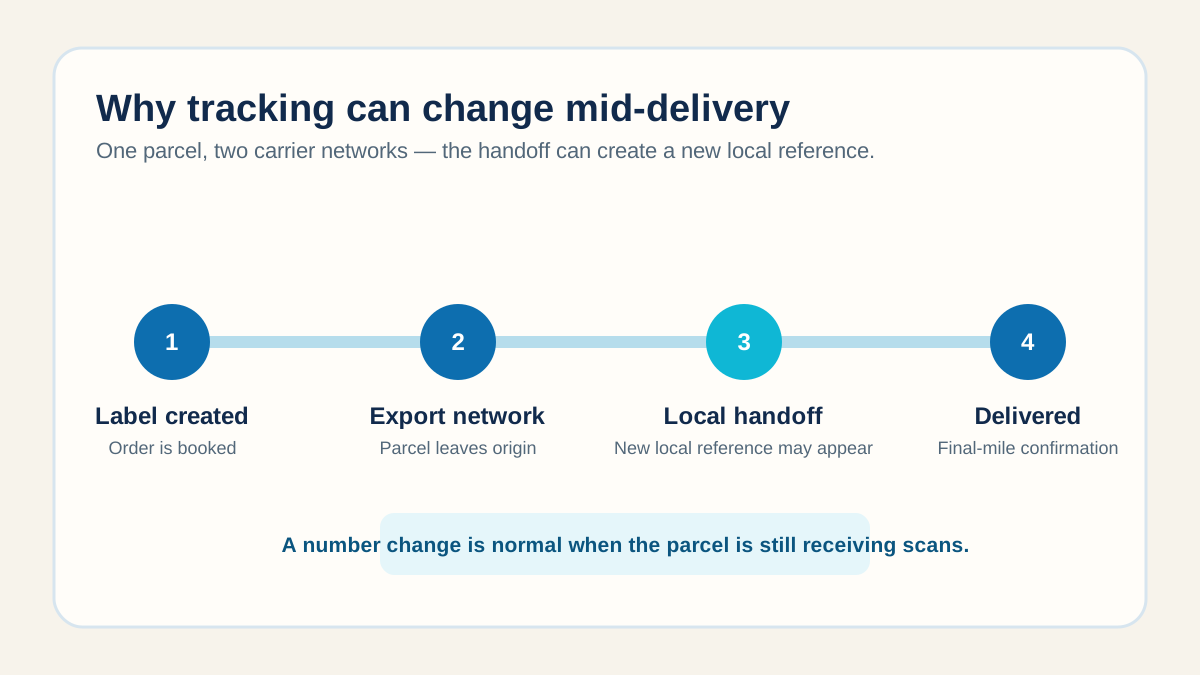
The operational tension is between giving a neat company biography and answering the customer’s actual question. A cross-border provider can manage acceptance, consolidation, export and data while a postal or courier partner performs the last mile. A parent-company fact does not guarantee a route, and a changed tracking number does not by itself mean the shipment changed ownership incorrectly.
The useful answer separates identity from custody. Explain what role 4PX plays in the chain, then use the latest physical event and the named local partner to describe what happens next. That gives the seller a defensible update without pretending one organisation drives every segment. Company background can establish who the operator is; tracking milestones establish who should act now.
About this story: it is an anonymised composite of client situations. It broadens markets and product families and leaves out identifying details. Read the dated field note: Honest talk about shipping labels — and the unglamorous side of the job.
We get asked this a lot: "is 4PX the same as Alibaba logistics?" Not quite, but they're connected, and the connection matters for what you should expect from a route that uses it.
The short version
4PX is a cross-border ecommerce logistics and fulfilment company, founded in Shenzhen back in 2004. It's majority-owned by Cainiao, which is Alibaba's logistics arm. Cainiao picked up the remaining stake in 4PX (about 17.6%, previously held through Singapore Post) in a deal that closed in June 2025. The exact current ownership percentage isn't published anywhere precise, so we won't pretend to know it to the decimal.
What that ownership actually changes for you: not much day to day, but it does mean 4PX's warehouse network, technology, and route options have been getting deeper integration with Cainiao's broader logistics system. More capability on paper, not a guarantee that every route performs the same.
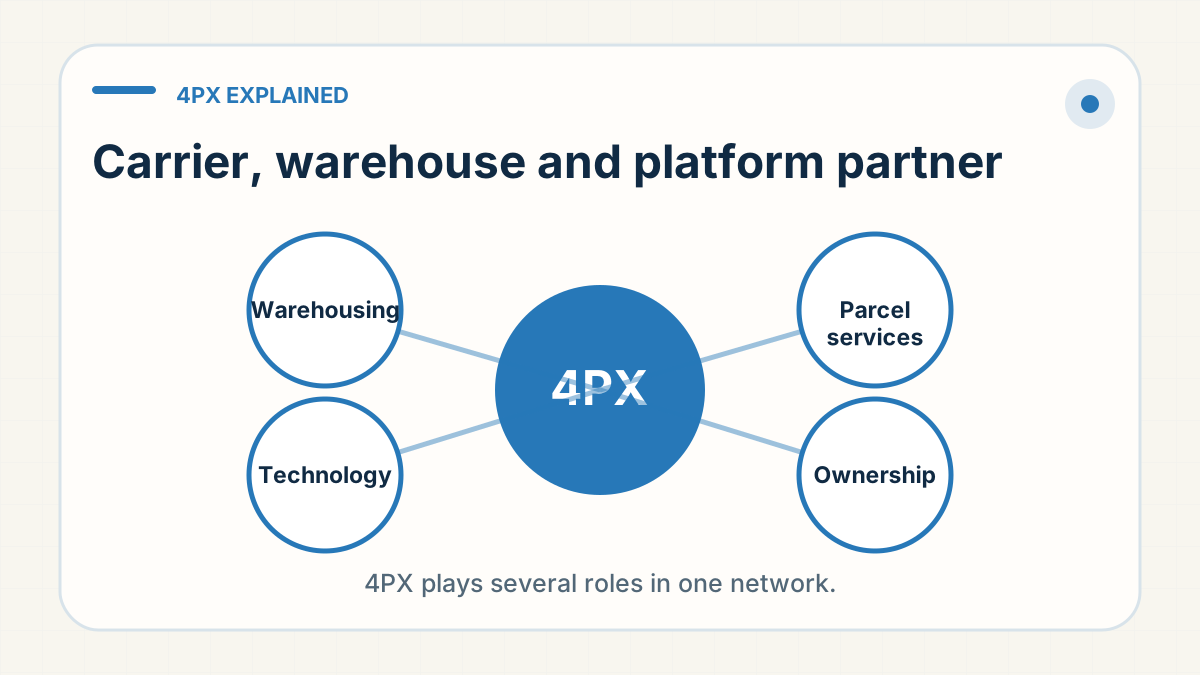
What 4PX can touch in your order's journey
Picking up or receiving stock from your factory. Warehousing, inspection, relabelling, or consolidating multiple SKUs. Export processing and the international leg. Destination customs. Local last-mile delivery, usually handed to a postal or courier partner. Overseas warehouse fulfilment, if you're pre-stocking. Marketplace replenishment (Amazon FBA, for example). Returns handling, on the routes that support it.
What 4PX is not
It's not your sourcing agent, your factory negotiator, your quality inspector, or your customer service line. That part's still on the fulfilment partner you're actually working with. 4PX is infrastructure. Somebody still has to pick the right product on it, pack it correctly, catch the exceptions, and answer your customer's message when something goes sideways. That's us.
Why we bring this up
We use 4PX for some routes because it genuinely does span more of the logistics chain than a single-service carrier, direct parcel, warehousing, and returns can all sit on the same system. But "4PX" isn't one product. A registered parcel, an untracked postal option, and a warehouse fulfilment order are different services with different tracking, different customs handling, and different reliability. When we quote you a route, we're telling you exactly which one we're using and why, not just dropping a carrier name and hoping it sounds credible.
Use 4PX where a named service fits the exact product, destination, packed parcel and customer promise. Its corporate breadth is context; the buying decision still belongs to the live route available for that order.
The rule: Use ownership and company information to understand who 4PX is, not to infer that every shipment is suitable. The operational decision remains the named service, exact parcel, destination, tracking chain and current terms offered for the order.