From the operations archive
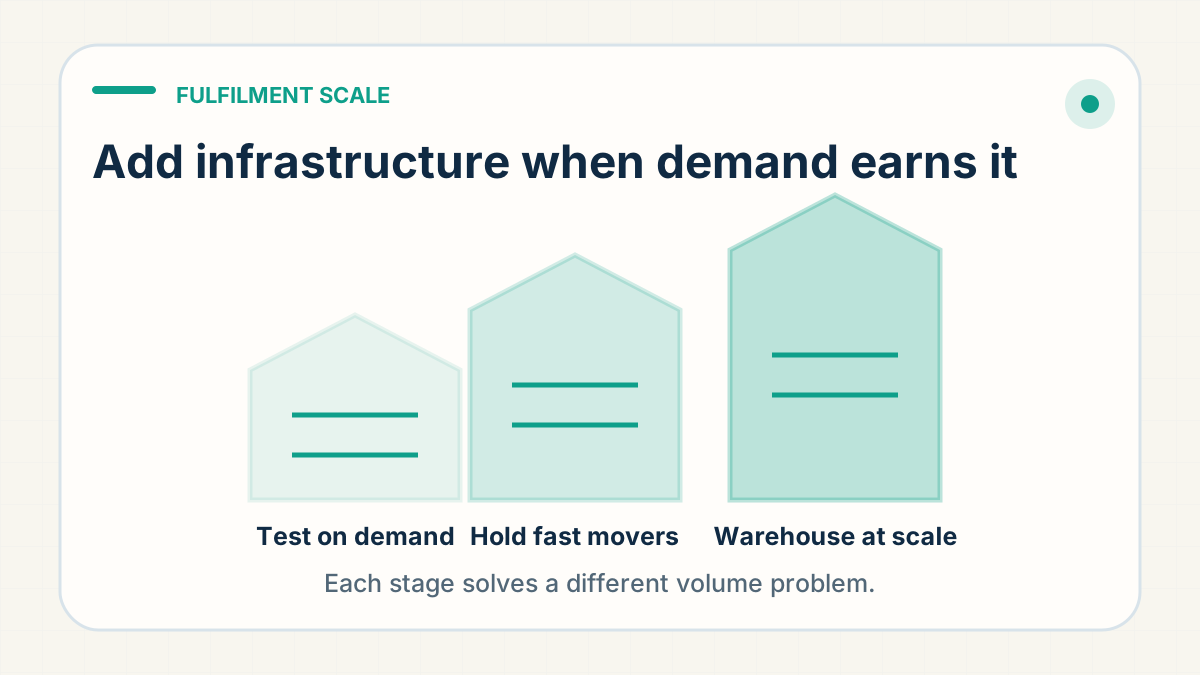
More warehouse capacity would not fix uncertain stock
A European-facing accessories seller was moving beyond per-order purchasing and considering held stock. A larger logistics network promised faster release, broader services and a path toward regional inventory. But the team was still proving a more basic capability: receive a batch, identify every variant, isolate questionable units and reconcile what remained after real orders.
Scaling immediately would shorten some steps while magnifying mistakes in others. More stock could reduce domestic purchasing time, yet it could also lock cash into slow variants or spread one version error across multiple locations. The question was not whether 4PX had useful warehouse options. It was whether the seller’s product and stock controls were ready to benefit from them.
The transition happened in batches. First the seller established approved references, receiving evidence, locations and reliable stock deductions. Then faster-moving products earned deeper cover and additional routing options. Warehousing added leverage after the process became repeatable. It was not a substitute for knowing which physical unit the store had promised to the customer.
About this story: it is an anonymised composite of client situations. It broadens markets and product families and leaves out identifying details. Read the dated field note: Building out a warehouse one batch at a time.
Most dropshippers think of a carrier as "the thing that ships my order." 4PX is a bit more than that, it also runs China-based consolidation warehouses and overseas fulfilment warehouses, and that matters once you move past testing a product into actually scaling one.
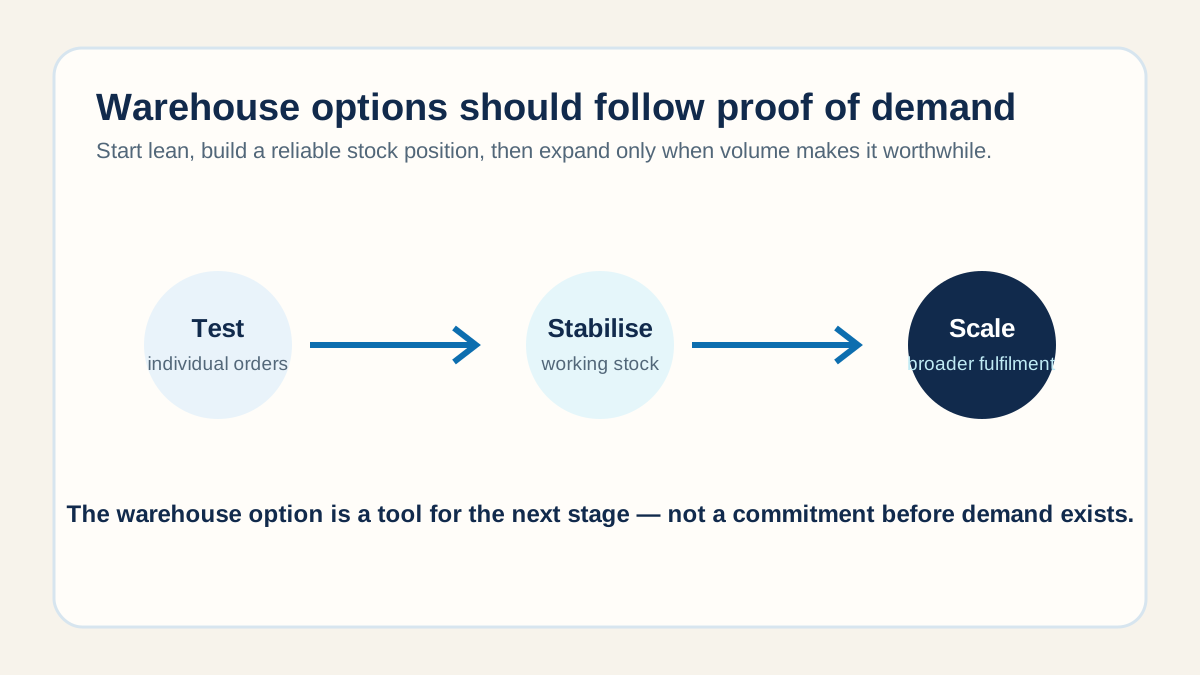
The three stages, and where 4PX can sit in each
Direct parcel from China. Good for testing, long-tail products, and low or uncertain demand. Order ships straight from China to your customer, no inventory commitment. Slower, more customs touchpoints, more dependent on tracking scans going through cleanly.
China consolidation warehouse. Useful once you're sourcing from multiple factories or suppliers and want consistent packaging and labelling instead of every parcel looking different. Stock gets received, checked, and consolidated in one place before it ships out. This adds inbound and storage handling, so it only makes sense once you have real volume worth consolidating.
Overseas warehouse. For proven winners. Stock gets pre-positioned closer to your customer, so delivery gets meaningfully faster and more consistent. The tradeoff is real: you're now carrying inventory risk, storage cost, and you need a plan for what happens if a product stops selling and stock sits there.
Why this matters beyond just "faster shipping"
If you're also selling on Amazon or another marketplace, 4PX's fulfilment network extends into replenishment for those channels too, receiving stock, prepping it to marketplace spec, and moving it into their fulfilment centres. And on the reverse side, if a customer return needs to come back, having a warehouse option in-market means it can be inspected, relabelled, or resold there instead of shipping all the way back to China.
When to move from direct parcel to pre-stocking
Only when demand is actually repeatable, not a one-off spike; product quality has been stable for a while; you've confirmed compliance and documentation, especially for anything in a restricted category; the faster delivery genuinely moves the needle on conversion or reviews for that product; and you have a plan for slow-moving or dead stock, not just a plan for the upside.
What we actually do with this
We don't push every client toward pre-stocking just because the option exists. Most orders we fulfil are still direct-from-China, and that's the right call for most products at most volumes. We bring up warehousing when a specific product has proven itself and the math on faster delivery and reduced stockouts actually works out, not before.
Use consistent paid demand, destination concentration, current delivery tails and stock economics to decide whether pre-stocking earns its extra commitment. A growing order count alone does not answer where inventory should sit.
The rule: Add warehousing only after the operating inputs are stable: approved product version, variant-level demand, receiving checks, stock ownership and replenishment timing. A larger storage network cannot correct uncertain inventory or a product that changes between batches.
Need a product checked before you spend on ads?
Send us the product link and destination on WhatsApp (+86 178 4666 9989). We'll check sourcing, packing and shipping with you before you commit.
Get Sourcing Quote on WhatsApp →