Material is a commercial decision, not a specification detail
A seller can do everything else correctly — good photography, accurate sizing, fast delivery — and still accumulate refunds and poor reviews because the item does not survive being used. The most common version of this is not a defective batch. It is a material that was never suitable for the way the customer was always going to use it, chosen because it looked right in photographs and cost less.
The pattern is worth naming because it is predictable and therefore preventable. It shows up a few days to a few weeks after delivery, which is late enough to be past your own testing and early enough to be inside the marketplace protection window.
The clearest example: plated metal versus stainless steel
Jewellery and small metal accessories make the trade-off unusually visible. Brass, copper and plated alloys take a bright, warm finish that photographs beautifully and matches what buyers expect from the category. They also tarnish when exposed to water, sweat, perfume or skin acidity, sometimes within days, and can leave a green mark on skin. Stainless steel resists that but reads slightly darker and cooler, and it will not match a plated reference photograph exactly.
There is a second constraint sellers meet only after choosing: stone-set and inlaid designs generally cannot be produced in stainless steel by the same suppliers, because the setting process differs. So a catalogue built around stone-set pieces may have no stainless option at any price, and the decision becomes which designs to sell rather than which metal to specify.
What is actually happening to the metal
The mechanism is worth understanding, because it explains why the failure is so predictable and why "better quality control" does not fix it. A plated item is a base metal — commonly brass, copper or a zinc alloy — carrying a decorative surface layer that is often only a fraction of a micron thick. That layer sets the colour and does nothing structural.
Two things attack it. Abrasion wears it through at contact points, which on a bracelet or ring means days rather than months of ordinary wear. And moisture reaches the base metal through wear points and microscopic pores in the plating itself. Sweat accelerates this considerably because it is mildly acidic and contains salt; perfume, hand sanitiser, sunscreen and chlorinated water all do the same. Once the base metal is exposed it oxidises, which is the dulling and darkening customers describe as tarnish.
The green mark on skin is the same reaction from the other direction: copper compounds forming as the base metal reacts, then transferring. It is a normal chemical outcome for the material, not evidence of a counterfeit or a bad batch — which is exactly why it cannot be inspected away, and why the decision has to happen at material selection.
Stainless steel avoids all of this because its corrosion resistance comes from the alloy itself rather than from a coating, so there is no layer to wear through. The trade-off is honest: it takes a cooler, darker finish and will not match a bright plated reference photograph.
The same logic in other categories
- Fabrics: an elastic waistband measures far smaller relaxed than worn, so a static measurement published as a size chart generates avoidable returns. Publish the intended body measurement, not the flat measurement.
- Coatings and prints: a printed finish that peels after handling is a material choice, not bad luck. Ask what the surface treatment is and how it is applied.
- Outdoor goods: an untreated ironwork item will develop surface rust outdoors. That may be acceptable and even desirable, but it must be stated in the listing rather than discovered by the buyer.
- Natural materials: stone, wood and shell carry inclusions, cracks and grain variation. Show that variation in the listing images so it reads as authenticity rather than as a defect.
Specify the material before you build demand
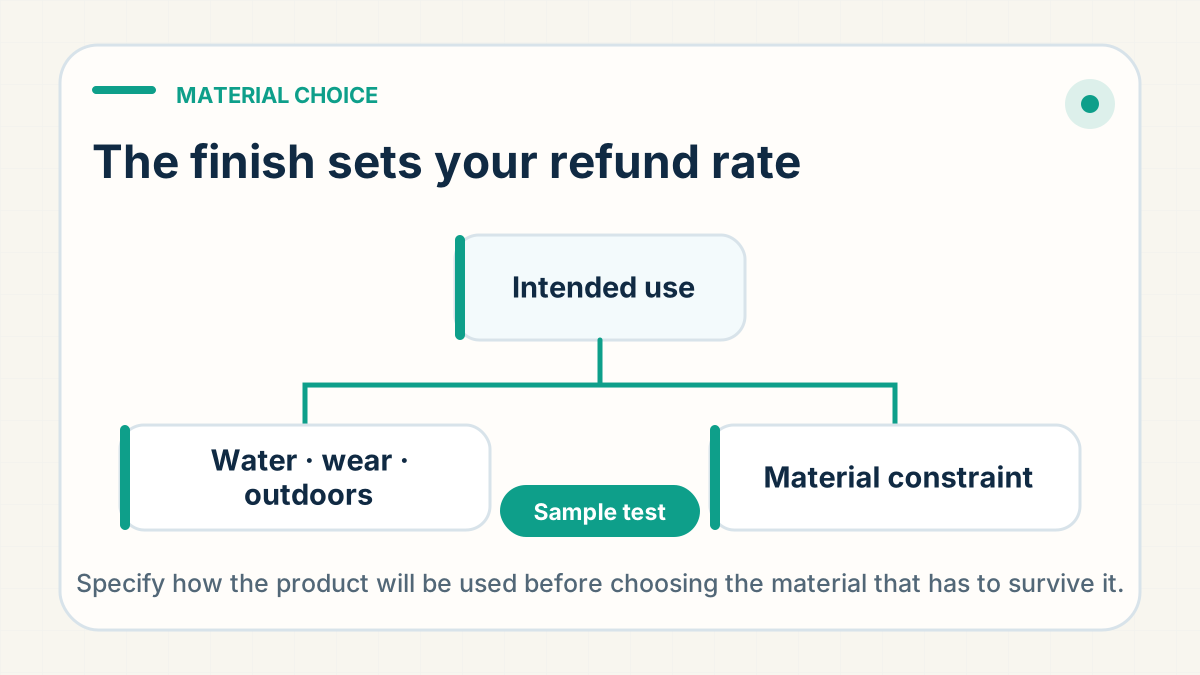
The useful sequence is to decide the material constraint first, then find products that satisfy it, rather than choosing a product and hoping a better material exists. Send your partner the constraint in that form: this item will be worn in water, so it must be a finish that does not tarnish; this item will live outdoors, so surface change must be acceptable or prevented.
- State the material and finish as a non-negotiable, separately from the design.
- Ask which designs in the range are available in that material, and accept that some will not be.
- Request a sample and test it the way a customer will — water, wear, handling — not just visually.
- Record the approved material against the SKU so a later restock or factory change cannot quietly substitute it.
- Write the material and its care requirement into the product page before the first order, not after the first complaint.
Say what the material does in the listing
A short, honest care line converts a refund into an expectation. Plated finishes should not be worn in water. Natural stone varies. Untreated metal will patinate outdoors. Sellers often fear that this language costs conversions; in practice, the alternative is paying for the same information in refunds, replacements and one-star reviews that mention it for you.
When the answer is to stop selling the item
Sometimes a design cannot be made in a material that survives its intended use at a price the market will pay. Delisting that product is a legitimate and often profitable decision. It is cheaper than the refund rate, and it protects the account metrics that the rest of your catalogue depends on.
Specify the material before writing the listing
Specify the material against how the product will actually be used, verify it on a physical sample, lock it to the SKU, and describe it plainly in the listing. Material choice is one of the few levers that changes your after-sales rate before a single order ships.
The rule: Approve the material as part of the sellable product, not as a supplier-side detail. The reference should connect composition, finish, behaviour, sample evidence and listing claims, and a material change should stop purchase or dispatch until the customer-facing version is updated.
Want a product checked before it ships?
Tell us what to check on WhatsApp (+86 178 4666 9989), and we can build those product, packaging and quantity checks into the fulfilment process.
Request Quality Check on WhatsApp →