From the operations desk
Two countries, one service, two different lists of lines
Tuesday was the week's heaviest quoting day, and what kept going wrong was not the figure but the country attached to it. Five quote threads carried a delivered price whose destination had to be settled first: a market never named on the thread, one of two countries named minutes apart, a country other than the one the request message itself had named, a market across the Atlantic from the one already on the record, and no country at all on the face of the figure.
One of them ran a whole loop inside the day, and it shows what a destination really changes. A seller with a European destination on the record from the start of the thread got his first delivered figure priced to the United States, and what he asked back was not about the country but about what the figure covered — whether packing sat inside it, and whether the product cost did.
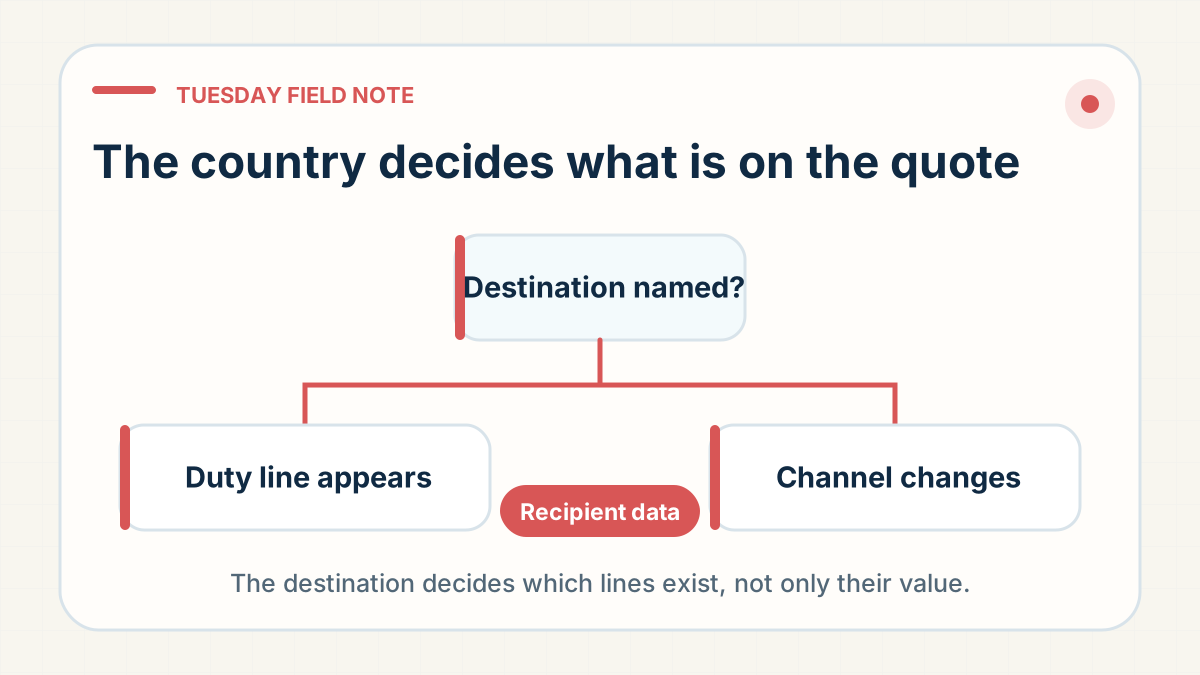
The European figures arrived the best part of an afternoon later, and they were not the same quote with a different total. Priced to the market he actually sells to, the all-in number was not lower. Only afterwards did he say he supplies his own stock and wanted shipping only. Each European line carried something the American line did not: a temporary EU customs duty, charged per customs item in a low-value consignment, stated on the quote beside the delivered figure. Nothing about the service had changed in between. What changed was the list of lines.
The destination decides which lines exist, not only their value
That is the part a seller cannot reverse-engineer from a total: which lines a quote has to carry is settled before any figure is written. what a per-customs-item charge changes for your orders holds the counting rule; the artefact to ask for is the quote with its lines shown beside the delivered figure.
A market pivot re-prices the set, not just the shipping line
One seller announced he was moving off a European market and onto the United States. On the Tuesday morning the quote he had asked to be re-priced came back with the new market set out beside the old one, each destination with a standard channel and a faster one, each at its own price and its own transit band — and one variant in it stayed on its own channel in both markets, with a longer window than everything around it, because that is the only way it travels. The pivot did not move that item onto the quicker lanes with the rest of that quote, and the two sides of the sheet did not carry the same lines as each other.
Delivered-duty-paid is standard on the vast majority of routes, so the customer pays nothing at the door, but which channel an item may travel on — and how long that channel then takes — is settled by the destination and the contents together, before any price is written. how a destination lane actually gets decided covers what sits behind a yes or no on a country.
When the country is missing, the sourcing goes back out
That last one cost the most time. The desk had asked at intake which country he was selling to and was answered only the previous evening; the combined product-and-shipping total then went out without it, so the prospect had to answer the figure with a country he had already given. A minute later the same thread carried a minimum he had never agreed to: the supplier behind the price had a floor, and he needs single-unit fulfilment. So the total was held as a candidate rather than the answer, and the sourcing went back out against the requirement it should have been priced to in the first place.
A delivered figure is comparable only once you can say which country it is for and which lines it contains. how to read a landed-price quote sets out the labels a quote has to carry before you weigh it against another — the exact item reference, the unit basis, the inclusions, the destination and lane together, and the lead time — and it is where the one-country-per-line rule is written down.
Ask which lines your destination adds before you compare quotes
Go through the quotes you are holding and ask your partner, one at a time, which lines the destination on each one adds — a duty line, a channel a restricted item has to take, the window that channel carries: a figure you cannot place is not an expensive quote, it is an unusable one. Then, when your market changes, ask for the whole item set to be re-quoted rather than the shipping line alone: a new country can add a charge you have never paid before and leave one item on a slower channel than the rest. Ask for that as a sheet with both markets set out side by side, so the lines that appear on one and not the other are visible without arithmetic.