Field note
The situation
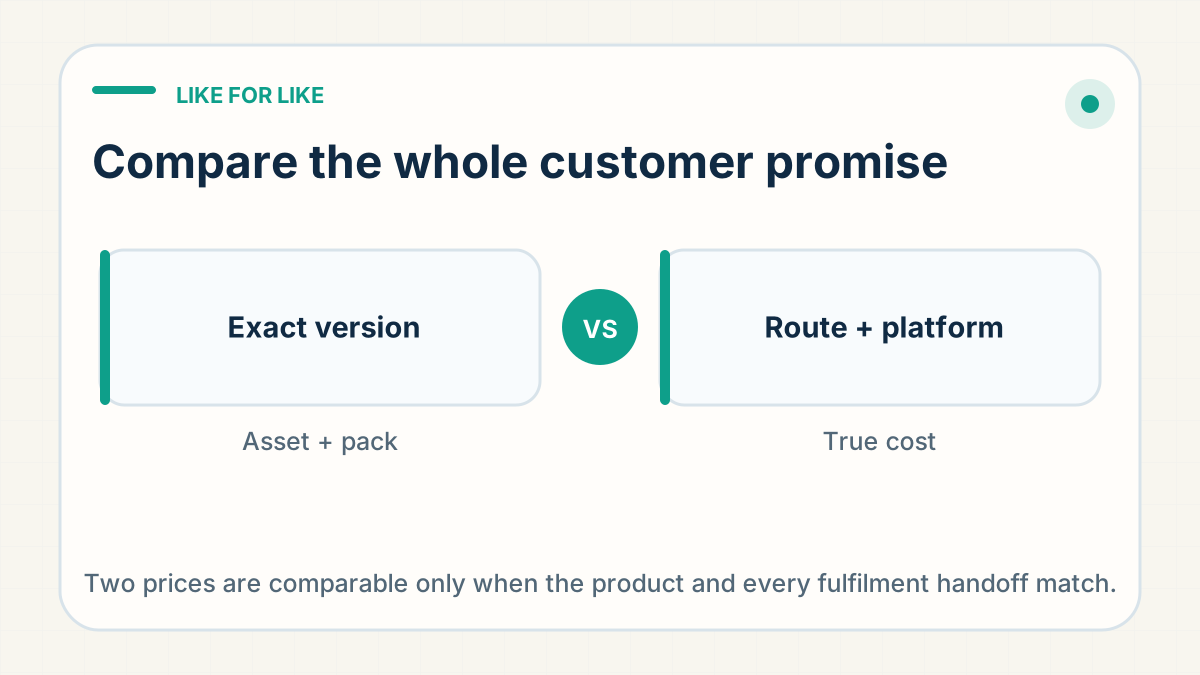
Compare the whole offer, not the first visible number: the exact product, its pack, the route and the platform timing. Tuesday included familiar price pressure: a public marketplace showed a lower number, a seller wanted a cheaper alternative, and another brief asked for an improved version based on complaints about the original. Elsewhere, personalised artwork had to travel from a storefront to production, while marketplace enquiries raised a separate timing question. These were not independent details. They were all parts of the product being compared.
The displayed price is attached to a displayed version
Before comparing two prices, align the physical specification, material, variant, included parts, packaging, quantity, destination and shipping scope. A marketplace retail price may describe a promotion, a different option or a delivery method that does not match the customer-ready route in the quote. A cheaper alternative is useful only after its differences are visible enough for the seller to accept or reject.
The same rule applies to an "improved" version. Product complaints can be a strong design brief, but improvement has to become observable: a different component, finish, closure, measurement or test. Without that translation, the supplier can return something merely different while everyone calls it better.
Personalisation is part of the specification
For a made-to-order item, the customer file is another variant field. The workflow needs to say which format is accepted, how the asset maps to the order line, who checks that it opens, whether a proof is required and how much production time begins only after a valid file arrives. A price for the blank unit and a shipping estimate do not describe that job.
The marketplace clock belongs in the comparison
A route can physically reach a country and still fail the store's operating need if production, dispatch confirmation, recognised tracking or customer-visible milestones do not fit the selected platform setup. Those rules can change, so the safe decision is a current preflight against the exact store and market rather than a timeless claim that a channel "works".
A like-for-like check
- Exact product and variant, including material and included components.
- Personalisation data, proof and production time where relevant.
- Packing, packed weight and destination-specific route.
- Platform handoff, tracking recognition and customer-facing timing.
- What is verified, what is supplier-claimed and what still needs a sample.
Prove it is the same product before comparing price
Compare the complete promise, not the first visible number. If product identity, artwork flow, pack, route or platform timing differs, name the difference before deciding which offer is cheaper. The most expensive comparison is the one that looked equal only because half the scope was missing.