From the operations archive
The dress quote changed after it became a real parcel
A private-label apparel project began with sketches, swatches and a target selling price. Shipping looked like a later calculation. Then the proposed garment became a customer-ready unit: fabric, protective packing, presentation materials and several size variants. The parcel was light, but its volume and handling needs no longer resembled the generic product estimate used at the start.
The seller could keep comparing headline per-kilogram rates or use a line built around apparel flows. The dedicated option was not automatically cheaper. Its value depended on how it treated volumetric weight, the destination, the packed format, tracking and ordinary clothing declarations. The tension was between a rate that looked attractive in a sheet and a route whose assumptions matched the units that would actually leave the warehouse.
Only after the sample and packing method were stable could the routes be compared honestly. In that case, the apparel-focused line changed the landed-cost model enough to influence pricing and stock planning. The lesson was not that clothing needs a special carrier by default. It was that a product category can carry repeatable packing and handling patterns, and a service designed for those patterns may price the real parcel more accurately.
About this story: it is an anonymised composite of client situations. It broadens markets and product families and leaves out identifying details. Read the dated field note: A weekend of fabric swatches — and a refund we didn’t really owe.
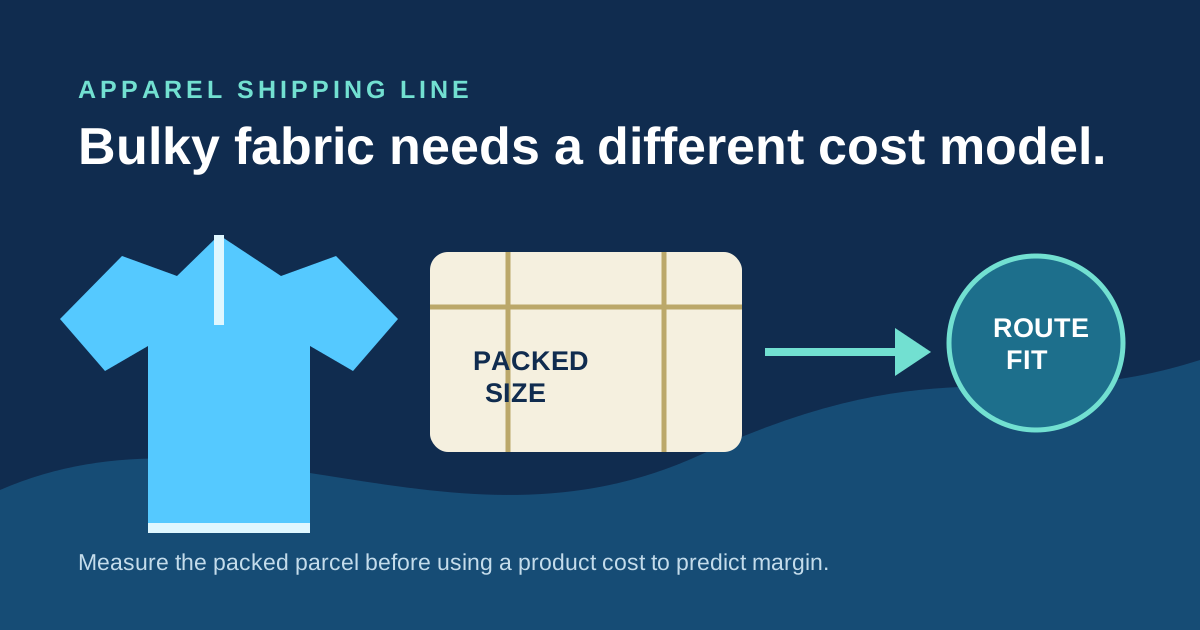
Clothing has an awkward shipping problem: it's bulky relative to its actual weight. A folded sweater or a packed dress takes up real box space without weighing much, and most carriers bill by whichever is higher, actual weight or volumetric weight calculated from the box's dimensions. For apparel, that usually means paying for the box size, not the garment's real weight.
What a no-volumetric-weight apparel line actually does
Some carriers, WANB Express among them, run a dedicated line for apparel-category shipments that bills on actual weight only, skipping the volumetric weight calculation entirely for products that qualify. For a clothing brand shipping bulky-but-light garments, that can mean a meaningfully lower shipping cost per order than routing the same parcel through a general-purpose line.
Why this exists as a separate product
Carriers build dedicated category lines when a specific product type has different real economics than the general parcel population. Apparel is bulky and light in a way that's predictable and common enough to build a whole pricing structure around, unlike, say, electronics, which tend to be denser and don't get the same benefit from a volumetric-weight exemption.
What to check before assuming your product qualifies
1. Confirm the product genuinely falls into the carrier's defined apparel category, not just "clothing-adjacent." 2. Check whether there are other restrictions, size limits, packaging requirements, that come with the line. 3. Compare the actual quoted cost against a general-purpose line for your specific product and destination, since the benefit varies with how bulky-vs-light your garment actually is.
Who this is actually worth it for
If you're shipping genuinely bulky, lightweight apparel (think puffer jackets, packed multi-piece sets, anything that takes up real box volume without much scale weight), the savings can be real and worth actively routing for. If your apparel is compact and doesn't have much of a volumetric-weight problem to begin with, a general-purpose line might already be cost-competitive, and chasing a specialty line for a marginal saving isn't worth the added complexity.
Compare the finished apparel parcel on actual weight, chargeable weight, destination coverage and the service promise. A specialist line earns the order only when the complete route improves contribution or customer experience on the products you really ship.
The rule: Compare the apparel line using the finished garment parcel and its actual destination mix. The service earns the order only if its volumetric treatment, eligibility, tracking and delivery range improve the seller's landed economics without weakening the customer promise.
Need a product checked before you spend on ads?
Send us the product link and destination on WhatsApp (+86 178 4666 9989). We'll check sourcing, packing and shipping with you before you commit.
Get Sourcing Quote on WhatsApp →