Field note
What was happening
This week's sourcing conversations ranged from simple product ideas to items that could have material, battery, skin-contact or market-specific implications. The useful work was deciding which fact needed checking first, rather than pretending a generic supplier listing or a low unit quote could settle every question at once.
The call should diagnose, not rush
Several early-stage seller conversations this week returned to the same question: what needs to be known before anyone can responsibly recommend a supplier, route or fulfilment setup? Product fit, actual evidence, quality expectations, destination and order stage all matter. A useful call narrows the problem before it proposes a solution.
Evidence turns interest into a workable brief
A promising product idea becomes operational only when the details can be checked: the intended version, the relevant sample or actual photo, a realistic order size, and the claims that need supporting documentation. If a seller chooses to continue into setup, the value is not a vague promise of service; it is a shared brief that makes responsibilities and verification points visible.
A quote is one input, not the decision
You can ask for initial pricing before a call or discuss the product constraints first. In either case, compare the quote with the exact-product evidence, destination and fulfilment requirements before approving it.
The exact model matters
Several sourcing questions could not be answered responsibly from a generic supplier claim. Electrical, battery, children's, skin-contact and other regulated categories may need documentation for the exact model and intended market. A certificate for a related product—or a promise to reveal documents only after payment—does not close that gap.
A bundle changes more than the product count
Adding an accessory, liquid, battery or branded insert can change the packed dimensions, eligible route, documentation and customer promise. The useful quotation defines every included component and checks the bundle that will actually ship, rather than pricing the main item and treating the rest as an afterthought.
The takeaway for sellers
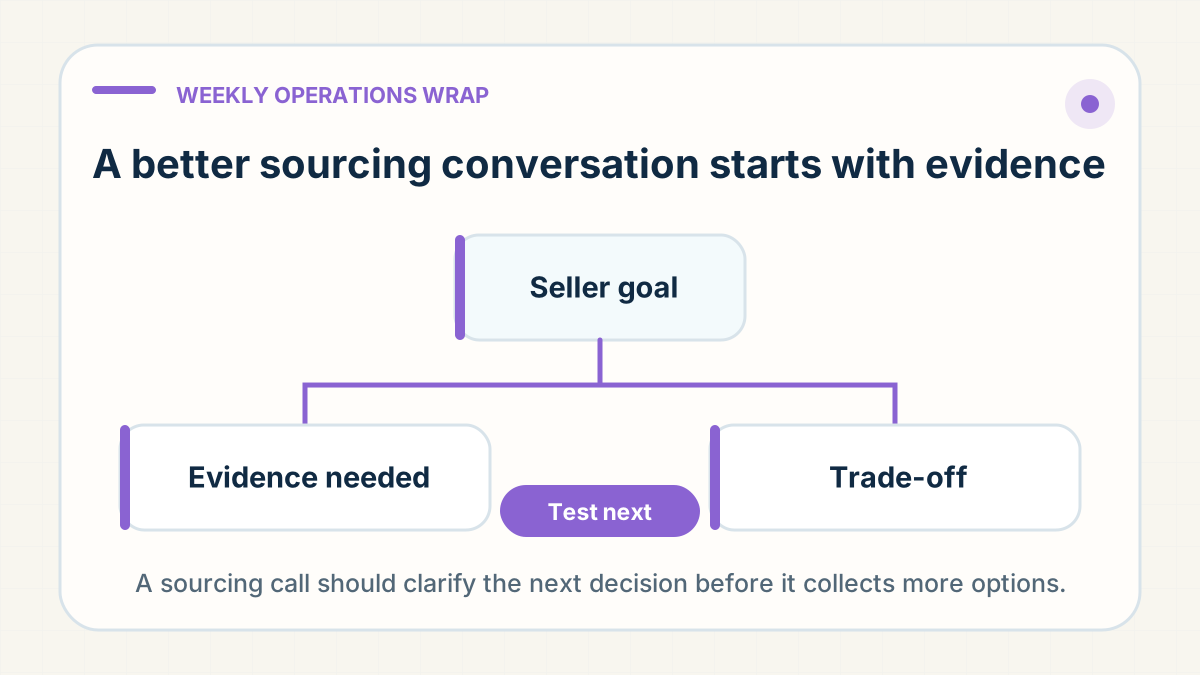
Use a sourcing conversation to identify the one decision that should be tested next. It may be material, fit, product eligibility, packaging or delivery fit. Solving that question first is usually more valuable than collecting another long list of options.