From the operations archive
The product took off before the factory was ready
A beauty range accelerated faster than its factory could replenish every variant. The storefront saw momentum; the supplier saw a production queue; fulfilment saw uneven stock and customers whose promises had already started. The attractive response was to place one much larger order and assume the factory would catch up. The evidence did not yet support that confidence.
The team chose smaller daily batches while chasing a firm production commitment. That cost more attention and made the shortage visible, but it reduced the chance of selling stock that existed only in a forecast. Once output and demand were clearer, a larger purchase and better pricing could be negotiated from evidence rather than panic.
The “viral prep” happened in the operating details: an approved version, current sellable stock, confirmed inbound quantities, release capacity, fallback customer messaging and one owner for factory updates. Nobody can schedule virality. A seller can make the response less fragile by deciding in advance what will pause, what can substitute and which promises must change when demand outruns supply.
About this story: it is an anonymised composite of client situations. It broadens markets and product families and leaves out identifying details. Read the dated field note: When a product takes off faster than the factory can keep up.
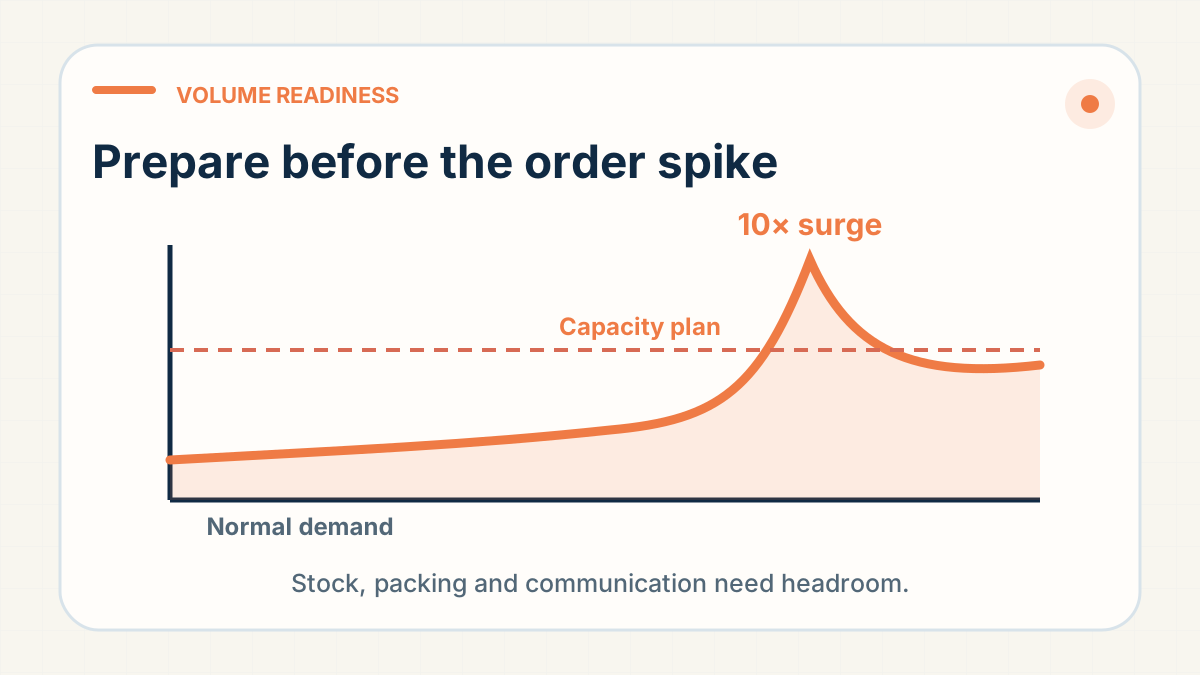
A video takes off, an influencer collab lands, or an ad finally clicks, and orders jump from a trickle to hundreds a day almost overnight. It's the outcome every seller wants, and it's also when fulfilment problems show up fastest. Whether it goes smoothly usually comes down to what got set up in the days before, not how fast anyone scrambles during it.
What actually breaks during a spike
Stock runs out mid-launch because nobody confirmed real factory availability at the new volume, only at the old one.
Quality drops because a rushed reorder skips the inspection step that normally happens.
Processing time stretches because the warehouse wasn't staffed for the new order volume.
Communication breaks down because there's no single point of contact who knows the full picture, so questions bounce between people.
Customer complaints spike because delivery times quietly slip and nobody told the seller until customers started asking.
None of these are really about the product being popular. They're about capacity planning not happening before the demand showed up.
What to do before you launch something that might spike
Tell your fulfilment partner the launch is coming, with a realistic estimate of daily order volume, even if it's a guess. A heads-up two days out is far more useful than a message after orders start piling up.
Confirm actual factory stock or production capacity at the new volume, not just the volume you've been ordering so far.
Ask whether pre-stocking a buffer makes sense for this specific product, given the timeline and expected demand.
Get a straight answer on realistic processing time at the new volume, not the number that applies to normal daily orders.
Set an internal escalation contact, so if something starts going wrong mid-launch, you're not waiting in a general queue.
Prepare a written launch-readiness brief
Before the campaign goes live, give the fulfilment team a written readiness brief: expected range, timing, approved product version, sellable and inbound stock, release capacity, substitution rule and the customer message if demand exceeds supply. Preparation begins with a shared state, not a hopeful forecast.
If you've got a launch, collab, or ad campaign that might spike orders, tell us before it goes live. It's the single best thing you can do to make sure fulfilment keeps up with the moment instead of becoming the bottleneck.
The rule: Prepare the controls that still work when demand exceeds the forecast: approved version, sellable stock, confirmed inbound units, release capacity, substitution boundary and customer message. Do not call unreserved factory output available stock or promise a surge that has not happened yet.