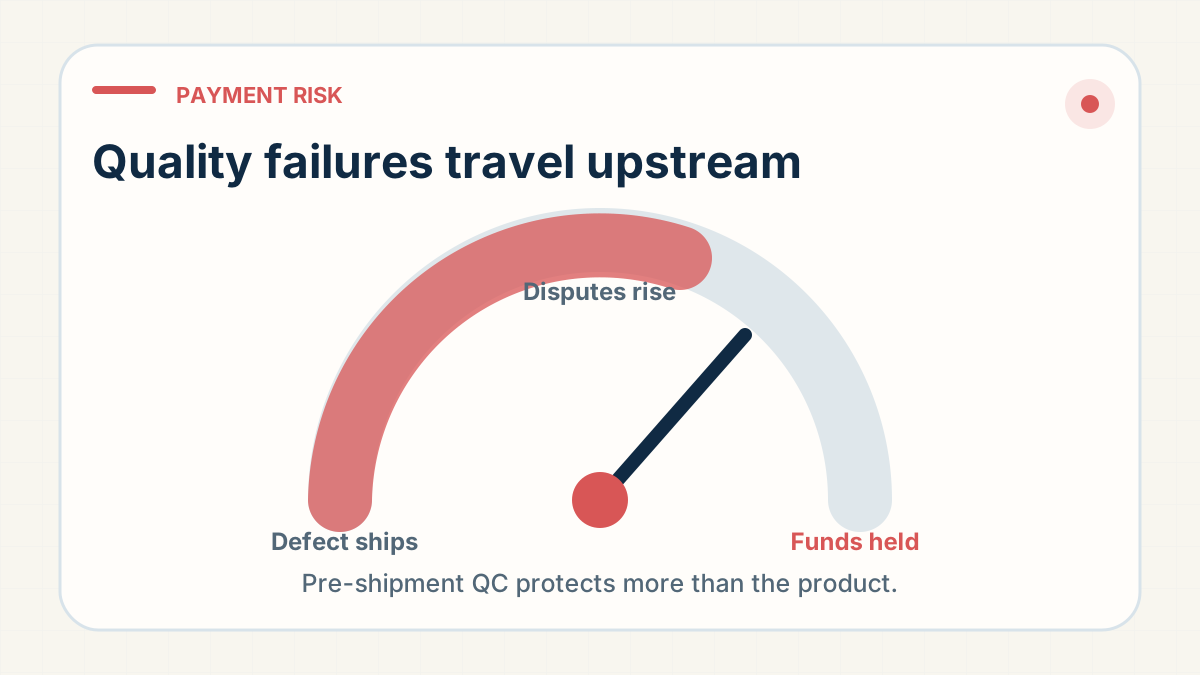
Repeated disputes, chargebacks or complaints can increase a store's payment-risk exposure. Each processor and merchant account has its own agreement, review process and remedies, so no general article can promise a specific outcome, reserve amount or hold duration.
Prevent disputes with an evidence trail
Match the listing to the approved product, use accurate sizing and delivery expectations, preserve product and packing evidence, and keep customer communications clear. These steps do not eliminate disputes, but they make a complaint easier to understand and respond to.
Treat a pattern as an operating signal
If the same complaint repeats, separate product defects, packing damage, route problems, misleading listing details and support gaps. Fix the underlying release rule instead of only issuing a one-off remedy.
Use your own payment terms
For an account review, consult the processor's current merchant agreement and request account-specific guidance. Do not rely on a generic timeline or promise about funds, disputes or account access.
The commercial risk travels beyond the refund
Picture a growing seller of small electronic or personal-care goods. One customer reports a cosmetic issue, another says a function does not match the listing, and a third opens a payment dispute before support has finished collecting evidence. Each case may be affordable on its own. Together they can look like a pattern: the product promise, release check and remedy process are no longer producing consistent outcomes.
The tension is easy to miss because the warehouse sees units while a payment processor sees ratios, complaints and the merchant's ability to explain fulfilment. Replacing individual items may calm the queue without correcting the batch, listing or packing cause. At the same time, fighting every case can create slower responses and weaker records. Either reflex can increase the risk surrounding future payouts.
Work backwards from what a dispute will ask for
For every recurring complaint, connect four records: what the listing promised, which product version was approved, what the pre-shipment evidence shows, and how the customer was answered. Then classify the pattern before choosing a remedy. A defect across the same version calls for a hold and batch review. Damage concentrated on one route calls for a packing or carrier check. Confusion around size, colour or function may begin in the listing rather than in manufacturing.
This classification matters because a processor review often asks whether there is a real, controlled operation behind the store. Supplier invoices, fulfilment terms, tracking, customer correspondence, inspection records and a written corrective action tell one coherent story. A folder of unrelated screenshots does not.
What to fix before the account is under pressure
- Keep an approved reference for the version customers are buying and make changes visible.
- Define which defects stop release and what evidence the checker must capture.
- Give support a policy for investigate, replace, reship or refund decisions, including who may approve exceptions.
- Review complaints by cause and batch, not only by total ticket count.
No checklist guarantees how a processor will treat an account. It does give the seller something more valuable than reassurance: evidence that the underlying product and fulfilment risk is being found, owned and reduced.
Review that evidence while payouts are normal. Waiting for an account request turns routine record-keeping into a crisis and makes it harder to show when the pattern was first noticed, which stock was affected and whether the corrective action actually reduced later complaints.
The rule: Build the processor response from reconciled orders, supplier and fulfilment records, customer communication and the corrective action taken. Do not manufacture certainty or documents after the dispute; the defensible account is the one whose product, payment and shipment evidence already agree.
Want a product checked before it ships?
Tell us what to check on WhatsApp (+86 178 4666 9989), and we can build those product, packaging and quantity checks into the fulfilment process.
Request Quality Check on WhatsApp →