An exit interview is a lead, not a root-cause report
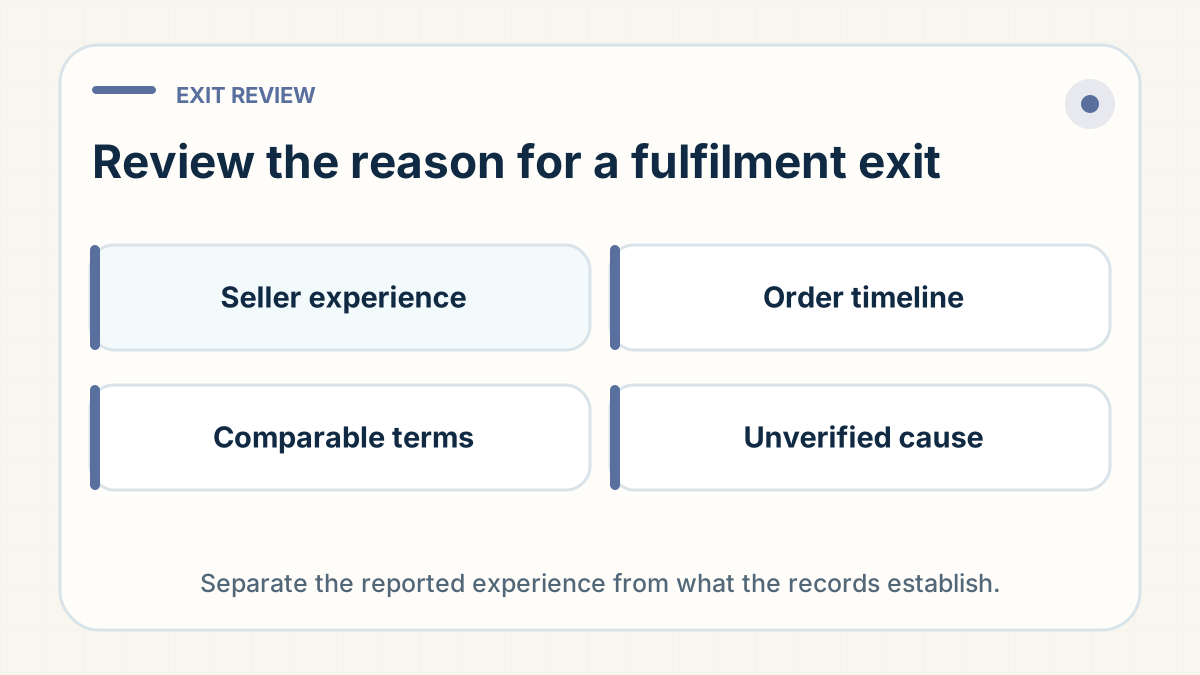
A seller may accurately report late customer deliveries, a higher quote, poor communication or weak margin. That statement matters because it describes the experience that changed the relationship. It still does not show where time was lost, whether two quotes covered the same service or whether a later process change prevented recurrence. Calling the feedback a complete diagnosis creates false confidence in whichever lesson sounds most convenient.
Two real exits show why the distinction matters
One seller who moved fulfilment in-house cited delayed customer deliveries and higher pricing. The delay root cause, corrective owner and post-change outcome were not established. This case remains unresolved; the stated reasons for leaving do not demonstrate a successful correction.
In a separate conversation, another seller confirmed that an alternative fulfilment quote was cheaper, yet the product still appeared unprofitable after advertising spend. That supports a narrower conclusion: the lower quote did not make that particular product test viable on the seller's stated numbers. It does not prove fulfilment price was irrelevant, that every competing quote is incomplete or that no different product strategy could work.
Build the evidence timeline
For a delivery complaint, reconstruct the order journey using the milestones that actually existed: payment, release to fulfilment, purchase or stock allocation, warehouse receipt, packing, carrier acceptance, export, destination handoff and delivery. Record the first point at which the order exceeded its agreed window. If a milestone is missing, mark it unknown rather than assigning the delay to the warehouse, supplier, carrier or customer by instinct.
Compare cost on the same scope
Put both offers on one line-item basis: product specification, inspection, packaging, pick and pack, payment charges, chargeable weight, shipping service, duties or tax arrangement, claims handling and expected delivery window. Then add acquisition cost, refunds and support cost to the seller's contribution margin. A cheaper fulfilment quote can be genuinely better and still leave the product unprofitable; both facts can be true.
Turn a supported cause into corrective action
- State the incident and customer effect without softening it.
- Name the supported cause, or state that root cause is not yet established.
- Assign an owner and a dated action to the failed control.
- Define how the change will be checked: a cohort, sample, milestone report or recurrence window.
- Keep commercial changes separate from operational corrections unless the evidence links them.
Closure requires verification, not better wording
An apology, an internal share or a new classification label is not proof that a delivery problem was corrected. A responsible closure note says what changed, which later orders were checked, over what period and what remains uncertain. If that evidence does not exist, the honest status is unresolved. Ask for the missing evidence before relying on a claimed improvement.
What this guide can and cannot claim
The two exit conversations are authentic and anonymised, and their stated reasons are preserved. They demonstrate why delivery evidence, like-for-like cost and product economics must be reviewed separately. They do not establish a root cause for the delayed parcels, prove a later fix or support a promise that the incident cannot recur. These two historical cases should not be relied on as proof that a similar problem has been prevented.
How we kept it anonymous
This guide combines two separate anonymised client situations. No statements are merged between the sellers. Client and store identities, exact products, contact details and shipment records are omitted; broad commercial context is retained only where it explains the operating method.
The rule: Before staying with or changing a fulfilment partner, compare the delayed order milestones and the full scope of each quote. Ask what cause was established, what action followed and which later orders were checked. The historical cases here do not establish a verified correction.
Have a specific fulfilment question?
Send us the product, destination and order context on WhatsApp (+86 178 4666 9989), and we'll answer for that order instead of giving a generic estimate.
Ask Questions on WhatsApp →