The situation
The new relationship began with old promises
Start the handover from a failing agent while you still have access, not after communication stops. The seller did not arrive with a clean first order. More than 200 customers had already paid and their orders were still unshipped by the previous agent. Pricing had changed from day to day, communication had deteriorated and the commercial relationship had collapsed before the operational records were untangled.
Every order was already carrying a clock. Customers were waiting, refund windows were moving and the seller could not safely promise recovery until someone knew which parcels existed, which had tracking and which had never progressed beyond a record.
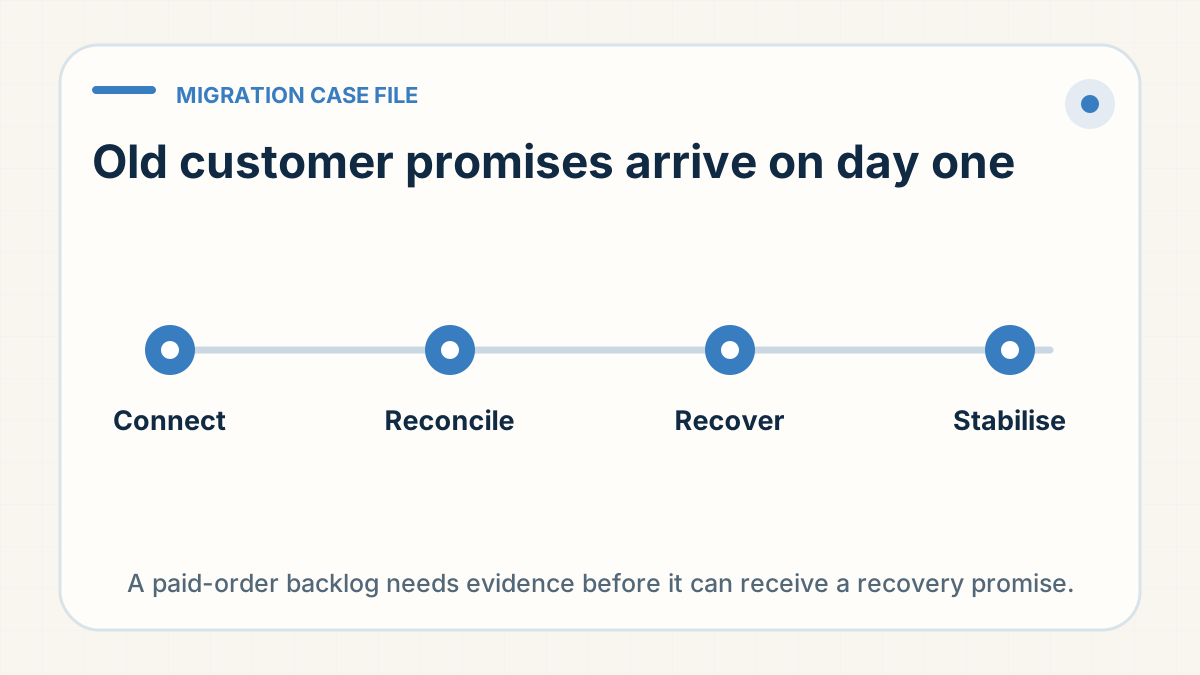
- 01Connect the storeCreate visibility on day one instead of waiting for normal onboarding.
- 02Reconcile the backlogSeparate usable tracking from incomplete or unverifiable records.
- 03Choose order by orderChase, replace, re-source or refund while options still exist.
- 04Stabilise the new workflowConsistent quoting and records prevent the original failure repeating.
Day one was a reconciliation exercise
The store was connected through collaborator access on the same day rather than placed into a normal onboarding queue. That created visibility, but visibility was not the same as truth. The order export still had to be reconciled against whatever tracking and supplier evidence had survived from the former workflow.
The queue was divided into three practical states: an order with usable shipment evidence, an order that appeared outstanding but could still be verified, and an order whose records were too incomplete to recover. That separation stopped every customer being given the same vague update.
Missing history cannot be manufactured
A new agent inherits the quality of the previous agent's records. Where a supplier reference or tracking trail did not exist, we could not recreate it by asking harder. Some products had to be sourced again and some decisions had to restart from the beginning.
That cost time the waiting customers could not get back. The honest migration promise was therefore not that every old order would be saved. It was that the gaps would be identified quickly enough to choose between chasing, replacing, resourcing and refunding while those options still existed.
What changed operationally
- Store access was connected and checked on day one.
- The inherited queue was reconciled rather than imported as though every record were equally reliable.
- Products were re-sourced where the original supplier trail could not support recovery.
- Quoting was stabilised so the reason for leaving the previous agent did not repeat.
- The backlog moved into a controlled recovery workflow while customer-refund options were still open.
What we know about the results
The case began with the stated backlog and a same-day store connection, followed by reconciliation and separate decision paths for incomplete orders. A reliable final count of recovered, replaced or refunded orders is unavailable. This is a migration-triage case, not a claim that every inherited order was saved: the unresolved orders were separated into actionable states before customers received a blanket promise.
The migration lesson
Do not wait for communication with a failing agent to stop completely before preparing a handover. Export orders, tracking, product references, open balances and supplier information while access still exists. Every silent week removes recovery options that a new partner cannot buy back later.
Where the inherited queue uses Shopify, separate a request to change or cancel an exact item from confirmation that the service stopped physical work. The Shopify order-handover controls give that check without turning this case into a promise that every old order can be recovered.
How we kept it anonymous
This case is based on reviewed migration and onboarding conversations. The backlog is described as a rounded band. The seller, previous provider, customer records, store, products, tracking references and destinations are omitted.
Facing a similar operating decision?
Send the product category, destination and current order stage on WhatsApp (+86 178 4666 9989). We'll tell you what we can confirm, what is still uncertain and the smallest useful next step.
Discuss Your Situation on WhatsApp →