From the operations desk
The situation
Wednesday was a reminder that necessary information can still be handled in the wrong place. Fulfilment depends on accurate names, addresses, contact details and account permissions. That operational need does not make every group chat an appropriate place to repeat the full information.
Use the smallest useful audience
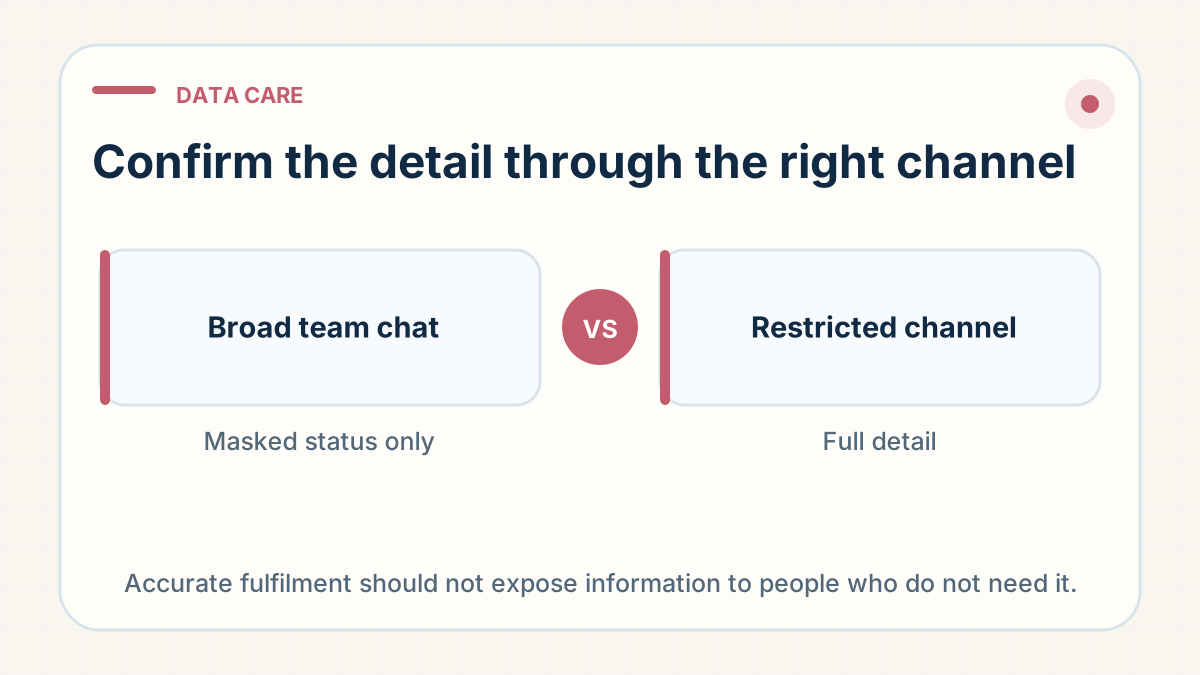
A team group usually needs to know that an address is confirmed, that a correction is pending or that access has been granted. It rarely needs the complete personal record or a password. Full details should stay in the restricted system or private channel where the authorised people can use them, while the operating group receives only the status and the minimum masked reference needed to coordinate the work.
What a safer confirmation looks like
Instead of pasting the full record, confirm a non-sensitive fragment such as a postcode ending or the last few digits of a phone number, then complete the check privately. Store access should use platform-supported collaborator or permission flows rather than shared credentials. If sensitive information appears in the wrong channel, the response should focus first on containment, acknowledgment and a clear change to the process.
New seller desk
Several new enquiries moved beyond a price question into sample proof, stocking and store workflow. One anonymised health-and-fitness example needed the team to connect the approved reference, quality evidence, likely replenishment and eventual order handoff without publishing the exact item or seller. That is a useful privacy pattern for operational writing too: preserve the category and decision, remove the identity, link, unusual destination, exact volume and traceable message history.
US, UK and European destinations recurred across the pooled intake. Disclosed operating scale ranged from single-digit tests to the low tens of orders. That is enough context to explain why sample evidence, packed shipping cost and a workable reorder path mattered, without publishing a number that could identify a specific store.
Use the smallest channel that can do the job
Privacy is part of fulfilment quality. The same discipline used to prevent the wrong item reaching a customer should prevent the wrong people receiving customer data. Accurate work and careful data handling are not competing priorities; they are the same promise of responsible operations.