Field note
The situation
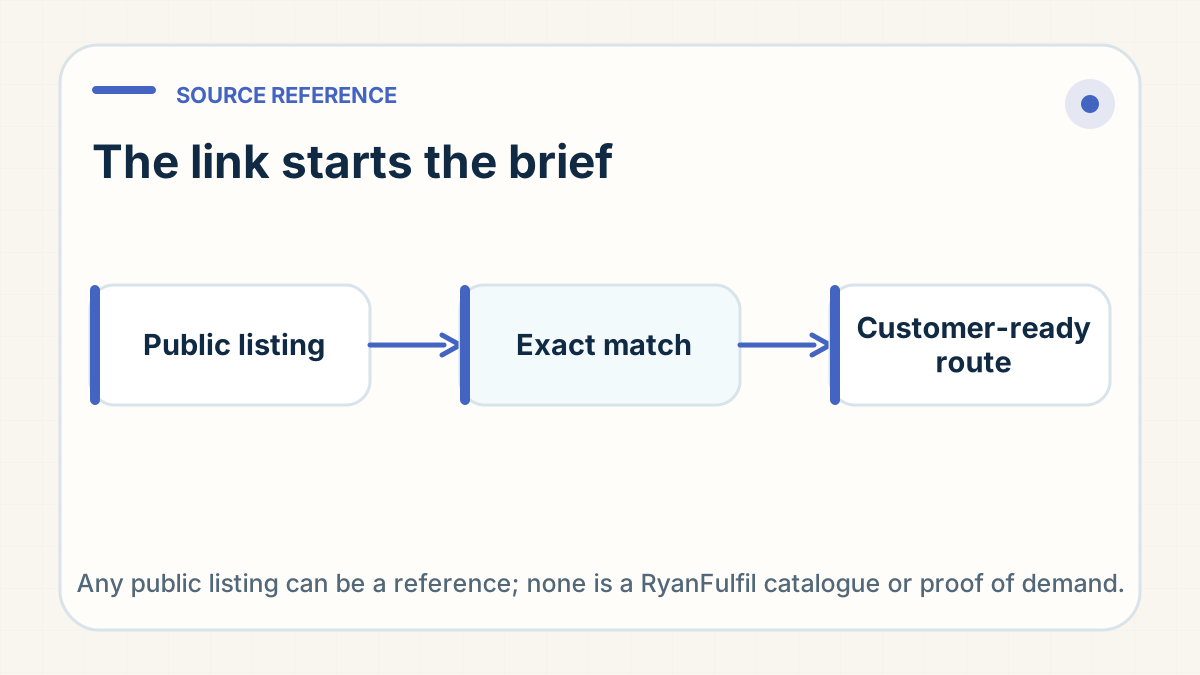
Treat a product link as the starting reference for a brief, not as the supplier, the catalogue or proof of demand. Wednesday's newer conversations arrived with references from several public marketplaces, store pages, photos and partial descriptions. Others asked for a catalogue, a list of popular products or the items that were "ours". The confusion is understandable: many sellers first meet a fulfilment agent after buying from a marketplace, so they assume the next supplier relationship starts with another shelf of ready-made listings.
To turn a reference into something a supplier can quote, see how to write a product sourcing brief suppliers can quote.
RyanFulfil is the operating route, not the shelf
A fulfilment partner does not need to own the inventory shown on a reference page. The link tells the team what the seller is trying to match. Sourcing then checks the exact version, supplier availability, material, included parts, packing, domestic movement, quality evidence and destination route. The result may come from a factory or suitable supplier rather than from the page the seller sent.
That is why a public Amazon, Temu, CJ, AliExpress, Alibaba, 1688, Taobao or other marketplace listing can all be useful starting references without becoming a promise to buy from that listing, match its promotional retail price or reproduce it exactly. A clear photo can work too, but every missing property becomes a question rather than a fact.
Turn the link into a matchable specification
Record the variant, dimensions, materials by component, finish, functions, included accessories and customer-ready packaging. Mark which details are essential and which can change. If the public page contradicts itself, the contradiction belongs in the brief. Do not resolve it by silently choosing the cheaper interpretation.
Quote the full clock, not only carrier transit
The same threads showed why delivery time starts before the parcel is shipped. Made-to-order or customised products can need production, movement inside China, receiving and QC before carrier transit begins. A fast international route does not erase that first half of the clock. Give the seller the production or availability state, warehouse preparation and carrier estimate as separate windows.
Sourceability is not demand validation
RyanFulfil does not publish other clients' winning products or private sales research. A seller who is still choosing should shortlist one or two candidates. The operations team can assess whether the version is identifiable, sourceable, packable and practical to fulfil; the seller still has to validate whether customers want it and whether the economics survive acquisition and returns.
Turn the link into a quotable specification
Bring a reference, not an expectation that the reference page is the supplier. Turn it into a complete product-and-route brief, separate what is matched from what is still provisional, and test demand on your own store. The link starts the sourcing conversation; it does not finish it.