Field note
What was happening
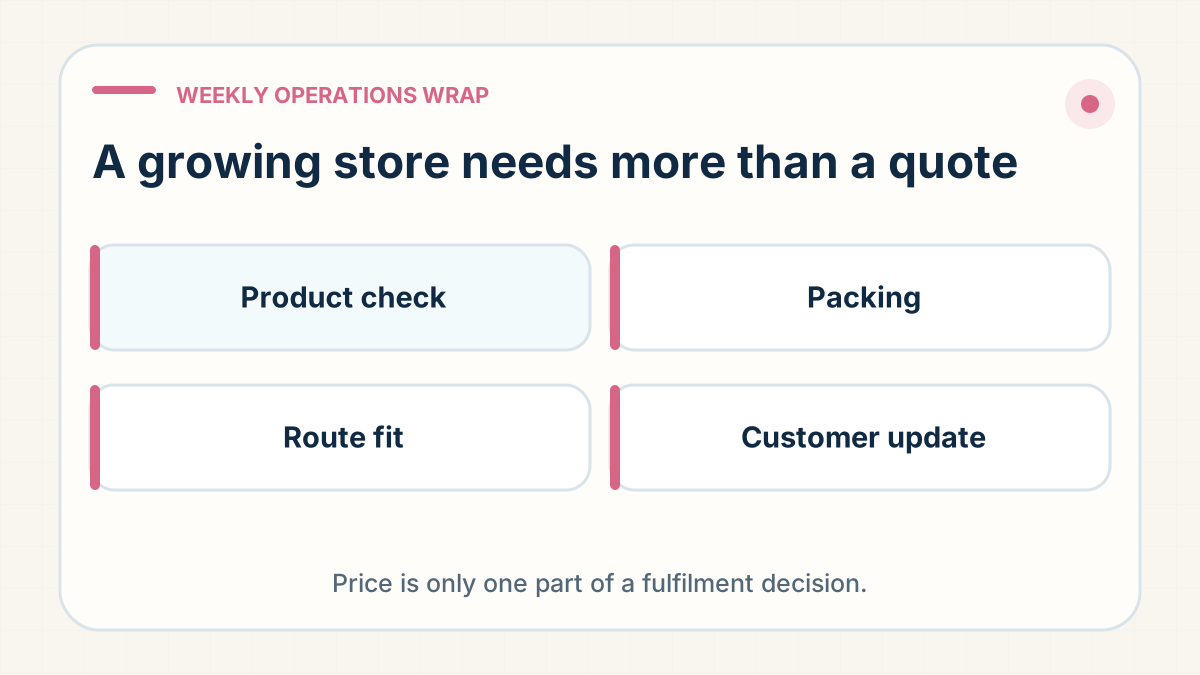
The week included growing sellers whose questions had moved beyond a first unit quote: they needed to know whether an approved version could be replenished consistently, whether the intended packing still fit the route, and how customer updates would work when a parcel changed hands. At this stage, an answer is only useful if the decisions connect.
Growth changes the questions
As a seller moves beyond a first product test, the questions become connected. A product price must still fit the specification; packaging has to work at the intended volume; a route needs to suit the destination and item; and customer communication should reflect real operational milestones. Looking at any one of these in isolation creates avoidable surprises later.
Use calls to surface the dependencies
Before a call, state what you need to prove next and which requirements cannot change. Ask your partner to identify any supplier, sample, stock or route dependency before you approve the next step.
Technology still needs an operating decision
Questions about store or ERP connections came up alongside the commercial questions. Dianxiaomi can be one internal order-management step between a connected store and the fulfilment workflow, but it does not replace product approval, a release rule, a packing instruction or a realistic customer update. Those decisions should be agreed before automation is expected to carry the process.
Stock planning needs the variant mix
A high total stock count can coexist with paid orders blocked by one unavailable size, colour or product version. The useful report separates sellable, reserved, inbound and problematic units by SKU, then links each shortage to the affected orders and an approved response.
Overseas inventory is a model, not a shortcut
Moving stock closer to customers can reduce the per-order delivery journey, but it adds inbound freight, receiving, storage, local fulfilment, replenishment and cash-flow decisions. It makes sense only when demand is stable enough and the SKU range is concentrated enough to support those commitments.
The takeaway for sellers
When comparing fulfilment support, ask how product checks, packing, routing and customer updates connect. The better answer is usually a clear process with visible limits, not the most confident standalone quote.