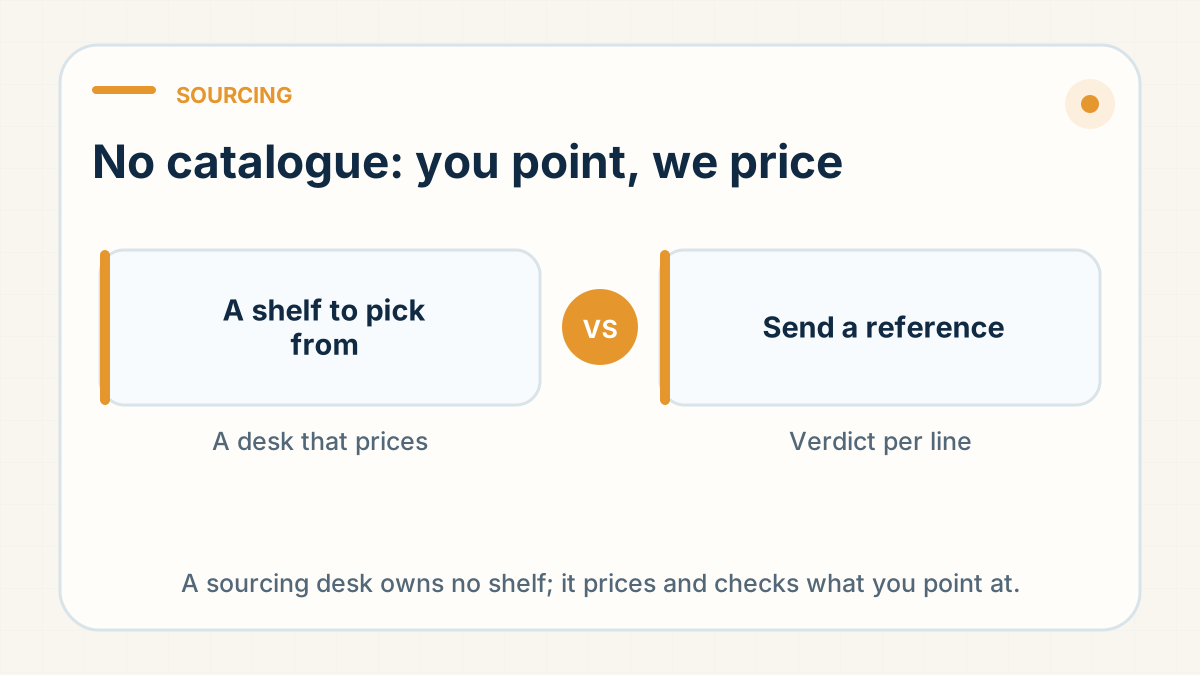
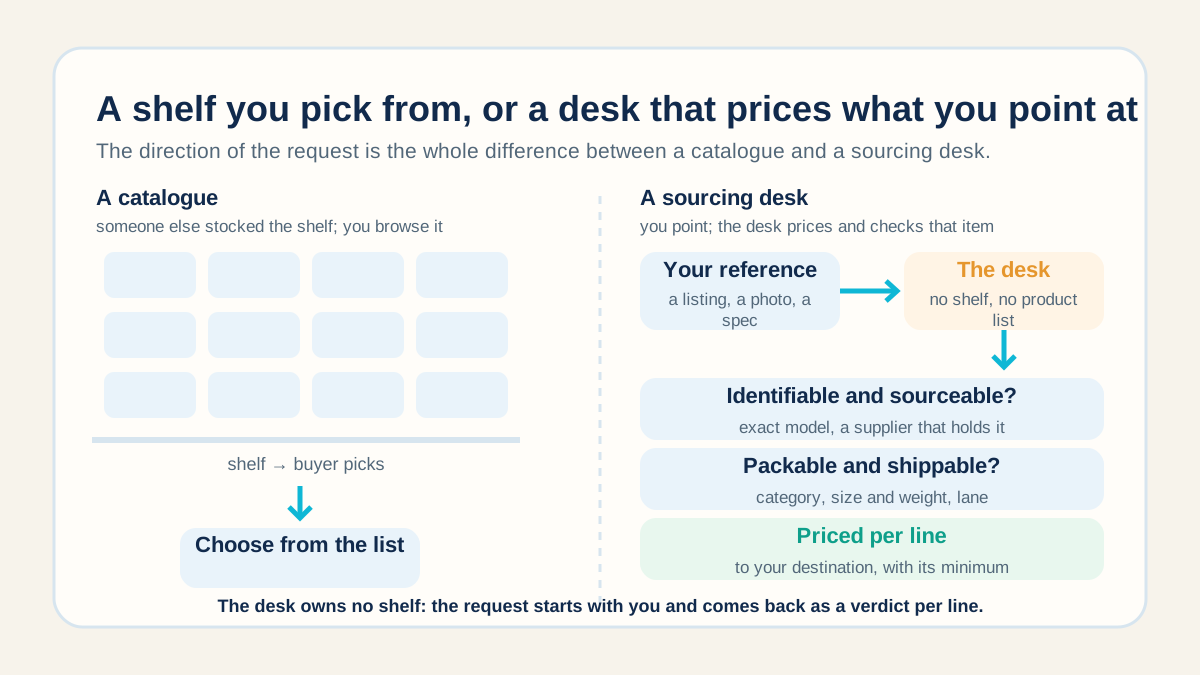
No — a sourcing desk has no catalogue and no product list, because it does not own the shelf: it identifies, prices, checks and ships whatever reference you point it at. What stands in for a catalogue is a large public consumer marketplace: browse it, send the closest one or two links, and back comes a specification match and one all-in landed figure per product line. What a sourcing desk will not hand over is a list of what to sell.
Does a sourcing agent have a product catalogue I can browse?
No, and the reason is structural, not a matter of size. A sourcing desk holds no stock of its own, publishes no range and buys to order, so there is nothing to page through — the starting point has to come from you. The ask arrives in three shapes: a browsable site in the seller's own language, a chat request for a product list of every colour, size and shape, and a request for a recommendation of what is selling. The pattern turned up on most of the thirteen complete days to 11 September 2026.
Between 7 July and 14 August 2026 this desk read 355 public supplier requests in sourcing communities, and 127 named no product at all — the same gap in different clothing, counted in what 355 supplier requests reveal. Those tallies measure what buyers wrote publicly, not what sells.
If there is no catalogue, where do the products come from?
From the reference you send, tested against what a factory can make and a lane will carry. The first thing asked for in a new conversation is the product link, because a listing pins the attributes a quote depends on — size, material, construction, included parts. Send nothing and there is nothing to check against: the match is made against the approved specification you supply, so what nobody wrote down can only be reported on appearance.
A link is where the work starts: it is a sourcing reference, not a catalogue, and the specification still has to be written out.
How should I filter a listing before I send it?
Treat one large consumer marketplace as the stand-in catalogue and filter it on review score first — the advice is to filter for listings rated at least 4.6 out of 5, then send the closest one or two links. The order is not placed there: that marketplace is the reference, the item is sourced against it rather than bought from that page, and the parcel leaves the desk's warehouse.
A wholesale platform works the same way, with one correction: its headline figures usually exclude freight, so ask for the delivered figure before setting it against an all-in quote — the trade-offs sit in which supplier platform fits. Sellers who cannot read a Chinese-language supplier site meet this first; the answer is not a translated catalogue but a marketplace you can read.
Can you tell me what is selling well right now?
No, and the refusal is the same one that will later protect you. What other clients sell, and what sits in their warehouse space, is not disclosed — a seller who asks to see an existing client's shop is declined on the grounds that keep their own products out of the next conversation.
Nor does the desk pick winners: no viral list, no trending selection, no product of the week. It assesses the product you chose — whether that version is identifiable, sourceable, packable and shippable, and what it lands at; whether that figure leaves you a margin stays with your store. A borrowed winner arrives without its advertising, its margin or its lane, so build a repeatable product-research routine.
What do you check once I send a reference?
Four things are checked: that the item can be identified precisely enough to buy, that a supplier will make or hold it, that it survives packing, and that a lane accepts it for your destination. Quantity per shipment and destination country come before the figure, which is why a request for a full colour-and-size list comes back as two questions of its own. A custom-only producer answers the same way: no catalogue, only a core range plus a feasibility check on anything outside it.
What comes back is one all-in figure per product line — product, packing and handling, and shipping in a single number, with any separate line such as branded packaging stated on the quote rather than added later. Reading that figure is its own skill, set out in how to read a landed price quote.
What if all I have is a photo, or a long list?
A photograph or a short video is a legitimate starting point; what it cannot do is settle attributes nobody stated, so what is visible gets matched and the rest comes back as unmatched. Turning a picture into something quotable is the job of a sourcing brief suppliers can quote.
A long list is worked in small batches: send the top one or two, then add lines as orders arrive, because the products with live orders go first. A long pre-order list may carry a small refundable per-product sourcing fee, and the interim route is to list the marketplace product with standard shipping and let demand choose the next line — the first-order sequence is in the beginner's route to an agent.
Can you set up a catalogue with automatic stock and price sync?
No — a store integration carries orders and tracking, not a product feed. On a selling marketplace such as TikTok Shop, eBay or Etsy the default is a controlled order file, not a connection, with tracking sent to you to enter yourself. The ask does come up: a ready-built shop of thousands of listings with categorisation and automatic stock and price sync is a different business. What the seller keeps is the listing itself: its categories, its copy and every claim on it.
What each store connection does carry, platform by platform, is set out on the FAQ hub — read it before you plan a launch around a stock feed.
Which products will you not source at all?
There is no approved-product list, only named exclusions. Brand-name and lookalike goods stop a conversation fastest — a request for a branded appliance comes back as a request for an unbranded equivalent — and a regulated category gets its lane and paperwork checked before any price. Which side of that line your idea sits on decides whether it can be made at all, and the line is drawn in what a fulfilment agent can ship.
Three things to fix before you send your first reference
A desk with no shelf needs three inputs from you, each one removing a round of messages:
- One link per variant — the colour, size and model you mean, not a family page covering them all.
- The quantity per shipment and the destination country, because both move the price and either can decide whether a lane exists.
- The attributes you will not compromise on, written down, so the match can report which were confirmed and which were not.
Then ask for the specification match in writing before the listing goes live: which attributes were confirmed with the supplier, and which were matched on appearance only. That second group is what a catalogue would have hidden, and the written match is what your product description should be built from. The steps around it sit on the how-it-works page.
Need a product checked before you spend on ads?
Send us the product link and destination on WhatsApp (+86 178 4666 9989). We will help you assess sourcing, packing and shipping before you commit.
Get Sourcing Quote on WhatsApp →