Are 1688 and Alibaba.com the same?
No. Alibaba.com is an export marketplace. Listings are written for overseas buyers, usually in English, and the seller expects to quote an international shipment, produce export paperwork and accept payment from abroad. 1688 is a domestic Chinese wholesale marketplace. Listings are written for buyers inside China who pay with a domestic method, receive goods at a Chinese address and arrange onward movement themselves.
That difference changes what a supplier's price may cover. Check whether each quote includes packing, movement inside China, payment costs and international delivery. A lower listing price is not a discount on the same service when the product or delivery scope differs.
Is 1688 cheaper than Alibaba?
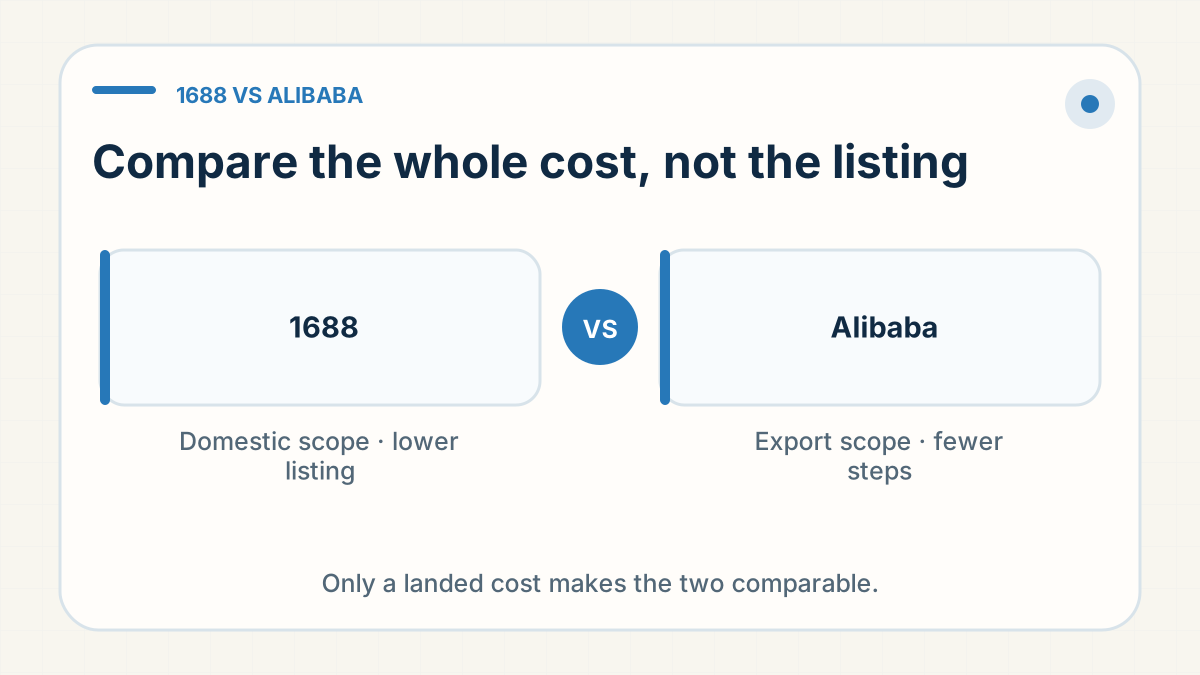
Not on listing price alone. Placing a 1688 price beside an Alibaba price and treating the gap as savings is the most common error in a sourcing spreadsheet. To compare them honestly, carry both prices to the same place: your customer's door.
- Movement inside China from the supplier to wherever the order is consolidated.
- Inspection, repacking or relabelling wherever the factory carton is not what you want a customer to receive.
- International freight on a service the product and destination actually qualify for.
- Duty, import tax and any compliance the destination market attaches to that product.
- Payment conversion, and any intermediary handling the domestic platform cannot do for a foreign buyer.
Once those lines are present, the ranking between two listings often reverses. A landed comparison is the only one worth making a decision on, and it is the number that decides whether a product works at all.
Does 1688 have lower minimums than Alibaba?
An Alibaba supplier quoting export orders usually states a minimum that reflects a production run and an international shipment. A 1688 supplier is often willing to sell far smaller quantities, sometimes a single case pack, because the buyer is expected to be domestic and the parcel is travelling a short distance at low cost.
That flexibility is real and it is genuinely useful for testing. It is also the point where the cost profile inverts: a small 1688 quantity carries the same international freight overhead as a larger one, so the per-unit landed cost of a tiny test batch can be considerably worse than the listing suggests. Small minimums lower the cash at risk, not necessarily the unit economics.
Movement inside China is the step people forget
A domestic listing assumes someone in China receives the goods. For a dropshipping seller abroad, that receiving step has to exist somewhere, and it is where several separate orders normally become one shipment. Consolidation is also where mismatches surface: a wrong variant, a damaged carton or a supplier who shipped a different version than the listing showed.
Treat that address as an operational checkpoint rather than a formality. It is the last point where a problem is cheap to fix. After the international leg has started, the same problem costs a return, a reship or a customer refund.
Specification, samples and quality control
Neither platform verifies that a listing photograph matches what ships. Both host trading companies alongside manufacturers, and on a domestic marketplace the listing is often shorter, because a local buyer is expected to ask. The practical response is the same on either platform: define the product in observable terms, then check it against the goods rather than against the listing.
- Record material, dimensions, weight, included components and packaging as things a receiving check can confirm.
- Name the exact variant and the version, not the listing title.
- Ask for current photographs of actual stock before a full order, and a physical sample where fit, finish or function must be approved.
- Decide in advance which differences are acceptable and which make the batch unusable.
Can a merchant buy from 1688 without an agent?
Some overseas merchants can arrange payment themselves. WorldFirst's Singapore help centre documents paying for 1688 orders through World Pay using linked accounts. Check the provider's current availability and verification requirements for your situation; do not assume every overseas buyer has the same payment options.
Being able to pay does not settle the fulfilment job. Confirm the exact variant and available stock, any replenishment minimum or lead time, the China receiving point, agreed product checks, packing and international route.
Already chosen a supplier? Ask RyanFulfil to confirm intake and the receiving and fulfilment scope before sending goods. Need sourcing as well? Include that in the enquiry. Start with the product reference, required quantity, destination and the work you need handled—not customer addresses or private order records.
Where an agent changes the answer
An agent's value is the China-side work it agrees to own: supplier follow-up, receiving, agreed product checks, repacking and dispatch coordination. Needing help with those tasks is different from needing someone to make a payment. Confirm the scope rather than assuming every service is included.
It is not automatic value. An agent is worth using when the volume of exceptions justifies someone owning them — variant checks, repacking, split shipments, damaged cartons, supplier follow-up. For a single small test with no repeat intent, the coordination may cost more than it saves. Ask what an agent is accountable for before asking what it charges.
How to choose between them
- Testing an unproven product, small quantity, one destination: compare both platforms on landed cost, not listing price, and expect freight to dominate.
- A proven repeating product: the domestic platform usually wins once consolidation and inspection are already happening for other orders.
- Regulated, branded or certification-dependent products: start from what the destination market requires, then find the platform and supplier that can evidence it.
- Any product where a wrong version would be expensive: prioritise the option where a sample and a receiving check are realistic.
Choose the buying workflow before the platform
The question is rarely which platform is cheaper. It is which supply option delivers an acceptable product to a paying customer at a landed cost that still leaves a margin, with a way to catch a problem while it is still cheap. Compare the whole cost, verify against the goods, and let the repeat rate decide how much operational capability is worth building.
Need a product checked before you spend on ads?
Send us the product link and destination on WhatsApp (+86 178 4666 9989). We'll check sourcing, packing and shipping with you before you commit.
Get Sourcing Quote on WhatsApp →