Field note
The jewellery brief was not quote-ready
The enquiry was for a custom jewellery piece, but the seller had not yet fixed the metal grade, finish, stone details, packaging or intended commitment. A supplier could have returned a fast price for something called a silver ring; that number would not have established whether the quoted object matched what the seller hoped to list.
The seller was still in exploration rather than repeat fulfilment. At that stage, a minimum order, tooling charge or material choice can decide whether the product is testable at all. The useful work was therefore to narrow the question before asking a factory to sound certain.
A fast price would have priced an imaginary product
Jewellery makes vague language expensive. "Silver", "plated" and "silver-coloured" describe different materials, wear behaviour and costs. If the answer were rushed, the seller could build claims and photography around one version, pay for another, and discover the difference only through customer complaints.
Turn the enquiry into missing decisions
A quieter day is a good reminder that not every enquiry deserves an instant certainty. A custom jewellery enquiry, for example, needs a material choice, minimum-order discussion and supplier confirmation before a useful answer exists. Material cost and production time are part of the product decision, not an afterthought.
Being clear about what is not yet known creates a better working relationship than giving an answer that later needs to be withdrawn.
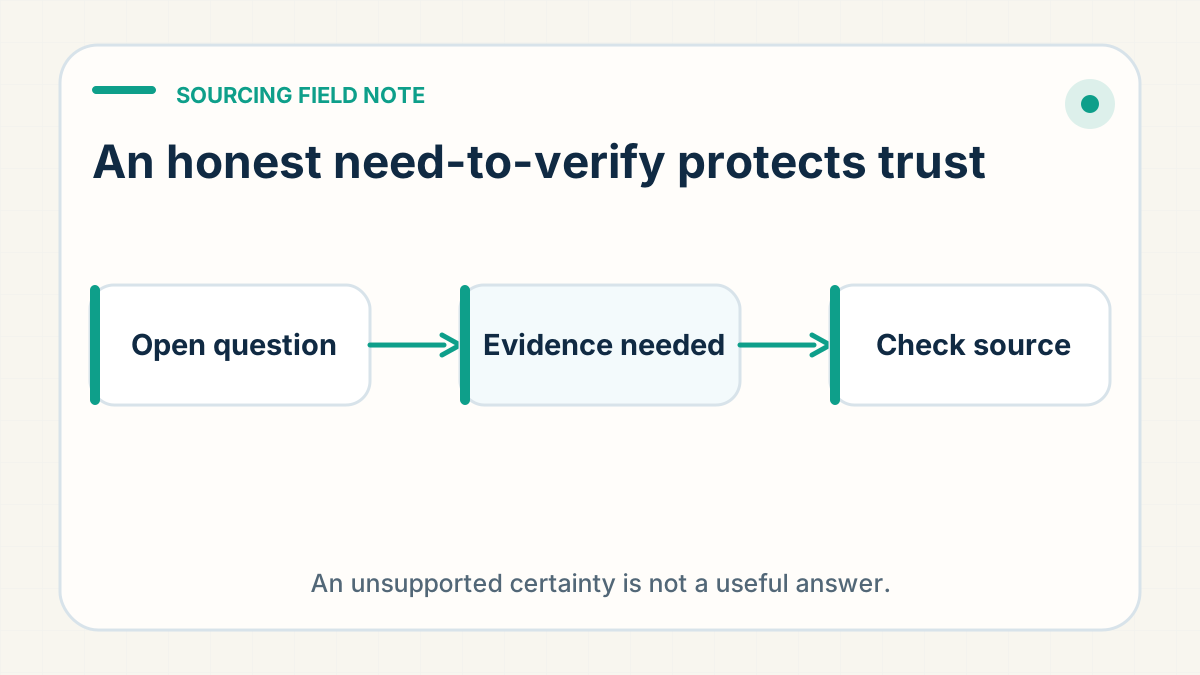
A good next step is specific: name the missing evidence, who will check it, and when the answer can be revisited.
Monday started with a brief, not a guess
No unsupported price or production promise was given that Sunday. The open points were converted into a short supplier check: material, finish, construction, minimum commitment, sample route and lead time. "We do not know yet" became useful because it was followed by exactly what would make the answer knowable.