From the operations archive
The store was connected, but the operation was not ready
A new seller wanted the reassuring sentence that follows a store connection: orders will now flow automatically. The connection worked, but important decisions were still living in chat. Nobody had confirmed which product version matched each listing, which stock was sellable, what happened when an address was incomplete, or whether the first live order should pause for review.
Calling that onboarding complete would let everyone move faster for a few hours. It would also allow software to transmit ambiguity at machine speed. The first unusual order—a changed variant, an unpaid order, a missing phone number or a product not yet approved—would force the warehouse and seller to invent policy while a customer was already waiting.
The team used a controlled test order instead. They followed it from import through product match, release, tracking return and exception handling, then wrote down who owned each pause. The client became onboarded when another operator could identify a ready order and a blocked one without rereading the entire conversation. A live connection is evidence that data can move; successful onboarding is evidence that decisions can move with it.
About this story: it is an anonymised composite of client situations. It broadens markets and product families and leaves out identifying details. Read the dated field note: The onboarding call I give a version of every week.
A positive call is not completed onboarding
An enquiry shows interest. A call clarifies fit. A forecast explains opportunity. None proves that the product, data, money and operating rules are ready for fulfilment. Calling every promising lead "converted" creates misleading reporting and encourages teams to skip the hard setup work.
Use explicit commercial stages
- Enquiry: a seller has asked a relevant question.
- Qualified: the broad product, market, stage and service fit are understood.
- Evaluation: quotation, sample, route or workflow is being assessed.
- Committed: an agreed commercial trigger has occurred, such as a first payment or approved order.
- Onboarding: product, stock, store and exception rules are being configured.
- Live: at least one real order has passed through the agreed process.
- Repeatable: the process has handled normal orders and at least one realistic exception.
Define the operational acceptance criteria
A live workflow needs approved product records, variant mapping, available stock or sourcing rules, packing instructions, release timing, shipping selection, tracking return and exception ownership. Shopify's fulfilment-service workflow similarly separates the fulfilment request, service action and tracking progress; the connection alone does not prove readiness.
Test with deliberate orders
- One straightforward order using a common SKU and destination.
- One multi-item or variant order if the store sells them.
- A cancellation or hold before the cut-off.
- An address correction and a tracking update.
- A controlled out-of-stock or substitution scenario.
Use test orders where the platform supports them and avoid releasing anything to a real carrier by accident. The aim is to confirm data mapping and ownership before a customer discovers the gap.
Record the handover
The onboarding record should name who can approve purchases, substitutions, branding, cancellations and address changes. It should also state cut-offs, funding rules, communication channels, escalation contacts and the source of truth for stock and product versions.
Measure readiness, not presentation
A seller does not need a complex system on day one. A small store can be live with a simple, explicit manual workflow. A large store is not ready if variant mapping and exception rules remain ambiguous. Complexity should follow actual order needs.
Onboarding ends when a real order can run safely
Count conversion at a concrete commercial milestone and count onboarding complete when a real order can move accurately, visibly and recoverably. That definition is honest to both the seller and the operations team.
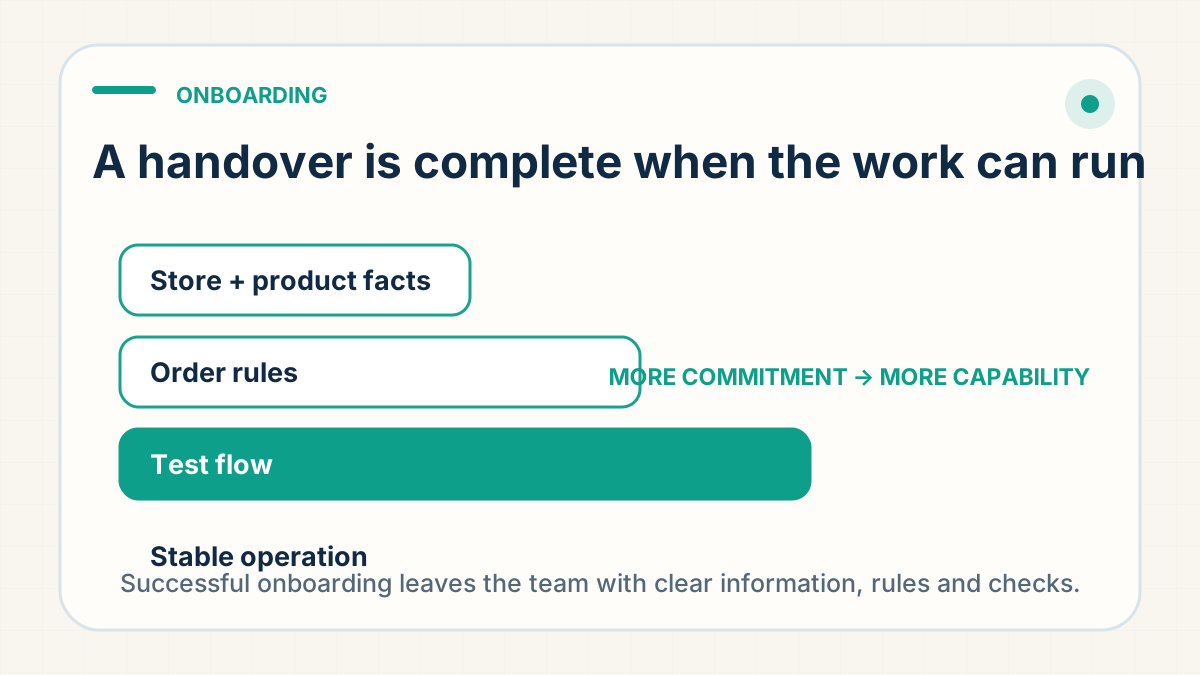
The rule: Call onboarding complete only after the agreed workflow has passed an operational milestone: the store or order feed works, product and address data are usable, exceptions have owners and a test order can return valid tracking. A call, forecast or signed-up account is progress, not proof of readiness.
Have a specific fulfilment question?
Send us the product, destination and order context on WhatsApp (+86 178 4666 9989), and we'll answer for that order instead of giving a generic estimate.
Ask Questions on WhatsApp →