From the operations desk
Thursday kept stalling on one line at a time
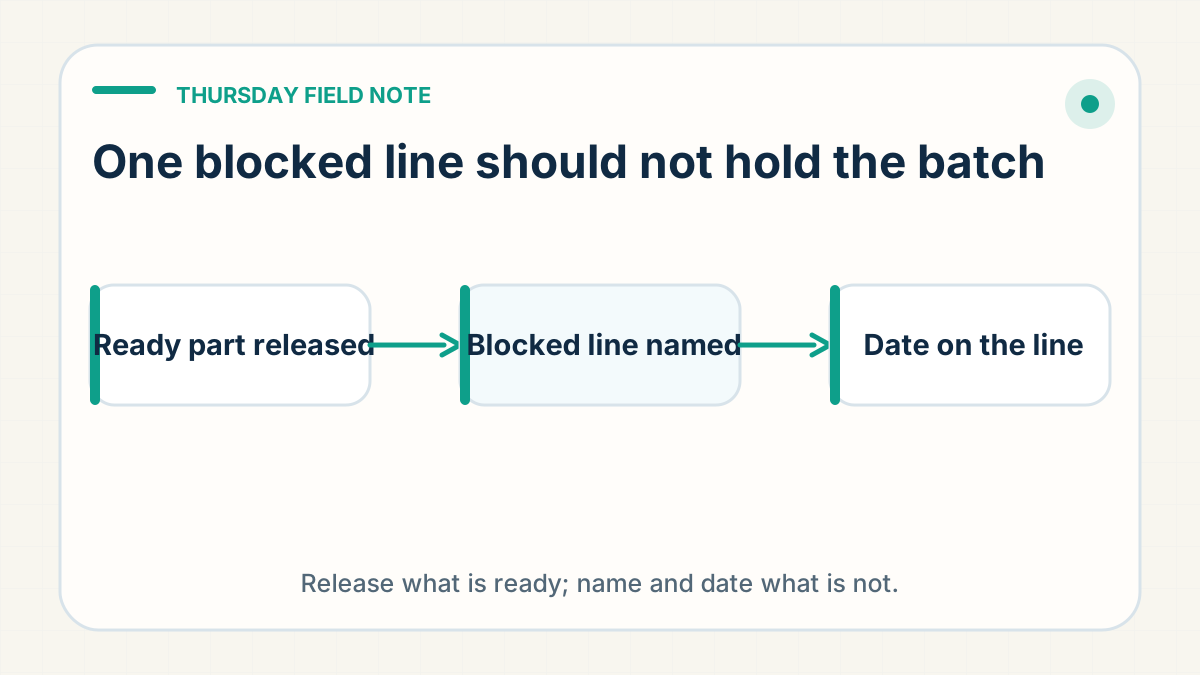
Thursday came round to one shape all afternoon: a batch of orders, or of quotes, standing still because a single line inside it was not ready. In five of the day's threads the batch was split, or the seller asked for it to be — two on a live order, three on a quote batch.
The defining exchange was the smallest. A combined invoice went out covering more than one order for one seller shipping into France, and minutes later the desk flagged that one of them was missing a complete recipient address. She did not wait for the fix: send the complete order now, she answered, and tell me what that one comes to, because I want to write to my own customer. The invoice was split, the figure came back, and the missing address followed — a split invoice line out, and one order held back until its address arrived.
Ask for the priced part now, not the whole batch later
The second version came from an early-stage seller in Europe with her own clock running: her storefront would flag the orders as late if they were not processed that day. The honest answer was that the newer items were still waiting on the manufacturer's price and the quote would follow the next day, said plainly instead of dressed up as a number. The seller sorted it herself: one order already had a price against it, so she asked for that one alone. Sort your own stuck batch before you chase it, and name the lines that already have everything they need.
A quote batch splits on exactly the same line
Quote batches broke along that line too, and the ones that worked came back openly incomplete. An apparel batch bound for the United States returned prices for the items the supplier had answered on, plus a plain statement that the rest had no answer yet on specification or weight — and an honest read that such silence usually means out of stock.
A France-bound sourcing batch came back with a status on all but one line: a similar product only, nothing found after several suppliers had been tried, one item available only above a four-figure minimum with weeks of production behind it. A request for apparel and footwear into the United States settled its destination country before sourcing began, then returned each item labelled, one closed out as not findable at any supplier. A partial answer only helps when the missing line is named — without that, a short batch is a delay you cannot chase. Ask for a quote batch back with a status against every line you sent, even where the status is that the supplier has not replied.
The blocked line is usually a variant, not a product
Often what is blocked is not the product but one version of it, and that one came back named on the quote rather than split away. A batch returned an item that was available in a single colour only, stated on the face of the quote instead of surfacing after the listing had gone live. Ask for the colour and size list the supplier can hold before you publish the options on your product page.
The same decision went the other way as well
The counter-case landed the same day, which is what makes this a decision and not a habit. A first-orders buyer in Europe was told that one out-of-stock colour had delayed the whole batch reaching the warehouse, was given the arrival day the desk expected from the supplier, and asked only when the goods would then reach them. The cause was named and a date was given, but nobody offered the colours already sitting ready, or asked whether they wanted them. A release nobody offers is one you must request, and it has to land while the order is still editable — before packing and handover. Settle for your own account how long an order stays editable, so you know how long you have to ask.
Get the split's price before you need the split
Before you ask, price it. A release you ask for may travel as a second parcel with its own shipping charge, and two parcels can give back what a consolidated shipment was earning — what forces a split, and what it costs covers the rest. Into the EU the duty does not follow the parcel: the temporary per-customs-item charge on low-value consignments is counted per declaration line, so a split changes the paperwork without changing that charge — what the duty follows is worth reading before you assume a split adds one. Ask what the split costs on your own lane before you ask for the split.
One thing belongs on your own account before the next line sticks: whether an invoice can be split per order, so one customer can be given a figure while the rest of the batch waits. Who absorbs the second shipping charge is the term that decides whether you ever use it, so get that in writing while nothing is stuck.