Field note
The situation
Ask for the written rule behind every fee before you pay it, and confirm the price before you approve a charged replacement. Tuesday was a heavy weekday with quotes and invoices doing most of the talking. New sellers across France, Germany, Poland and Belgium were reading their first landed prices line by line, repeat accounts were reconciling invoices that had moved after payment, and several after-sales groups argued who pays for a replacement into the evening. A weather-hit supplier stopped dispatching, and prospects asked about products that were never going to be shippable. The thread through all of it: a charge, a promise or a verdict arrived before the rule behind it had been written down.
A charge is not a policy until it is written first
A European seller of a printed product family found a per-parcel reship fee on the invoice before anyone had said the free-replacement rule had changed. That was a historical handling description. Confirm the current remedy and reporting window for your account; it does not establish a new entitlement. What went wrong is that it surfaced mid-dispute, alongside a small per-HS-code line introduced weeks earlier that nobody had announced. The seller offers its own customers a warranty far longer than any factory window and had no way to map that promise onto a window it had never been given.
In another group a run of damaged-kit reports came in overnight. Replacements were created with fresh tracking before the seller had agreed to pay for them; one the seller then declined had already left and could not be recalled. A paid invoice was re-billed for an express difference with an explanation too vague to act on; the fuller reason, that two destinations had never been quoted, came only after the seller objected. Across a run of new-seller quotes the per-HS-code EU line appeared without a sentence explaining it. One quote carried an "MOQ 2" that the prospect read as "a customer cannot buy one"; another had a single row and a pair row explained only the next morning. The examples do not prove each charge justified. Each needed its calculation and agreed basis, and an invoice that moves after payment without one erodes trust in how billing and prepaid balances work.
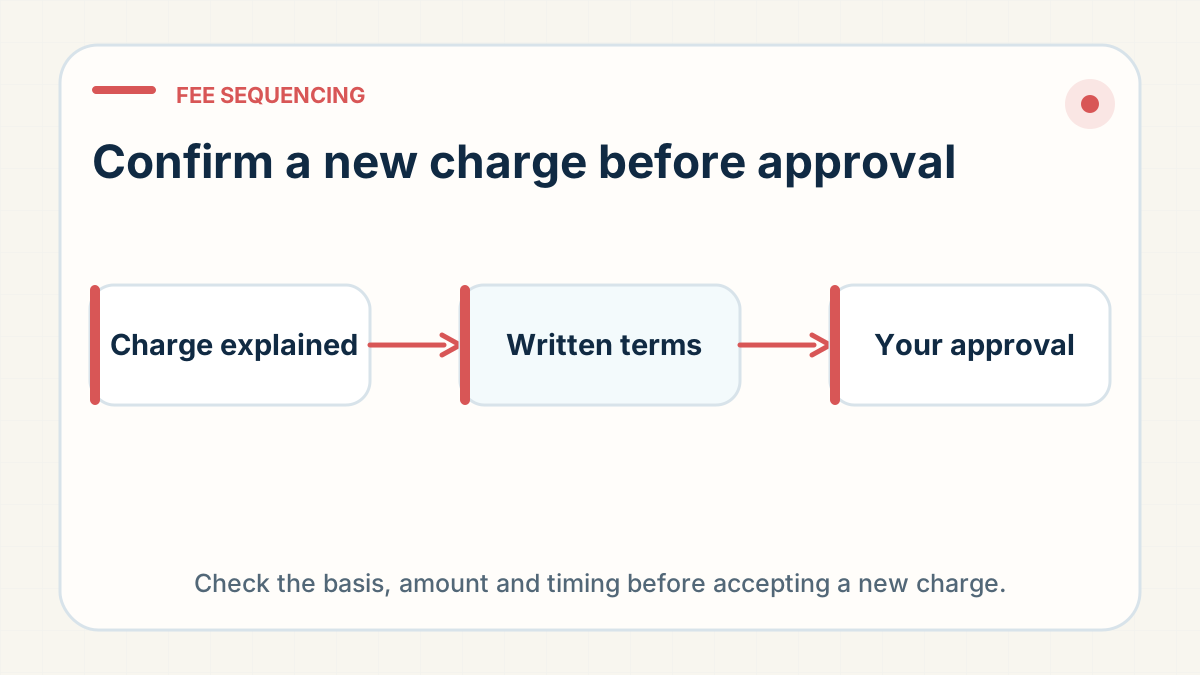
Before paying, ask what each line item covers and which terms authorise it. Get any changed charge in writing, and confirm the price before approving a charged resend. The after-sales window guide explains the current remedy by cause and timing.
The supplier's promise stays the supplier's
A supplier whose site had flooded after days of heavy rain told the desk it had found another courier and would dispatch finished orders that day. The desk relayed it as good news. Nothing moved, and the next day the supplier admitted as much. The seller asked what to tell customers, whether every order was affected and whether another factory could step in, and got the cause but not the scope, so each answer invited another.
Two smaller versions of the same slip: a templated return notice for a parcel whose tracking showed it delivered the day before, which the seller caught, and a tracking number posted for an item bought that morning, replaced by a second number when the parcel finally moved. Each described an event that had not yet happened.
Distinguish the supplier's dispatch estimate from a confirmed pickup or handover. During a supplier stoppage, ask for the cause, affected orders, proposed action and next update time before changing promises to your customers.
Screen eligibility from the listing, not from the factory
Two prospects, in separate groups, asked for the same branded automotive accessory family. In both cases the car maker's logo was visible in the listing title at intake, and in both the no arrived only after hours of factory checks, by which point one prospect had left the group and the other had stopped replying.
A seasonal small-appliance line was quoted on the standard lane within hours; days later, after purchase, the supplier disclosed a component that forced a dearer special channel, leaving the seller to choose between a higher unit cost and refunding an order already promised. The reverse error happened too: an own-brand footwear company asking for logistics only was advised to ship logo-free goods before anyone had asked whether it owned the mark.
Include the brand, battery, liquid, refrigerant and other relevant components in the product brief. Provide ownership or authorisation evidence for your own mark and ask for the exact product's eligibility and available route to be checked before purchase.
Confirm the terms before approving the charge
Ask for the basis of every unexplained quote or invoice line and confirm the price before approving a charged replacement. Check product eligibility before purchase and keep supplier dispatch estimates separate from confirmed movement.
Before you approve a charge, check it against what a fulfilment quote covers.