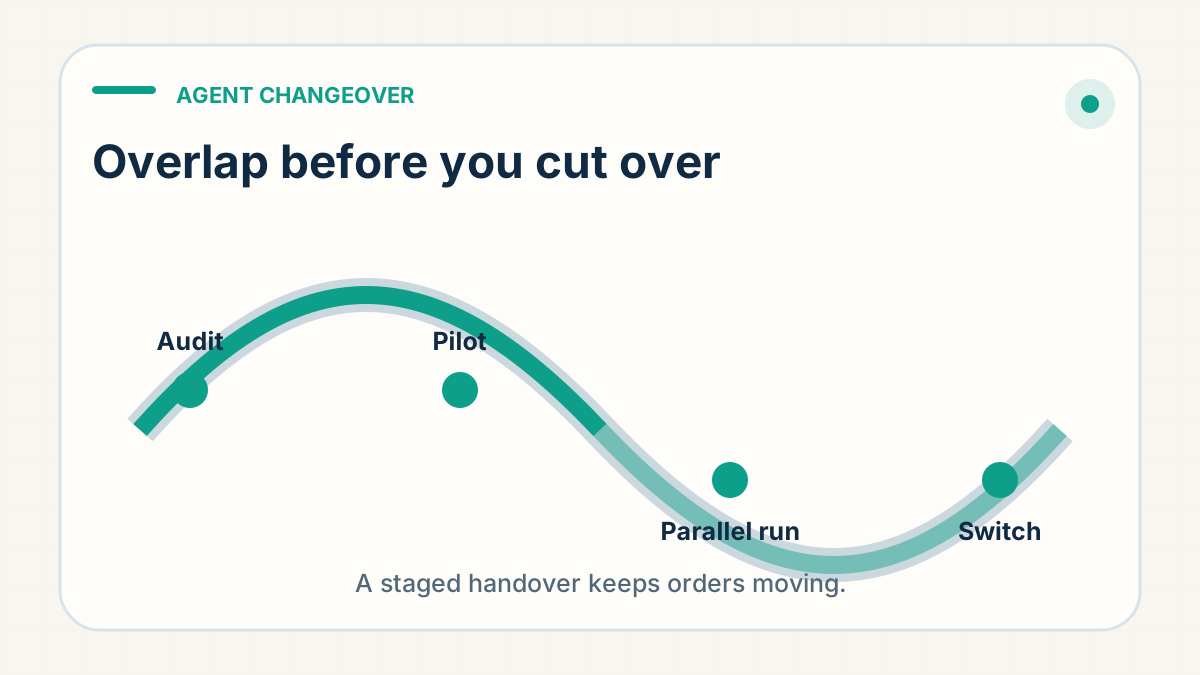
Reconcile stock and agree who owns each outstanding order before changing providers. For Shopify, also check the affected items, fulfilment request state and confirmation that the previous service stopped work. A changed status alone is not proof of a physical stop.
Shopify order handover: control the request, then confirm the physical stop
A Shopify order can have items handled through different fulfilment assignments. Identify the exact item and assignment first; the request state does not itself promise a particular app, warehouse stage or physical outcome.
| Check | Platform fact | Handover control |
|---|---|---|
| 1. App-based, not requested | No fulfilment request is open. | Confirm assignment before changing the item or location. |
| 2. Requested, not accepted | The merchant can cancel the request directly. | Check the recorded result before changing the item or location. |
| 3. Accepted | Cancellation goes to the service and can be rejected. | Wait for its response; rejection means fulfilment continues. |
| 4. Reverted to unfulfilled | A reverted status does not prove physical work stopped. | Confirm cancellation with the service and reconcile inventory. |
| 5. Custom email service | Custom fulfilment is email based and does not automatically update status. | Contact the service, then update status manually. |
Practical boundary: this table describes Shopify's documented request states and the controls a handover needs. It does not promise that a particular RyanFulfil setup, app, warehouse stage or service can cancel every item.
Prepare a handover enquiry once the item scope, current request state and open-order owner are clear.
Create one reconciled handover record
Agree the SKU list, physical count, condition, reserved stock, open orders, packaging instructions, product-version references and transfer responsibilities. Investigate mismatches before calling the inventory ready for customer orders.
Test before relying on the new flow
Run controlled test orders through the actual store, warehouse and tracking process. Check address handling, inventory deduction, picking, packing, dispatch confirmation and customer notifications. Fix the observed gaps, then test again.
Keep a deliberate fallback
Retain enough operational overlap to handle orders if the new process fails a test. The appropriate duration depends on stock location, transfer method, order volume and the parties' agreement; it is not a universal number of days.
Close only when ownership is clear
End the old flow after stock, open orders, access, invoices and after-sales responsibilities have a named owner. A documented handover protects the seller and makes later questions answerable.
The dangerous moment is the overlap
A seller usually changes agents because confidence in the old flow has already weakened. That creates pressure for a clean break. But during a real handover, stock may be physically moving while new orders keep arriving, old tracking cases remain open, and two teams hold different versions of the SKU and packing instructions.
The tension is not simply speed versus caution. Staying too long with a failing process carries risk; cutting over before the new one is proven gives paid orders no reliable fallback. A controlled overlap must therefore be short enough to preserve accountability and long enough to produce evidence.
Build one source of truth before moving stock
Reconcile the catalogue at customer-ready SKU and variant level. Record physical stock, reserved units, open purchases, orders not yet dispatched, packaging, approved product references and any unresolved quality issue. Decide who owns damage during transfer, count differences, old returns, tracking enquiries and invoices that arrive after the operational cutover.
Do not assume inherited stock is good stock. Inspect representative units against the version shown to customers, and hold a questionable batch separately. Catching a mismatch before release is one of the first useful tests of the new relationship.
Prove the flow with live milestones
Run controlled orders through import, hold rules, address review, picking, packing, carrier acceptance, inventory deduction and tracking return. A technically successful connection can still select the wrong variant or release an order that should have paused. Expand only after the observed failure points have been corrected and tested again.
Close the old flow when every remaining asset and obligation has an owner, not merely when a new contract is signed. A good switch leaves no mystery about which team answers for a parcel, stock unit or customer complaint on either side of the date.
Keep a signed-off exception list through the final reconciliation. It should name stock discrepancies, unresolved returns, supplier balances, access that must be revoked and evidence still owed. The handover is complete when that list is closed or deliberately transferred—not when ordinary orders first appear to be moving.
Changeover checklist: what to confirm before the switch
- Export a SKU list with variants, current stock, supplier details, product photos and the checks each item needs.
- Identify best sellers and retain enough cover for a short overlap while the new route is tested.
- Run a small live-order pilot before moving every SKU or changing every shipping rule.
- Agree who owns tracking updates, replacement decisions, address issues and customer-facing communication during the overlap.
- Only retire the old flow after stock, order import, packing instructions and tracking handoffs are working reliably.
Useful rule: a controlled overlap costs less than a rushed migration that leaves paid orders with no clear owner.
Need a product checked before you spend on ads?
Send us the product link and destination on WhatsApp (+86 178 4666 9989). We'll check sourcing, packing and shipping with you before you commit.
Get Sourcing Quote on WhatsApp →