Field note
An agent handover exposed a product-version risk
A seller was moving fulfilment away from a previous agent after inconsistent service. The handover included textile stock whose size, stitching and visible finish needed to be compared with the version already shown to customers. That check found a bad-batch signal before the first transferred units left the new warehouse.
An agent switch is usually framed as a connection task: move inventory, connect the store and resume dispatch. In reality it is also a change of custody. Nobody should assume that inherited stock is correct simply because another warehouse had been shipping it.
Moving stock could also move an unapproved batch
The seller needed continuity and could not afford a long pause, but speed created the exact risk the move was meant to remove. Releasing the batch immediately would preserve the dispatch rhythm while carrying the old supplier problem into the new relationship—and make responsibility harder to establish after delivery.
Hold the batch and rebuild the reference
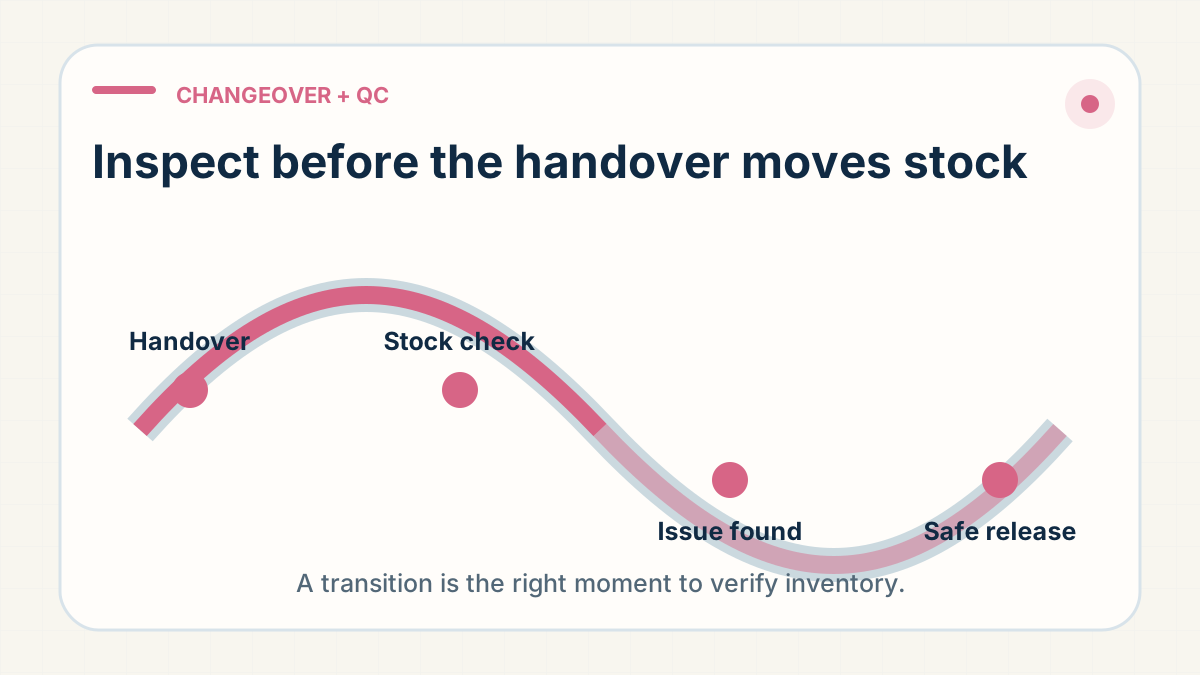
A handover is one of the best moments to verify what is actually in stock and whether it matches the agreed release standard. A textile-based batch in this review showed why: a reference comparison caught a size, stitching and visible-finish problem before any units moved.
Changing the party responsible for fulfilment does not remove the need for evidence. It makes the evidence more important, especially where a product is changing factories or material suppliers.
Audit, inspect, document and then release. A staged changeover protects continuity better than a sudden cutover.
The new flow started from the approved version
The questionable units were held, photographed and checked against the approved reference before release. Clean stock could move while the affected batch stayed separate. The switch became a controlled transition rather than a single cut-over date, which protected both continuity and the evidence trail.