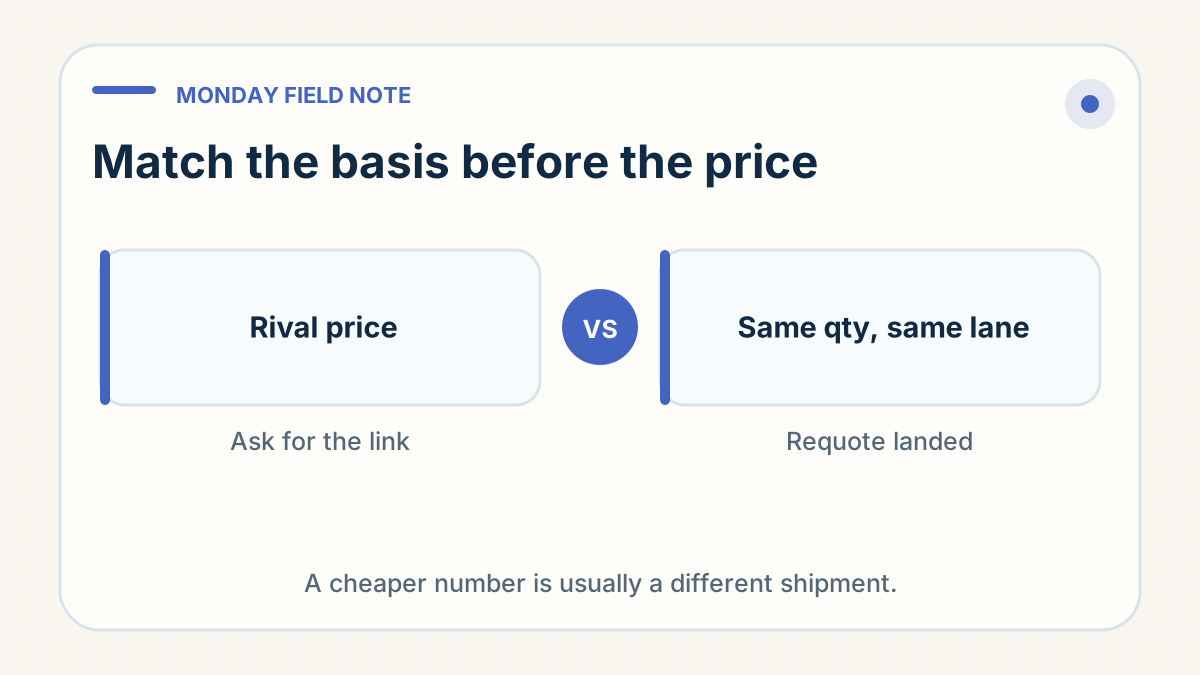
Field note
A cheaper number is usually a different shipment
Ask for the basis of any rival price, certificate claim or render before you answer it: exact spec, quantity, shipping method and inclusions. The heaviest day of the window opened with one objection arriving in different clothes: "I found it cheaper." A Netherlands seller had spotted a kitchen product listed cheaper on a big local marketplace, with next-day delivery. A UK seller held a retail ten-pack, bought for a single-digit USD figure, against a per-piece quote. Rival quotes arrived from the US and Canada for insoles and custom cards. Six separate times, the desk gave the same first answer — not a discount, but a question: show the basis. The same discipline carried through the day's compliance sourcing and its artwork checks. Before you match, defend or repeat a number, establish which shipment the number describes.
Ask for the artifact before you answer the objection
The Netherlands thread set the pattern. The desk asked for the screenshot before saying anything about the price, then explained the structural gap: a domestic marketplace listing is retail stock already inside the country, while a cross-border quote in the low-twenties EUR band carries international shipping and customs inside the number. Then, instead of defending the original figure, it re-sourced cheaper alternative versions of the product the same evening. A marketplace reseller who complained about pricing was asked for the market link so specs and shipping could be rechecked like for like. And one objector never produced a link or screenshot at all. That is also an answer: a comparison that cannot be shown cannot be matched.
Requote at the same quantity, on the same lane
The UK ten-pack showed why the artifact matters. Compared per piece, the gap looked several-fold. Requoted at the same bulk quantity, it closed to near parity — light items earn far better unit costs at quantity, so a per-piece number set against a ten-pack price is not a price gap, it is a quantity gap. The US insole thread ran the same drill from another angle: which shipping method does the rival quote assume, and does it come from a marketplace? A carrier switch was offered once the lane was named. The Canada custom-card negotiation moved only after the competitor's screenshot and shipping method were on the table.
The number that settles all of these is landed cost — the same spec, the same quantity, the same lane and the same inclusions, priced to the customer's door. Requote on that basis before conceding anything, and anchor any discount to volume, not to persistence.
Certificates ride on production runs, not on products
A Germany-bound kids-toy request needing CE and EN71 marks surfaced a mechanism most sellers meet the hard way. After a multi-supplier survey, the consistent answer was that certificates are issued when an order meets the factory's MOQ — a couple of hundred pieces — and goods sold with no MOQ come with no certificates. The certificate belongs to a qualifying production run; it is not a mark a factory prints on request. A second Germany-market buyer found a listing claiming single-unit MOQ and a valid CE certificate. Verifying the actual papers for the exact model showed the certificate applied only at a several-hundred-unit MOQ, and a ship-only fallback was offered instead.
A no-MOQ listing and a certificate claim are in tension by construction — one more line in what "no MOQ" really costs you. Verify the paper for the exact model before you rely on either claim.
Treat a hard compliance requirement as a sourcing filter
An EU prospect whose category had no ready-documented suppliers got a quote for third-party self-certification at a per-model cost in the four-figure CNY band — which turned a vague "no certificates available" into a real decision with a price on it. A mandatory certificate is a pass/fail filter at intake: suppliers without it are not candidates, however well they fit on price or lead time. The retroactive version appeared too. A marketplace demanded CE papers for appliances already sold; the full certificate packs were retrieved from suppliers within a day, but the scramble argues for archiving compliance documents at sourcing time, not when a platform asks.
Check the artifact before you vouch for it
Relayed artifacts failed the same way more than once: a custom colour-box render with square artwork stretched across rectangular panels, a factory's account of a file problem passed straight on untested. Each time the relay carried the supplier's version of events, and the work of disproving it landed on the seller. The fix costs a minute: overlay the artwork against the dieline, and test the explanation against the artifact, before passing either on as correct.
The counter-example ran the same day — when a pet-blanket sample reached the warehouse, the desk shot a hands-on video and volunteered the unflattering findings: soft and absorbent, not waterproof, and slightly smaller than the supplier's stated dimensions. That is what a checked artifact sounds like.
Records got the same treatment. Where a claim came in — a warranty ask, a doubt about which variant had shipped — the answer was read out of shipment and order history before anything was conceded or refused, and whatever the records showed went back politely with the evidence attached rather than as a bare verdict. Guessing costs more than looking. And one genuinely good risk disclosure — two new items had no real supplier photos, so colours might vary — lost its value when nobody named the affected items on request. A caveat that points at specific products has to name them.
A relayed claim carries your credibility, not the factory's — the same discipline that makes your photos and spec sheet match what ships.
Make the basis the first question you ask
Whether the number is a rival price, a certificate claim or a factory render, treat its basis as the first checkpoint: exact spec, quantity, shipping method, inclusions, and the paper or file behind it. Then decide once, on the like-for-like number, and send the decision with the reply: match it, decline and say why, or name the volume that would move it. If the comparison artifact never arrives, read the silence as your answer and hold the quote. Stop repeating any claim — from a supplier, a listing or a render — that you have not verified at source.