From the operations desk
The situation
Sunday was quieter than the rest of the week, which made one recurring question easier to see: a tracking number is not automatically useful just because a carrier recognises it. A marketplace may require a particular carrier mapping, a seller-selected fulfilment mode may hide information the operations team needs, and a customer notification can go out before the parcel has reached a meaningful physical milestone.
The exact workflow matters
The difficult part was not generating another number. It was confirming whether the seller platform would accept the carrier, whether the delivery address would remain available to the fulfilment team, how tracking would return to the store, and what event should count as genuinely shipped. In practice, that meant testing the handoff between the seller platform, Dianxiaomi and the selected carrier rather than treating each screen as proof that the whole workflow worked. Those checks belong before the first live order, not after a cancellation, warning or confused customer message.
What to verify before relying on automation
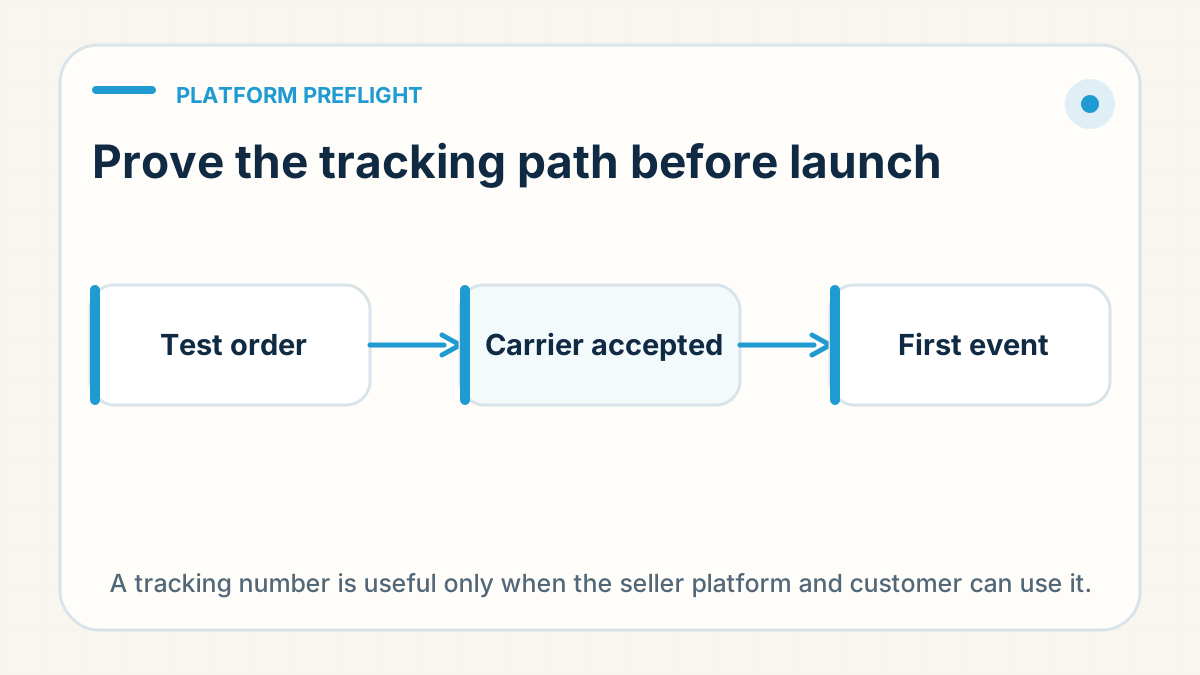
A sensible preflight uses a test order and follows it end to end. The team should be able to see the correct product and address, release the order through the intended workflow, choose an eligible route, return a recognised tracking event and preserve a clear cancellation path. If any step needs manual handling, that is not necessarily a failure, but it must be written down rather than discovered under pressure.
Choose the first product-and-route test
The day's product enquiries covered electronics, apparel, home and lifestyle goods, and accessories. The recurring request was more useful than the product identity: source an acceptable version, quote the customer-ready route, and show what a sample or quality check could prove. A product link started the work, but the destination and non-negotiable detail determined whether the result was actually comparable.
US and European destinations appeared in the route questions, while the clearest disclosed order band was still in the low tens. At that size, the useful offer is a complete product-and-route test with an honest manual step where needed—not an enterprise workflow sold before the seller has proved it.
Test tracking where the customer will see it
For sellers, ask a fulfilment partner to demonstrate the whole path with one controlled order. Ask your partner to demonstrate the capability for your exact platform, region and fulfilment mode, including any manual steps. A reliable workflow is more valuable than an early yes.