Field note
The situation
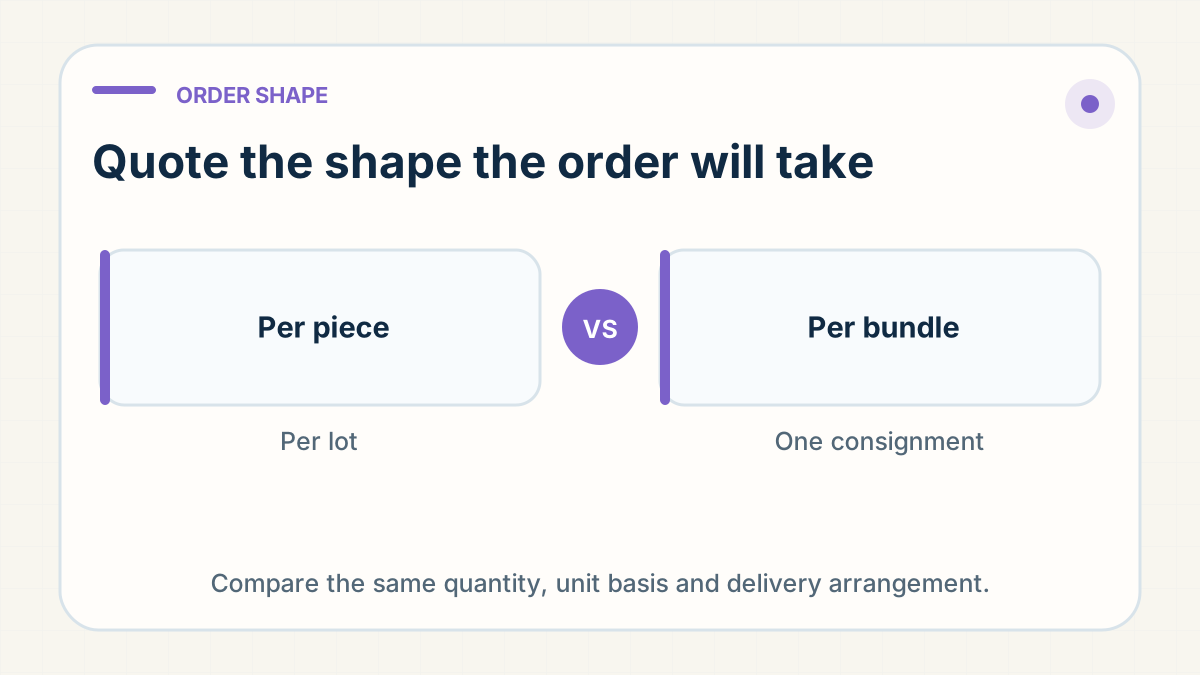
State the shape of the order before you ask for a price, and expect the quote back in that shape. Friday carried the usual pre-weekend quoting pressure: new prospects across Europe and the US wanting a figure before factories closed, bulk enquiries arriving through the same intake as single-parcel dropship, and a long after-sales and invoice tail underneath. The quoting threads shared one fault: a figure went out before anyone had established what shape the order would take, and the number came back as a question.
A price is only usable in the shape the order will be placed
A quote answers a specific order: how many, one parcel per customer or one consignment, what a bundle contains, whether the reference link is the exact item or an example of a category, and which currency. An Italian seller asked for several marketplace listings in single, double and triple bundles to Italy, the UK and the US and received single-piece prices first; the tiers came hours later. A US seller of toy bundles explained that his only question was one total with one shipping charge, because marketplace suppliers stack shipping per item; the reply was per-item prices with unexplained minimums.
The sharpest version was a bulky children's ride-on quoted as a single-parcel DDP figure in the high tens of euros. The prospect was shocked: she had meant a hundred-unit lot to one address — a freight quote, not a parcel quote. The arithmetic was fine; the intake had never captured quantity or shipment mode. The same day a plain bedding example link was searched as an exact item and answered with no stock and a high minimum, until the brief was restated as any plain set in stock.
State the quantity, parcel or consignment format, bundle contents, exact item or category example, currency and destination. Ask for the quotation in that same format so you can compare it with another offer.
One number, the same from everyone, where it first matters
Every figure a seller will repeat to a customer — a transit window, the express eligibility rule, the after-sales period, a storage rate, a minimum, a quote turnaround — has to be stated once, identically by everyone, in the message where it first matters. A UK marketplace seller whose whole question was delivery speed got three different UK transit figures from three people in one day, and she cannot publish any of them.
A seller with a handful of after-sales cases was told that a month, two months and five months since delivery had each passed the after-sales period, and still could not tell customers what the period was. A brand consigning seasonal stock heard that storage is free for an initial period and fees apply after, with no rate or period to set against a domestic 3PL. A first-order seller asked why the first parcels had not arrived; no window had been given at purchase, so the question arrived before any expectation existed. The replies did not give those sellers one usable set of terms before they needed to answer their customers.
Ask for one current written reference for the selected lane, after-sales terms, storage charges and change cut-off. If replies conflict, resolve the difference before publishing a customer promise. Confirm what the delivery range measures and when it starts.
Confirm the category before the verdict
A shipping verdict rests on a product category, and the category has to be confirmed with the supplier before the verdict goes out in either direction. A snow-globe-style lamp was called a liquid product with no channel; the prospect pushed back, and the supplier confirmed solid glass the next day. A dehumidifier already at the warehouse turned out to carry refrigerant plates, disclosed after purchase, forcing a dearer special channel that should have been named at quote time. One was a no too early, the other a yes too early.
The category check also has to answer the questions asked alongside it. A jewellery seller asked whether a ring was plated and its stone lab-grown and received a trademark warning instead. The cleanest reply of the day went to a phone-case seller: own brand yes, subject to a supplier check; a third party's protected brand no; an unbranded version offered. Ask for each product question to be answered alongside any eligibility restriction.
Liquid, refrigerant, battery, magnet, protected mark: confirm which applies before choosing a lane, because the category decides what can move, which is why we do not choose a route by carrier name.
Quote the unit the customer will order
Before asking for a price, state the shape of the order — quantity, parcel or consignment, bundle contents, exact item or example, currency — and expect the quote back in that shape. Confirm the product category and unresolved terms before approving the quotation or repeating its figures to a customer.