From the operations desk
Settlement day, and the fields an accountant needs
Saturday 10 October was a normal working day, and its weight sat on money: close to thirty client threads carried an invoice. Many went out numbered, and some named the orders they covered. An invoice is settled only when it ties out to the orders you sent, to the store that sold them and to the document your accountant files. That last tie was Saturday's open question: a seller who passes a monthly bill of every order to an accountant sent over the fields the accountant needs on it.
What goes with your order list
A lighting seller sends the desk a short message most days: the range of order numbers from the day before, any order inside it not to process, and the total expected for the rest. Saturday's message held one order back. That afternoon's invoice named the extra orders it carried and showed a deduction as its own line. Because the seller wrote the expected figures down before any invoice existed, each invoice can be checked against them line by line instead of being rebuilt from the store afterwards.
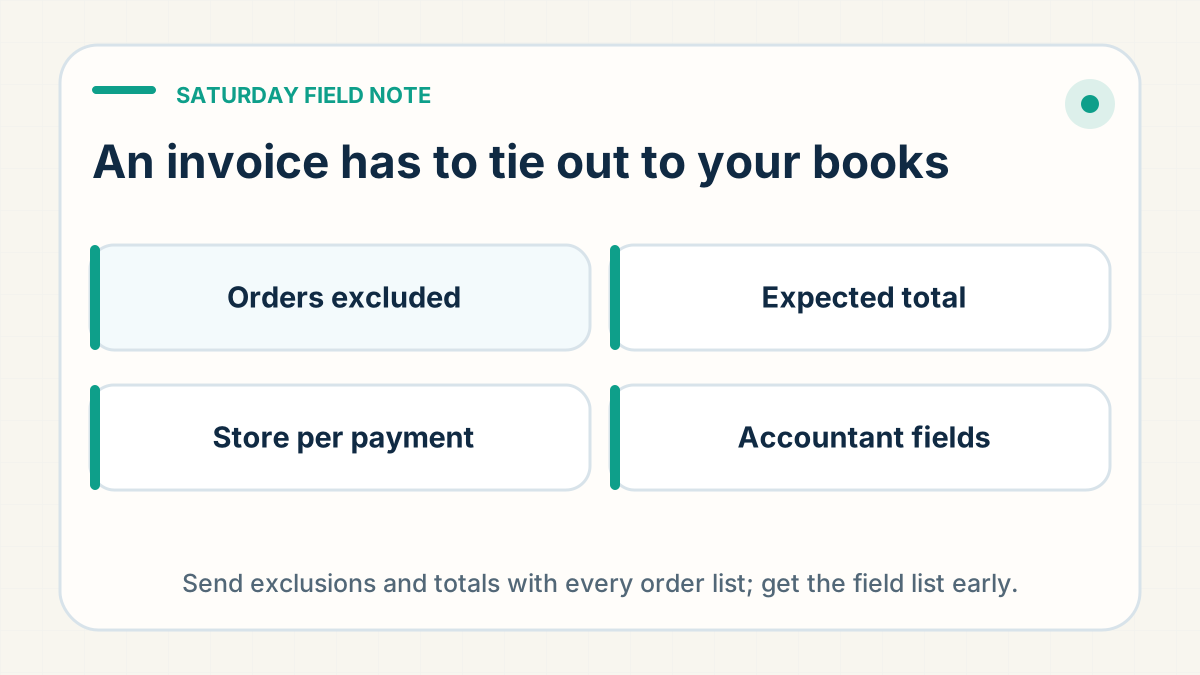
Send the orders to exclude and the total you expect with every order list, in the same message, and keep that message as your side of the ledger.
Is an order you held inside the range?
An apparel seller's Saturday payment request covered a continuous range of order numbers. Early in the week the seller had asked that one order not be shipped, because the seller would send it to the customer directly, and that order's number falls inside the range. The invoice detail sat in an image, so the thread does not show whether that order was billed.
A range does not show what was left out unless the invoice says so. Before you pay, check every order you held, cancelled or shipped yourself against the range. An earlier note on one reference, one total, one payment asked for the order reference against every line; on a range, ask for the excluded order numbers too.
Which store does this payment cover?
Sellers with several stores were invoiced store by store, each invoice naming its order numbers, which keeps every request traceable to the store it belongs to. One Saturday payment screenshot quoted the right invoice number beside a store other than the invoice's. The invoice number lets the payment be matched; if your own books run store by store, the label puts that money under the wrong one.
The published rule on payment references reads: "Any transfer reference is fine; send a screenshot or the transfer confirmation as soon as you have paid so it can be matched to your invoice." Beside that screenshot, write the invoice number and the store it pays for, copied from the invoice rather than from memory.
What will your accountant file?
The seller's list was short: the issuer's company name, address, city and country; the name and quantity of each item bought; and, at the foot, the total paid. That is a different document from an order list, and it is the accountant who sets it, not the supplier. Asking for it once, early, costs a message; discovering a missing field at filing time costs a month.
Other invoices that day did their arithmetic in the open: a small leftover from an earlier invoice added as its own line, and a deposit subtracted as its own line before a combined total. The reconciliation list in the billing guide gives the same layout for a rolling account, from opening balance to closing balance, so a month's total can be checked against the period's lines.
Get your accountant's field list before the month closes
Before the next consolidated invoice is issued, get in writing your accountant's own field list for a supplier invoice, and your expected total for the month, store by store. Send both with the request and ask whether the invoice can carry every field, so any gap shows before the month closes and you can tie its total to yours before you pay.