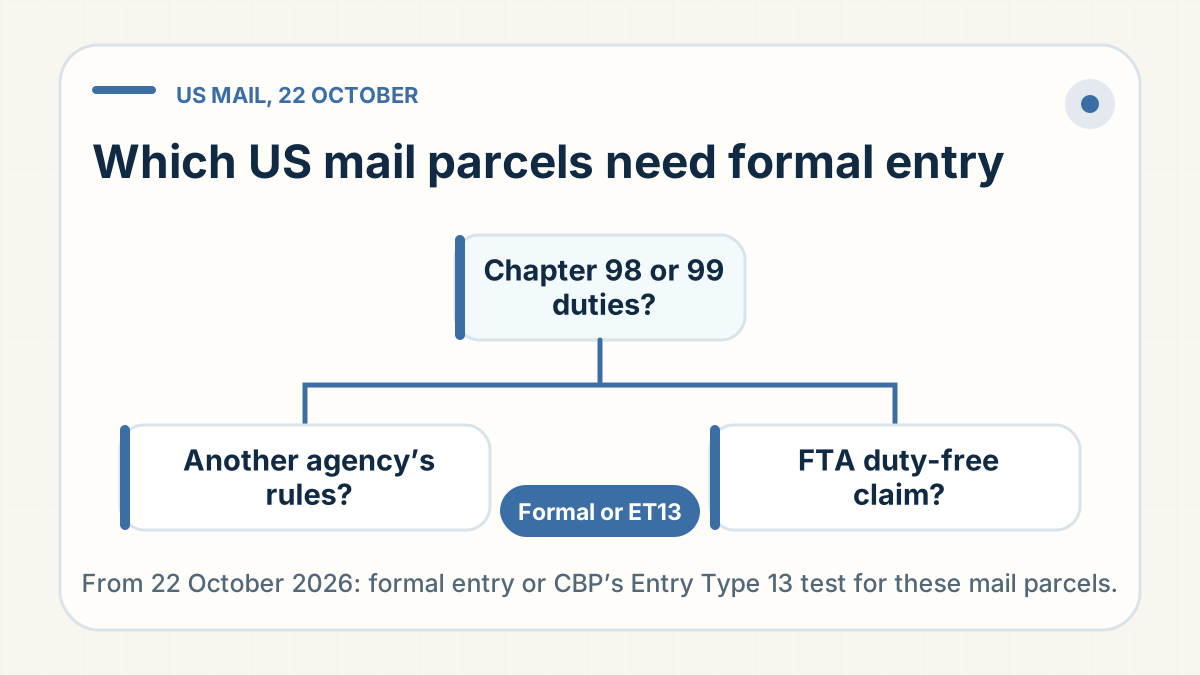
From 22 October 2026, US mail parcels valued at $2,500 or less lose CBP's postal informal entry process if they carry Chapter 98 or Chapter 99 duties, claim Chapter 98 or Free Trade Agreement duty-free treatment, or are subject to another US government agency's requirements. Those parcels then need formal entry or CBP's voluntary Entry Type 13 test; express and courier shipments are under a separate rule and not part of this date. On the same date, CPSC starts requiring eFiled certificates for regulated consumer products that arrive by international mail.
What changes for US mail on 22 October 2026?
CBP's interim final rule of 24 June 2026 (FR Doc 2026-12669) suspended the de minimis exemption for mail shipments indefinitely and created a new postal informal entry process. The rule took effect on 24 July 2026. 22 October 2026 is the compliance date for two of its paragraphs, 19 CFR 145.12(a)(2)(v) and (vi), so it ends a delayed-compliance window for those shipments rather than starting the rule.
After 22 October, filers can enter those parcels by formal entry or through CBP's voluntary Entry Type 13 test, which runs until CBP announces its end in the Federal Register. The test is not permanent, and the rule is an interim final rule, so either can still change.
Which China-to-US mail parcels are caught?
- Parcels carrying Chapter 99 duties. CBP names Section 301, 232 and 201 duties as examples, and the Section 301 duties apply to goods from China. Whether a given product carries them depends on its 10-digit HTS classification, not on its product type.
- Parcels claiming Chapter 98 or Free Trade Agreement duty-free treatment.
- Parcels subject to another US government agency's requirements, such as consumer products that need CPSC certificate data (below).
Three groups are not part of this date. Goods under quotas or anti-dumping and countervailing duties already needed formal entry from 24 July 2026 and stay ineligible for informal entry under Entry Type 13. Mail parcels valued over $2,500 already needed formal entry. Express and courier shipments sit under a separate CBP rule (FR Doc 2026-12670), not this mail date.
Who files the entry for a US mail parcel?
The entry is filed by a party with the right to make entry: the owner or purchaser of the goods, or a licensed customs broker designated by the owner, purchaser or consignee. It is not filed by CBP, by the US postal operator or by the post office that sends the parcel from China. If your route relies on the postal informal process today, find out who will file for the parcels this date catches.
What does CPSC require for mail from 22 October?
In a bulletin of 1 September 2026, CPSC said it will require eFiled certificates for mail shipments, through a Full or Reference PGA Message Set, from 22 October 2026. The importer is responsible for eFiling a certificate whenever one is required.
Mail was not free of certificate rules before that date. CPSC's Certificates of Compliance final rule, effective 8 July 2026, already required certificate data for mail imports to be entered in CPSC's Product Registry before the product arrives; entries from a foreign trade zone follow on 8 January 2027. The rule covers consumer products subject to a CPSC rule, ban, standard or regulation that must be certified, not every product sent by mail.
What should you check before 22 October 2026?
- List every SKU you send to US consumers by mail with its 10-digit HTS code, and ask your customs filer which ones carry Chapter 99 duties or need another agency's data.
- For any CPSC-regulated product, have the certificate data elements in 16 CFR 1110.11 ready, and confirm with your importer of record or customs broker that a Full or Reference PGA Message Set will be filed with the entry.
- Get in writing how those parcels will be entered after 22 October, by formal entry or through Entry Type 13, and what that adds to the landed cost and to the delivery estimate you show customers.
As of 5 October 2026 we found no later Federal Register notice moving the 22 October date, though that search was not exhaustive. The dated rule and fee changes for the rest of the season, each with its official source, are on our seller rule and fee changes calendar. This guide is a planning summary, not legal or customs-brokerage advice.