From the operations desk
A live question, answered by a standing call template
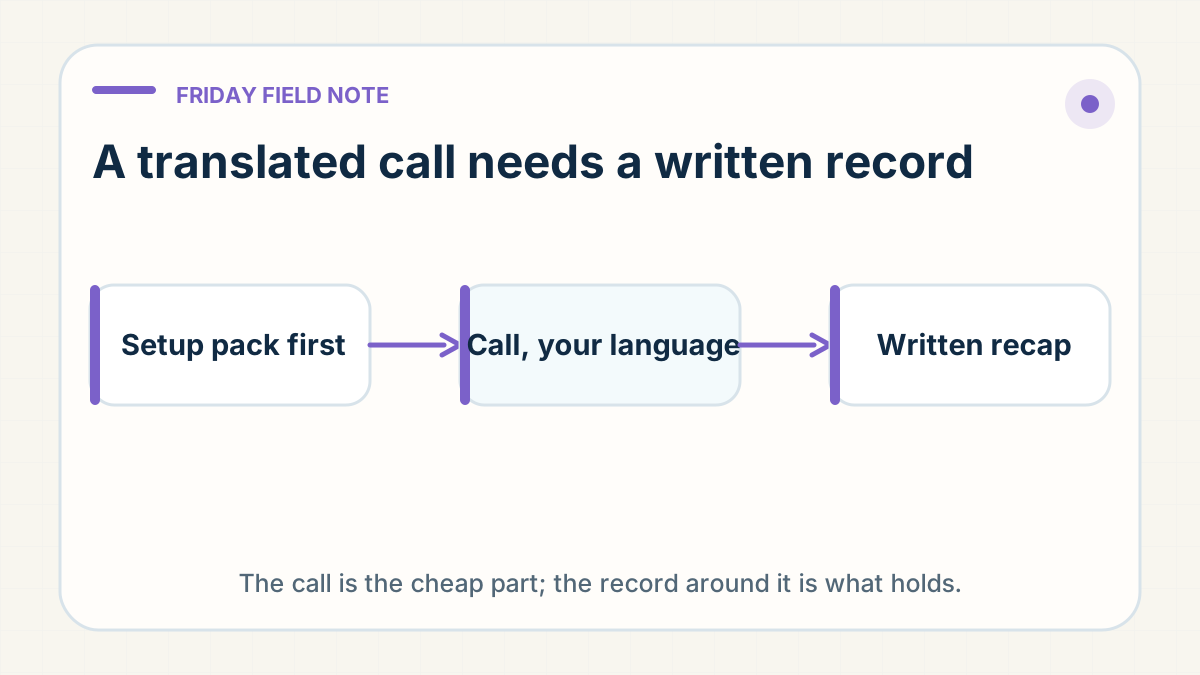
Friday ran a full day of cross-language onboarding and produced both halves of the lesson. Six written call recaps went into client threads that day, each in English, restating the terms the seller had named. That afternoon a seller who writes in French asked again for photos of the items held in stock, and the standing English check-in template fired instead, following up on her enquiry and offering a short video call. Two days earlier, in that same thread, she had declined a call because another job keeps her away from them. She asked once more. Pictures followed that evening once the request was passed on; the template had added a round trip.
Getting into the call across a language gap is the part already answered on this site: the FAQ says that captions or translation cover the major languages on a video call, that the settings are configured once you are inside the meeting, and that the team walks you through them the first time. What to cover in your first fulfilment call sets out what to bring to the conversation, and it already says a follow-up should record what is known, what still needs checking and who owns it. What no page sets out is that the record has to be read against the quote that comes next.
The recap is the artefact, and a refusal is its best line
What the seller keeps is the recap posted back into the thread, and the best line in one of Friday's recaps was a refusal: no workable shipping channel could be found for the product he had chosen, so the desk could not support it, and would he send other links instead. The same recap named where he had sold before and offered branding help with any packaging minimum to be confirmed with the factory — a stated limit rather than a promise.
A beginner pricing her first product into two European markets got the other kind of recap: the quote basis named as all-in, which here means product, packing and handling and shipping in one figure, no separate service fee, any separate line stated on the quote rather than added afterwards. Both destinations were named, and the delivery window was split into its two legs, the outbound lane named and the internal factory-to-warehouse transfer counted beside it.
What arrived later that morning was a message carrying one total for product and shipping, with nothing in it naming a lane or a window; when she came back for a second product's price and its delivery times, the reply was labelled the same way. Read the recap against the quote before you believe either, because a delivery time is a sum, not a number — the recap named both destinations and both legs, and the message beside it named only a total.
The terms you state are inputs, not preferences
One of those terms is the clock. A reminder that counted down in hours left a prospect to convert it himself; he wrote back with the hour he thought it meant, and the day. The repair was in the reply: the date and the hour restated in his own local terms, with the booking confirmation named as the record to check against.
Another is the hour a seller offers. One prospect had asked the evening before whether the desk was free at a day and an hour he named in his own zone; the reply was the self-service booking link and nothing else, neither a yes nor a no. His freight question was answered that evening — bulky goods, no route worth recommending at a workable price — and soon after he shelved the line and closed the thread politely. The channel is a term of the same kind: in the thread above, keeping everything in writing had been agreed in as many words earlier in the week.
Set the recap beside the quote that follows it
The recap and the quote only work read together, so ask for the call in writing before your first quote lands, and ask that the recap name the lane every transit figure belongs to. Then set the recap beside the quote and make the desk reconcile any gap, because reading a landed-price quote line by line is how you find out whether the all-in claim survived your destination. And put your language, your working hours and the channel you want to be reached on into one message early in the thread, so whoever opens it next can read your terms without having been on the call.