From the operations desk
The instruction existed everywhere except on the order
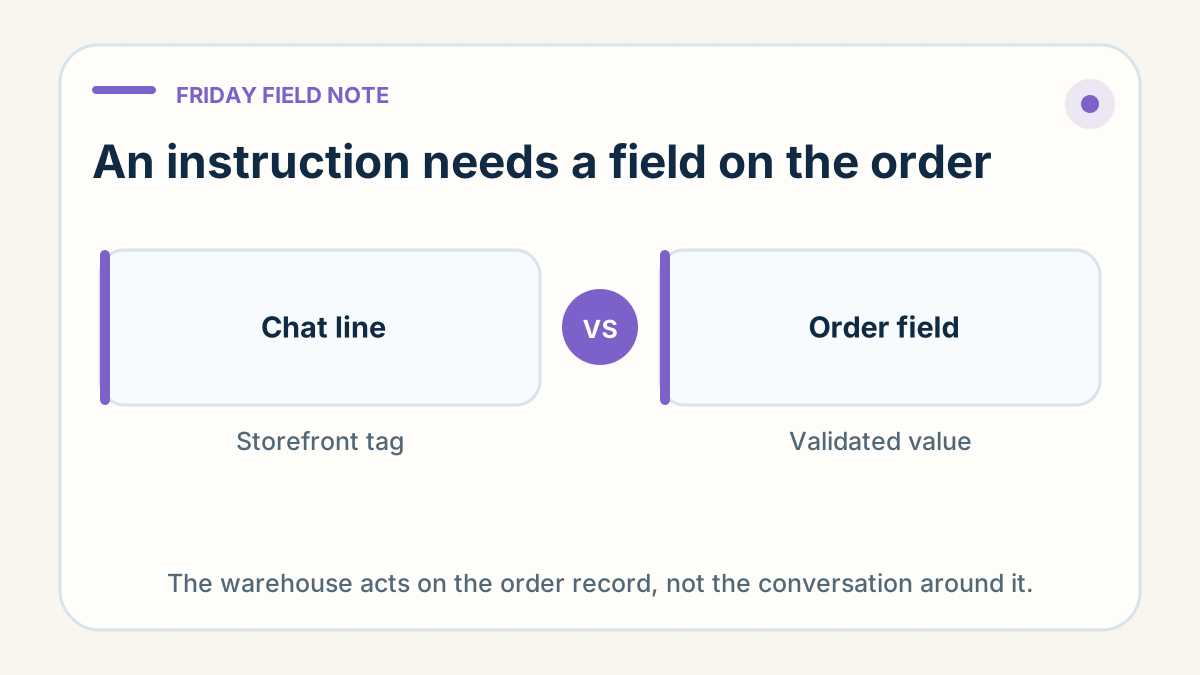
Friday closed the week doing two things at once: the heaviest intake of first-contact enquiries of the week, and a sweep of blocked and exception orders on the established accounts before the factories closed for the weekend. The exchange that named the day came from the second pile. A seller's side pressed, more than once and at length, for a formal enquiry into a parcel left where the recipient could not take it in, against the request that recipient had made at checkout to have it handed over in person. The answer came back twice, and the second time it named a reason a step earlier than the last leg: the order record had nowhere to put that instruction, and the address field had no room for it either.
So the instruction never travelled. It could not be printed, it could not be handed to the delivery agent, and afterwards it could not be the subject of an enquiry, because nothing on the order recorded that it had been given. One route still open in that position is the recipient's own recovery with the last-mile carrier, inside the window that carrier allows, and what happens after a failed delivery sets out those windows and what a resend needs.
Your shop's own hold button does not reach the order
A seller running an established store had added a tool to his storefront that lets his customers pause or amend their own orders, and asked whether tags on those orders could be worked from. More than once in the day he was told the same thing: an order paused inside his own storefront is not visible on that side, and neither is a shop tag, whatever it is named. The tool sat on his side of the shop; the channel the fulfilment side works from was still the thread. What he was asked for instead — the point a request is not a state change already makes — was a plain list, in the thread, of the order references he wanted held, re-sent whenever that list changed.
A field that is filled can still be unreadable
The most useful document of the day was a seller's line-by-line answer to a list of his own blocked orders. Some of the recipient identifiers on that list were correct but stored in a form the check rejected — spacing and case, not content — and the seller asked for them to be normalised before the check ran, rather than chased again from customers who had already supplied them. Others were listed as identifier faults when the identifier was fine and two other fields were not: the street line was short of a detail, and no telephone number had been captured.
Three asks come out of that. Ask for the blocker on each order to be named in the field vocabulary you can act on: the identifier, the street line, the telephone number. Ask for a per-order disposition rather than an acknowledgement, so you know which of your orders moves today. And where a destination wants a recipient identifier alongside the address, treat its format and length as part of the field and capture it that way at the point of sale, not after the order has stopped; the address and telephone lines underneath it are the ones recipient contact data is part of delivery already covers.
Re-posting the list is not the same as clearing it
The slowest shape came last. An order flagged for an incomplete address was still waiting four days later, when the same list went out again, longer than before. The seller had pressed in the thread for the order to be treated; the seller's own assistant undertook to contact the customers only once the longer list arrived. Both sides were acting in the conversation, and neither action put the missing value on the order. Nothing in the thread set the point at which a blocked order stops waiting.
Ask which fields an order carries, and when a blocked one stops waiting
Two values to go and obtain from your fulfilment partner. First, the list of fields an order actually carries beyond name, address, postcode and telephone number, and which of them reach the label or the delivery agent. Whatever your checkout promises — a signature, a delivery window, a safe place, a note — has to appear on that list before you can promise it. Second, the standing rule for an order blocked on missing recipient data — how long it waits, who chases the customer meanwhile, and what happens at the end of that wait. Write both answers into your own order-issue notes, then read the delivery promises on your product pages against the first one.