From the operations desk
The situation
The final day of June concentrated the next month's risks into one queue. Some customer refunds needed to be credited through the next invoice. Address corrections had to reach the dispatch workflow in time. A supplier warned that limited stock might not support a planned promotion. Store access was still being checked, while several parcels needed investigation for stale or disputed delivery events.
- 01Identify the new constraintA rule change, capacity limit or closure that starts tomorrow.
- 02Find affected ordersWhich live orders it actually touches, by destination and stage.
- 03Set owner and cut-offWho acts, and the hour after which the option disappears.
- 04Confirm the next updateAsk when affected orders will receive the next update.
Campaign volume is a capacity question
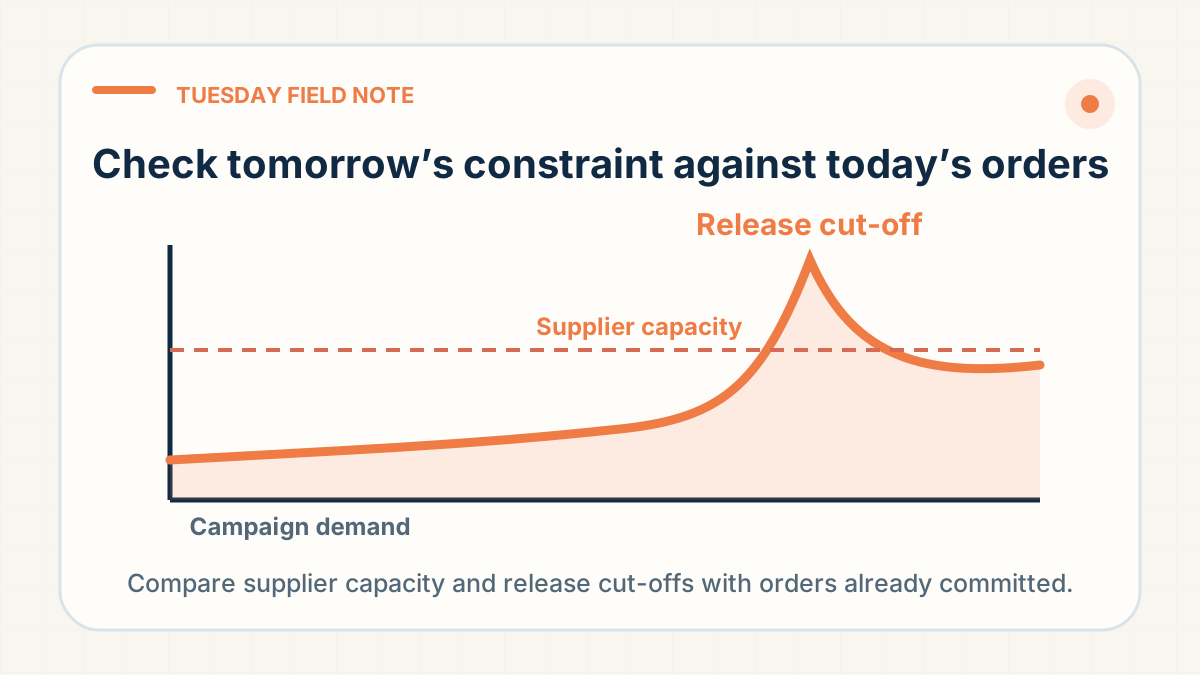
A seller can be ready to advertise before the supplier is ready to replenish. The useful response to limited stock is not a vague warning. It is a small capacity view: available units by variant, confirmed incoming quantity, replenishment time, downside plan and the sales threshold that triggers another commitment. That turns a campaign forecast into an operating decision.
Changes need to beat the physical cut-off
A corrected address or cancellation helps only if it reaches the person and system controlling release before the parcel moves. Ask for the applicable cut-off and an acknowledgment that distinguishes "request received" from "warehouse action completed." The same discipline applies when a refund will appear on a later invoice: record the amount safely, the account period and the reconciliation owner without exposing customer details in broad chat.
Integration does not resolve an unclear exception
Store access and automatic order flow can reduce manual copying. Dianxiaomi can support the internal order-management handoff, but it does not decide how to handle a parcel marked delivered but not received, a tracking record with no recent movement or an order awaiting a customer change. Those cases still need evidence, ownership and a deadline for the next update.
Act while the order can still change
The day before a new month is a useful control point. Check tomorrow's fees, stock constraints and release rules against today's open orders. A clean handover makes the policy change, campaign and customer exceptions visible before volume magnifies them.