Field note
What was happening
The week was made up of early conversations rather than one dramatic fulfilment event: sellers exploring a broad consumer product, weighing a first small batch, and asking whether an idea could be shipped to their intended market. The common risk was treating a price enquiry as though it already answered the product, quality, route and operating questions behind it.
A useful first conversation is broader than a quote
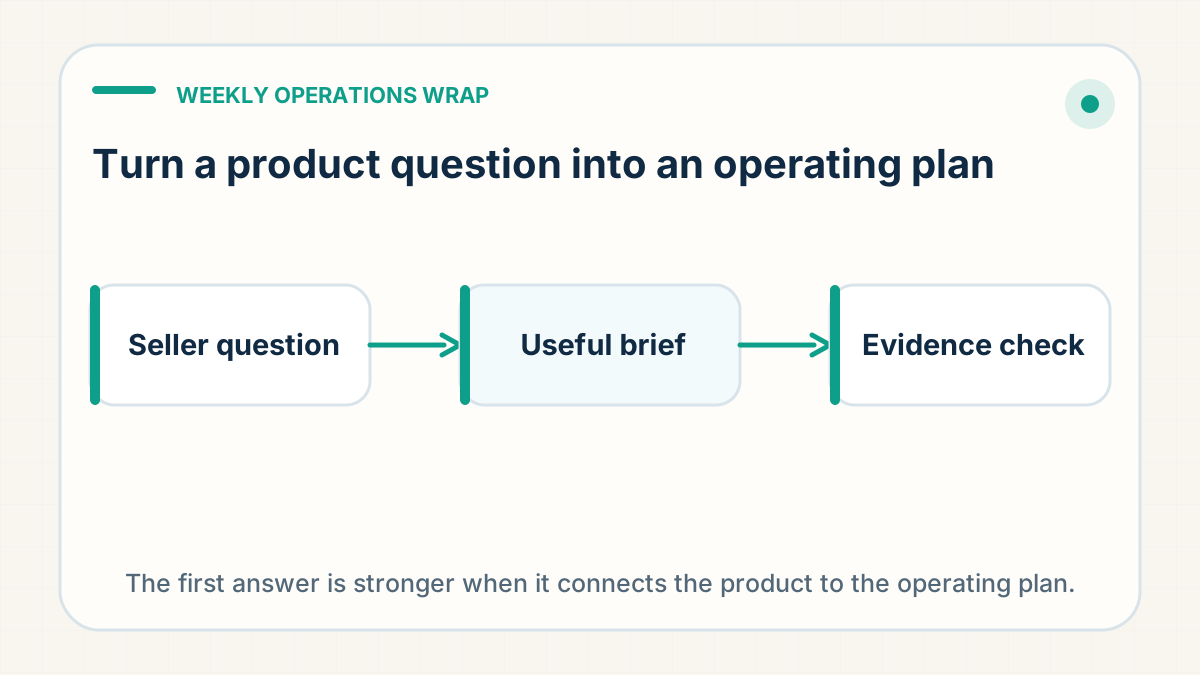
New enquiries often begin with a product category or a simple price question. The useful response is to establish the decision behind it: whether the seller is testing demand or preparing to scale, what must be true about the item, where it is going, what evidence is still needed, and what a sensible first batch would need to prove. That protects a seller from treating a supplier quote as a complete operating plan.
When evaluation becomes onboarding
A prospective seller is ready to move beyond an exploratory conversation when the next commitment is clear. That might be a sample brief, a confirmed variant, a fulfilment workflow, or a small test order with defined success criteria. The handover should make the remaining dependencies explicit rather than implying that sourcing, shipping and store operations will somehow solve themselves.
What early calls made visible
The recurring questions were not only about product cost. Sellers were also weighing delivery speed, packaging, quality-control expectations and whether a setup could cope if demand grew. That is why a short first conversation can be useful: it establishes which trade-off matters before the team starts collecting quotations or recommending a route.
Define what would count as progress
The records also showed several different commercial stages that should not be collapsed into one success story. An enquiry, a quotation, a sample brief, a first payment and a live repeat-order workflow are different milestones. Naming the stage makes the next commitment clearer and prevents projected volume from being treated as an achieved result.
Keep product context without exposing the customer
A useful internal lesson often needs the broad product category, a non-identifying quantity or the destination country to make sense. It does not need the customer's identity, exact listing, image, address or parcel number. That distinction lets an operations diary remain concrete without turning private work into public evidence.
The takeaway for sellers
Bring a short brief to the first call: the product category, likely customer market, target launch stage and the decisions you still need help making. A good fulfilment conversation turns those unknowns into a small sequence of verifiable next steps.