Field note
The kind of situation this covers
A short message such as "the item is wrong", "the parcel arrived damaged" or "tracking has stopped" can describe several very different problems. It may be a product mismatch, a packing failure, transit damage, a delivery exception or an issue with how the item is being used. The first response should preserve that uncertainty long enough to collect the evidence that separates those paths.
A complaint is the start of the investigation
When a seller or customer reports a problem, the first job is to establish what happened without jumping to a conclusion. Separate the observed issue from the possible cause: product condition, packing, order accuracy, delivery stage or customer setup can look similar from a short message. Request the evidence that can distinguish them, then record what is confirmed and what remains uncertain.
Your refund inbox is an unpaid product-research feed
Do not count every refund as proof of the same failure. Tag the reason at the smallest useful level: the product differed from the promise, the size or fit was wrong, the unit was defective, the packing failed, the route missed its promise, the customer used the item differently from the instructions, or the purchase simply was not wanted. Keep "unknown" available when the evidence cannot separate those causes. A tidy but invented reason is worse than a visible gap.
Read those tags by approved product version, supplier or factory, purchase batch, packing version, route and the week the order was placed. That is how one complaint becomes a possible pattern. It also prevents a busy route, a high-selling SKU or one loud customer from being mistaken for the source of every refund.
The customer remedy and the operating diagnosis are two decisions
Refunding or replacing quickly can be the right customer decision before root cause is known. Record it as a remedy, not as proof that the supplier, warehouse or carrier was at fault. Then make a separate operating decision: keep releasing the item, hold one version or batch, inspect a sample, change the packing instruction, correct the product page, open a carrier trace, or stop the product while the evidence is weak.
Close the loop operationally
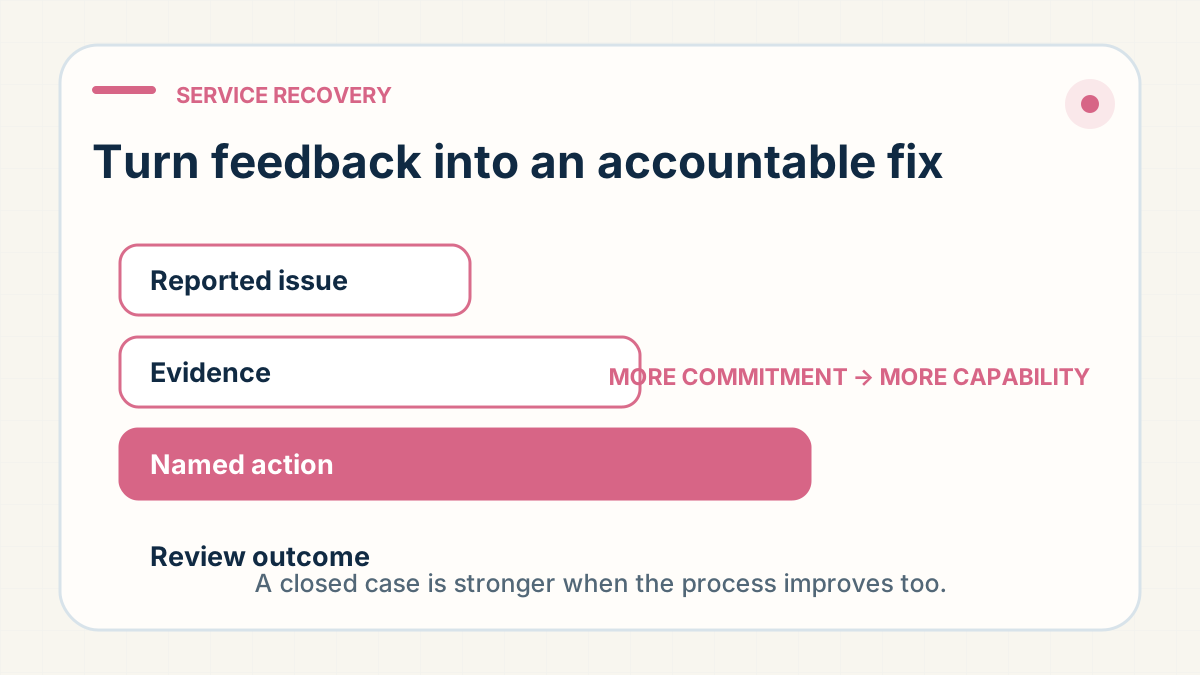
A useful response names the next action and its owner. That may mean checking an approved specification, reviewing the packing record, waiting for a meaningful carrier milestone, deciding whether a remedy is appropriate, or changing an instruction for the next batch. A refund or reshipment decision can be part of the outcome, but it should not replace understanding the underlying process if the issue could recur.
Read a falling refund rate beside the claims that came back
A refund rate can fall because fewer orders went wrong or because fewer valid claims were paid. Only the first is better service. A valid claim that was refused still costs money: it can come back as a payment dispute or chargeback, as more messages about the same order, or as a customer who does not order again. None of that shows in the refund column.
Before you call a lower rate an improvement, read these beside it for the same weeks of orders:
- Refused claims that came back: refusals you later reversed, or that the customer took to a dispute or chargeback.
- Repeat contact: orders that come back to the inbox after they were marked resolved.
- Returning customers: whether people who raised a claim buy from you again.
- Total money lost on claims: refunds plus dispute and chargeback costs, added together, because a cut in one can reappear as a rise in another.
If the refund rate fell while refused claims that came back, repeat contact or total money lost rose, or fewer claimants bought again, treat the drop as cost that may have moved to another line. Check what changed in how claims were answered before you credit it to a product or supplier fix. A rate that counts only full refunds can also fall when more cases end in a partial refund, and partial refunds can be missing from your marketing data too.
Treat suspected misuse as a pattern across orders
One doubtful claim is a suspicion, and a suspicion is not a finding. The pattern worth a closer look is a run of claims that do not add up while comparable orders arrive without complaint. Even that can turn out to be a mistaken record or a fault nobody has fixed yet, so a person looks at the evidence before any customer is accused.
The claim in front of you is still settled on its own evidence, using the same refund, reship, replace or investigate choice as any other claim.
Review whether the fix held
For a growing store, the important question is not only whether one case closed. It is whether the operational rule changed and whether the next comparable orders followed it. Compare the same product version and failure mode after the change, through delivery and the normal refund window. If the evidence is too small or too young, keep the fix provisional. A short follow-up review turns feedback into a better release check, packing instruction, customer update or supplier brief—and tells you when the claimed fix has not yet earned that name.