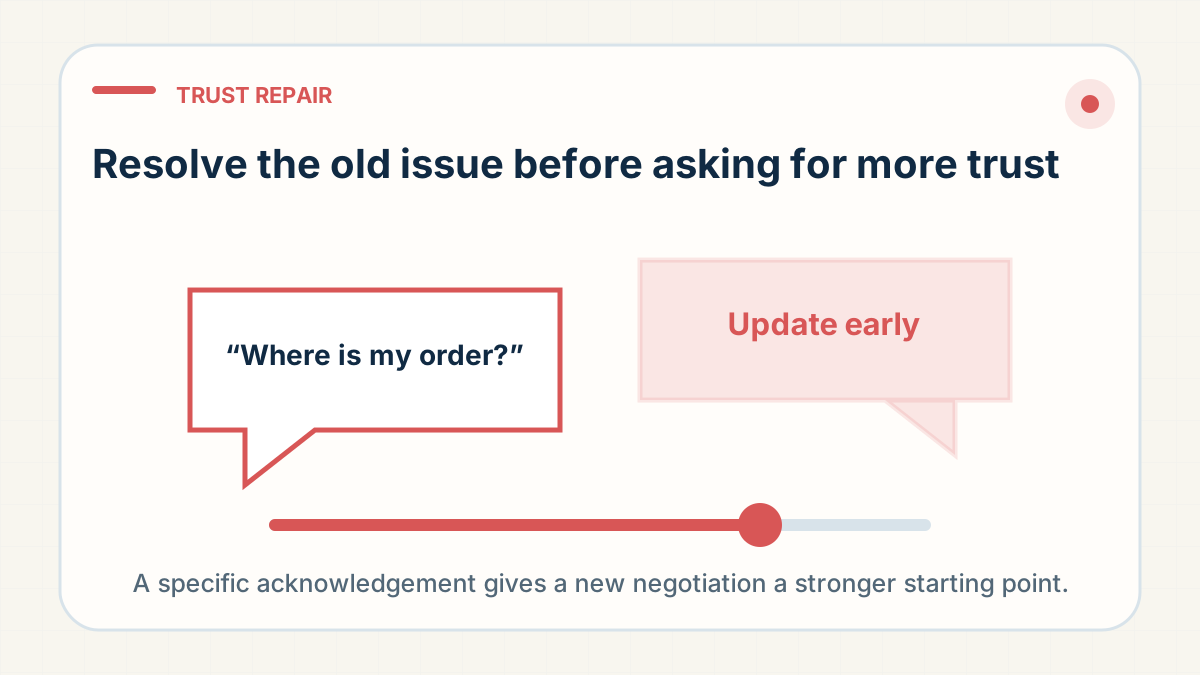
It happens more often than people expect: you're deep in a conversation about expanding a working relationship, more responsibility, more trust, more scope, and then an old, unresolved mistake gets brought back up. It can feel like it's arriving at the worst possible moment. It's actually arriving at exactly the moment it makes the most sense.
Why old mistakes resurface during bigger asks
If you're asking someone to trust you with more, whether that's more inventory, more budget, or more decision-making authority, it's completely reasonable for them to think back to the last time something went wrong under a similar arrangement. An unresolved mistake isn't dead weight from the past, it's live evidence about how you handle things when they go wrong, and that's precisely the information someone needs before agreeing to a bigger version of the same relationship.
The instinct to resist, and why it backfires
The natural reaction is to feel like the timing is unfair, "we're trying to talk about the future, why are we relitigating the past." Pushing back on the timing, even gently, tends to read as avoidance, and avoidance is worse for trust than the original mistake usually was. If the mistake is still genuinely unresolved, cost still uncovered, no clear fix in place, it's not really in the past. It's an open item that happens to be inconvenient to discuss right now.
A better way to handle it
1. Don't minimize what happened. Naming it plainly, without hedging, is the fastest way to signal you're not trying to talk around it. 2. Answer the real underlying question, not just the surface complaint. The actual concern usually isn't "that one thing went wrong," it's "how do I know this won't happen again at a bigger scale." 3. Offer something structural, not just reassurance. A vague promise to be more careful doesn't hold up under scrutiny.
A concrete change, shared risk, clearer decision rights, a written commitment, does. 4. Accept that some of these conversations don't resolve in one sitting. Real structural changes to a working relationship take real discussion. Rushing to a tidy resolution just to close the topic tends to produce an agreement that doesn't actually hold.
Why this matters beyond the awkward moment
The relationships worth keeping are usually the ones that survive an honest conversation about what went wrong. Treating an old mistake as off-limits because it's inconvenient protects your comfort in the short term and costs you credibility in the long term. The other side already knows the mistake happened. What they're actually evaluating is what you do when it gets brought back up.
If you're navigating a similar moment, our honest take: don't wait for the other side to raise it first if you know it's still unresolved. Bringing it up yourself, with a real plan attached, is a stronger position than waiting to be asked.
Turn the repair into a workable plan
- State what happened, its impact and what has already been done to put it right.
- Close any outstanding remedy before asking the other side to take on more risk or responsibility.
- Explain the concrete change that will prevent the same failure, including who owns it and how it will be checked.
- Where trust is still rebuilding, agree a smaller next step and a date to review the result before expanding the arrangement.
Trust is repaired by a visible response to the original problem, not by asking people to forget it. A specific plan makes the next decision easier to evaluate.
Need a product checked before you spend on ads?
Send us the product link and destination on WhatsApp (+86 178 4666 9989). We'll check sourcing, packing and shipping with you before you commit.
Get Sourcing Quote on WhatsApp →