Read Five Below’s fivefold profit with the tariff refund taken out
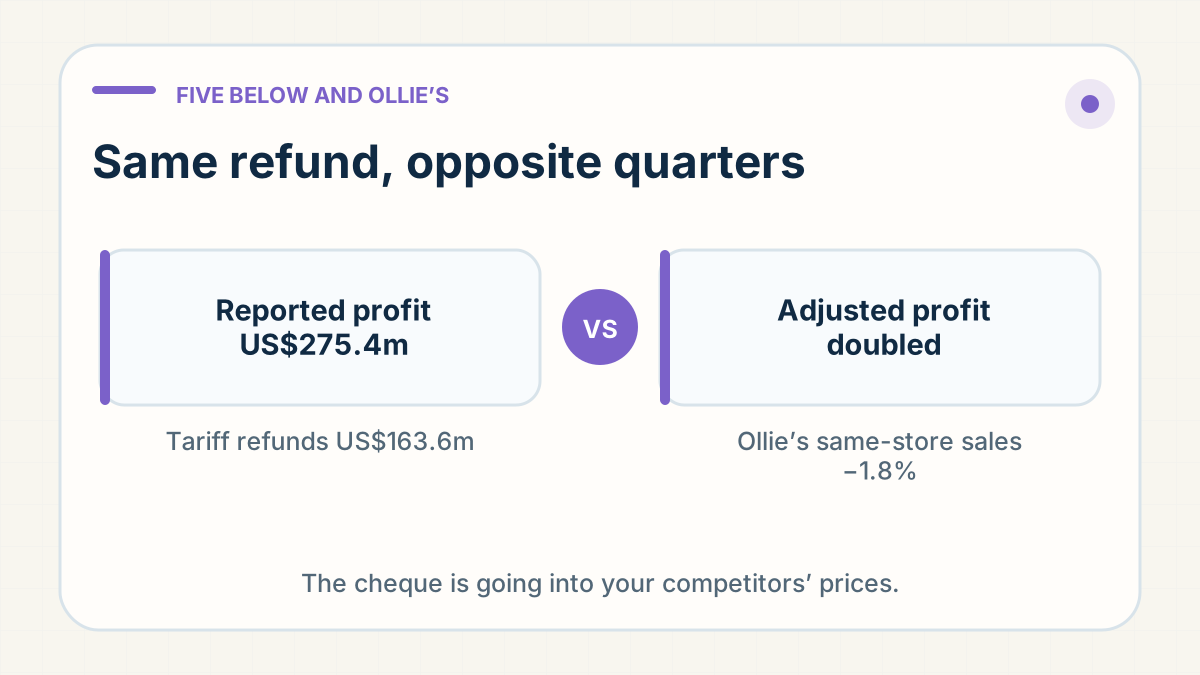
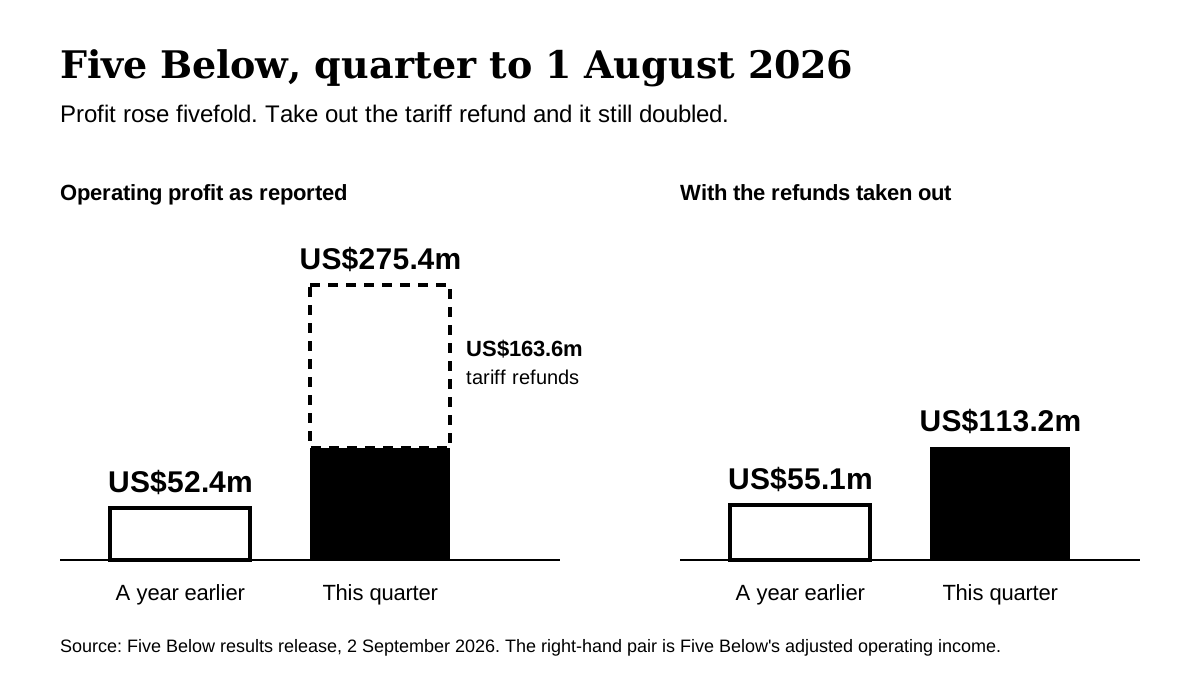
Five Below, the US chain that sells most things for $1 to $5, reported operating profit of US$275.4 million for the quarter to 1 August 2026. A year earlier Five Below made US$52.4 million. The notes explain most of the jump: US$163.6 million of it was tariff refunds. Take the refunds out and Five Below's adjusted operating profit still doubled, to US$113.2 million from US$55.1 million.
Ollie's Bargain Outlet reported the same day and banked a refund too. Underneath it, Ollie's stores sold less than a year ago. Same cheque, opposite businesses. Both are about your shelf and your prices.
What is actually selling at Five Below?
Nearly everything, to more people. Five Below's sales rose 22.9% to US$1.26 billion. Five Below's sales at stores open a year rose 14.1%, its fifth quarter in a row of double-digit growth. It lifted its full-year sales forecast to between US$5.63 billion and US$5.71 billion.
Chief executive Winnie Park put it down to "trend-right product stories at amazing value in stores that are fun and easy to shop." She named the customer too: "THE destination for the KID and the KID in all of us."
Our reading: cheap, fun and current is not a tired formula. At the $1-to-$5 end it is one of the fastest-growing things in American retail. Five Below ended the quarter with 2,022 stores and plans about 150 more this year. If you sell novelty, toys or small gifts, that is who stands next to you.
What did the refund hide at Ollie's?
A weaker quarter than the margin suggests. Ollie's gross margin rose 360 basis points to 43.5%. Ollie's says tariff refunds added 380 basis points. So without the cheque, Ollie's margin slipped slightly.
Ollie's sales at stores open a year fell 1.8%, because baskets got smaller. Ollie's total sales still rose 9.1% to US$741.3 million, since it has 11.9% more stores than a year ago.
Chief executive Eric van der Valk described the shopper: "Lower-income customers are prioritizing needs over wants, shopping closer to need, and in many cases delaying discretionary purchases where they can, while higher-income customers continue to trade down in search of value."
Which products won inside a weak quarter?
Ollie's finance chief Robert Helm listed them: "Top-performing categories were toys, general merchandise, summer furniture, candy, and seasonal decor." Lawn, garden and room air conditioners went the other way and cost Ollie's more than a point of growth, which it blamed on the weather.
Van der Valk said where the shelf space goes next: "protein and energy products, beverage, seasonal decor, and living room furniture as well as decorative pillows". Our reading: toys, candy and seasonal decor are the same small, fun, low-priced goods a $1-to-$5 chain is built on. Before you source into one of those, seven questions to ask of a big brand's growth still apply.
Where is the refund money going?
Into prices. Ollie's received US$28.3 million of refunds in the quarter and says it will put them into pricing. Van der Valk went further: "We are planning for the full year to invest approximately $15 million in price investments and will not hesitate to invest beyond this level to strengthen our price leadership position."
That is the line for anyone who imports from China. Both of these importers got a cheque, and at least one is spending it on being cheaper than you. A margin that jumped because of a cheque is not a margin you can copy, and the growth-driver guide shows how to spot one.
So here is the argument. Five Below grew 14.1% selling $5 trend goods from 2,022 stores. Is that proof that cheap, current product is where the demand is? Or proof that the big chains already own that customer? Five Below says its flywheel is "gaining momentum". What does your own best-seller say: are people buying the trend from you, or only the price?
If you are sourcing into toys, seasonal or small gifts, ask us to check the China side before you commit.
Need a product checked before you spend on ads?
Send us the product link and destination on WhatsApp (+86 178 4666 9989). We will help you assess sourcing, packing and shipping before you commit.
Get Sourcing Quote on WhatsApp →