Field note
The situation
Put the answer to the seller's next question in your first reply: what the quote includes and why it differs from their reference. Saturday was a full working day, busier than the one before it: the warehouse shipped, invoices were paid and first quotes went out while most factories were closed. Three threads ran through it: quotes sent as bare figures that came back as price disputes, per-HS-code lines and tax-ID rules surfacing at invoice time, and after-sales lanes that went quiet from mid-afternoon. The fix is in the title: the answer travels with the question, before the seller has to ask it.
Ask what explains the price difference
A seller who sends a reference link has already formed a price, and the quote has to answer it. A prospect sourcing a battery-powered massage product saw a gap of roughly nine times between a marketplace listing and the quote. The listing was attachments without the main unit; the explanation followed the complaint. A seller told a figure was at rock bottom heard why — the only certified option, a bulky mains-powered item, volume the only lever — a day after asking for less.
The same rule covers whatever was asked alongside the price. A first-day apparel seller asked for the supplier's size chart and received a quote for a similar garment instead; the size chart was the question. A drinkware client had to ask twice whether two new shapes could share one mould. Lookalike quotes that said only "a similar product was found" drew a second round; those naming the difference — sleeves, base colour, solid glass — closed.
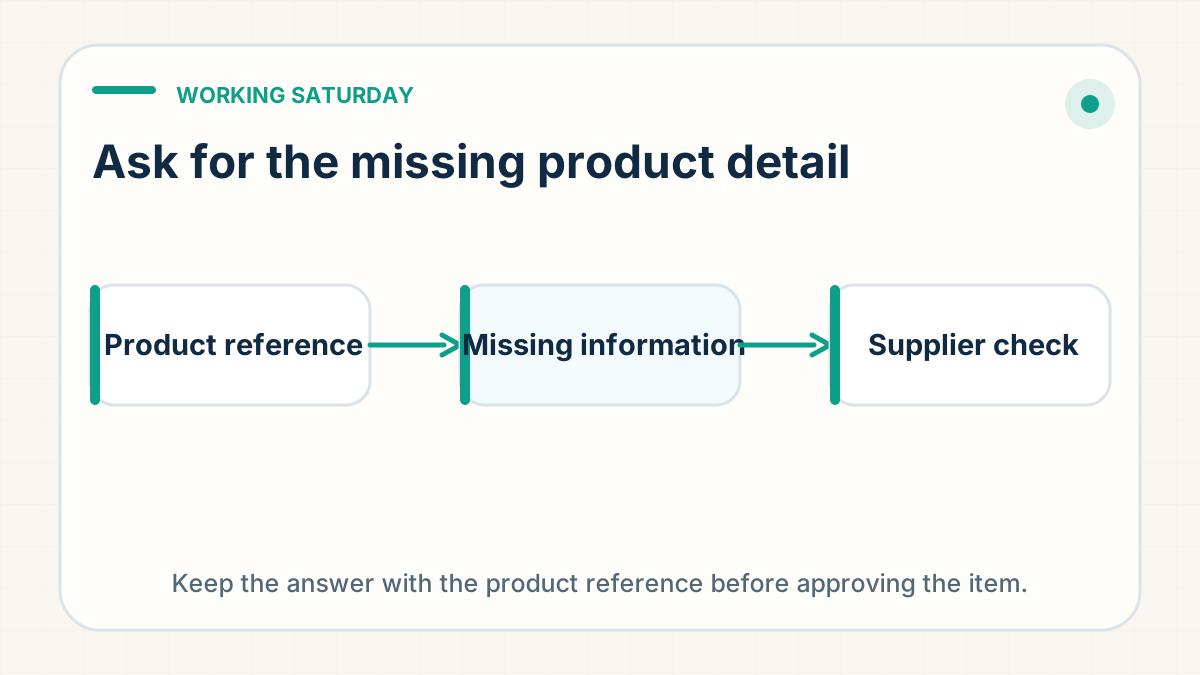
Ask what the reference includes, what the quotation includes and what explains the difference. If the total exceeds your budget, ask which specification, quantity or delivery choice could change it before comparing offers.
The destination sets the field list before the order, not after
A destination decides what an order must carry before it joins the queue; on Saturday those rules arrived late. A mixed parcel of apparel and decorations drew a per-HS-code line on the invoice, one per category, and the label rules — a person as recipient, a length cap on the name, the company in the second address line — followed after the order was in. Another order stalled because its destination needs a recipient tax ID not collected at checkout. The reply that worked went to a seller shipping to Chile: tax-ID format, full phone number, one ID per recipient, asked before the order moved.
Collect the destination's field list at checkout, and put the per-HS-code line in the quote for any mixed-category parcel, with one sentence on what a per-HS-code customs charge changes for your orders. A rule met at invoice time reads as a surcharge; at intake it reads as a specification.
Confirm the next update before the weekend
This was not a closed day: goods landed and left, and factory-dependent answers got a Monday date. What faded was after-sales coverage. From mid-afternoon the lanes run by sellers' support assistants in other time zones filled with cancellations, refunds, replacements, returns and stale tracking, and most sat unacknowledged into the night. A new client posted only question marks. A postal parcel missing for weeks had no decision date until the assistant pointed out how long it had been. None of it needed a Saturday solution; it needed a Saturday line.
When a carrier investigation opens, ask for the next update date and the applicable decision threshold under your account's terms. Before a weekend, obtain confirmation of completed changes and the next working-day action for any open claim.
Ask for the answer needed to make the next decision
Ask for a quote that identifies its inclusions and any difference from your reference. Supply the required destination fields before placing the order, and agree when open after-sales cases will receive their next update.
For an after-sales case that is still open, start from order issues.