From the operations desk
What was happening
Six complete days, 27 September to 2 October, between two holidays: many suppliers were still on their Mid-Autumn break on the Sunday, and China's National Day closure began on the Thursday. Roughly four hundred conversations carried close to a thousand direct client questions.
About half were prospect threads still deciding; new ones kept opening into the closure, roughly fifty on the last working day and as many again on the first closure day, mostly first contacts. Europe appeared in roughly three of four conversations naming a destination, France well ahead in roughly a third, then the United States at roughly one in five. Home and lifestyle and apparel shared the top of the product families at roughly one in five each; beauty, the mid-September leader, came third.
Wednesday, the last working day before the closure, carried roughly a quarter of the week's messages; Friday was the quietest. A closure notice or holding reply touched roughly half the conversations. The dates are in the autumn closure calendar.
The theme of the week
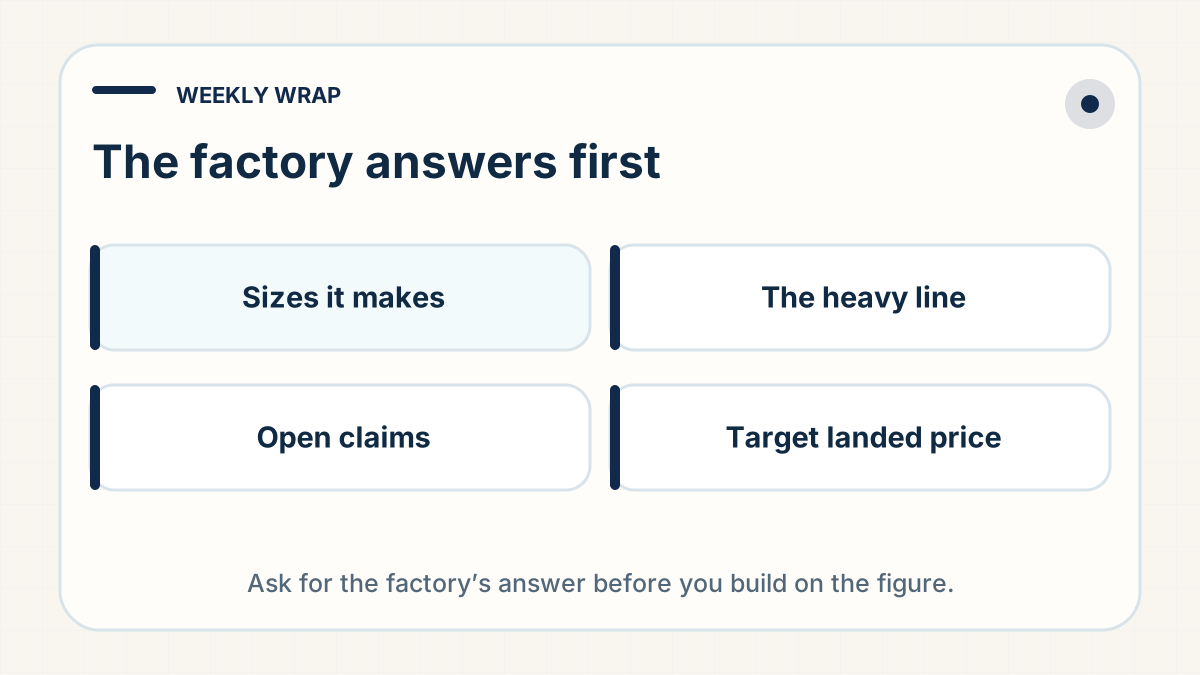
Most figures on a quote rest on an answer only the factory or the lane can give, so ask for the answer before you build on the figure. The factory answers first.
Thursday's lesson, to ask for the existing model before pricing a change, sits in the product sourcing brief guide.
The Sunday the factories were still shut
On that Sunday roughly a third of the day's conversations got a holding reply, the supplier closed and a follow-up due next day, yet quotes still went out. One seller had sent a target landed price per unit before the quote; the quote came back above it, and next morning's reply named the main cause: a battery lane, the only one the product could take.
Another Sunday quote listed production, the supplier-to-warehouse leg and transit separately, offered no faster option for a large item, and warned the supplier was shut for both holidays, with a possible backlog after. The seller chose to wait until after the break. A photo-only search sent that evening was answered on the first working day: nothing matching or similar.
The size list is the factory's
A size range on a product page is a wish until the factory returns its own list, the measurement behind each size and run terms for anything missing, as Monday's note on the factory's size list sets out.
Find the heavy line before the discount
A landed figure judged too high moves only when its heavier line does, by lane, component, size or source; Tuesday's note on finding the heavy line shows where the product, not the price, has to change.
A claim waits for the supplier, not the agent
An open claim moves on the calendar of whichever party answers next, so anything the supplier needs must reach it before its own last working day, as Wednesday's note on claims before a closure sorts case by case.
The target travels with the brief
Tuesday and Friday are two halves of one price conversation, after the quote and before it; Friday's note on the target price covers the half that saves a round: the number the first factory search aims at.
What repeated across the week
Price objections and late targets ran through all six days. On most days a request met something that did not exist yet, a missing size, a changed model or a product no factory makes, each its own run with its own minimum. Every day, a seller asked to have their own supplier deliver stock to the Guangzhou warehouse. A battery or cosmetic product set lane, price and speed together on at least four days. Mid-September's plug question came back sharper: is a mains product rated for the customer's country, or only fitted with its plug?
Where the week's questions sat
Product detail (sizes, voltage, box contents) took roughly a quarter of direct questions, mostly facts only the factory holds, so they belong in the brief. Quote, price and minimum took another quarter, up from a fifth in mid-September.
What to carry into next week
Send one factory-question sheet with the brief, a row per product, and keep it until the quote is accepted. Five columns: the sizes the factory makes, what each size measures, and the minimum and lead time for any missing size; the most you can pay landed, per selling unit and destination, with the delivery days that assumes; goods against shipping, and which lane each variant takes if its battery, magnet or bulky part is removed; for each must-have, whether an existing model meets it, with any change priced separately; and, for a mains product, a photo of the exact unit's rating label. The sourcing brief guide publishes the brief's other fields.
Agree the rating-label photo before ordering and read voltage, frequency and wattage off it before listing. Beside it, keep a restart list: each open claim or quote, the party that acts next and its return date; the separate clocks are in what you can still ship while the factories are closed.