From the operations desk
The size selector is a request; the factory's list is the answer
Monday was the first working day after the Mid-Autumn break, and a backlog of sourcing answers came back at once. Several of them said the same thing about sizes. A seller wanted a sock style across a full size range, with a size guide for the customers' market. The answer: the factory makes only the larger half of that range, has no plans to add the rest, and holds no size data for that market.
The same morning a towel came back without the dimension its seller had asked for, because the manufacturer does not make it, and only a similar style was offered.
Ask what each measurement describes
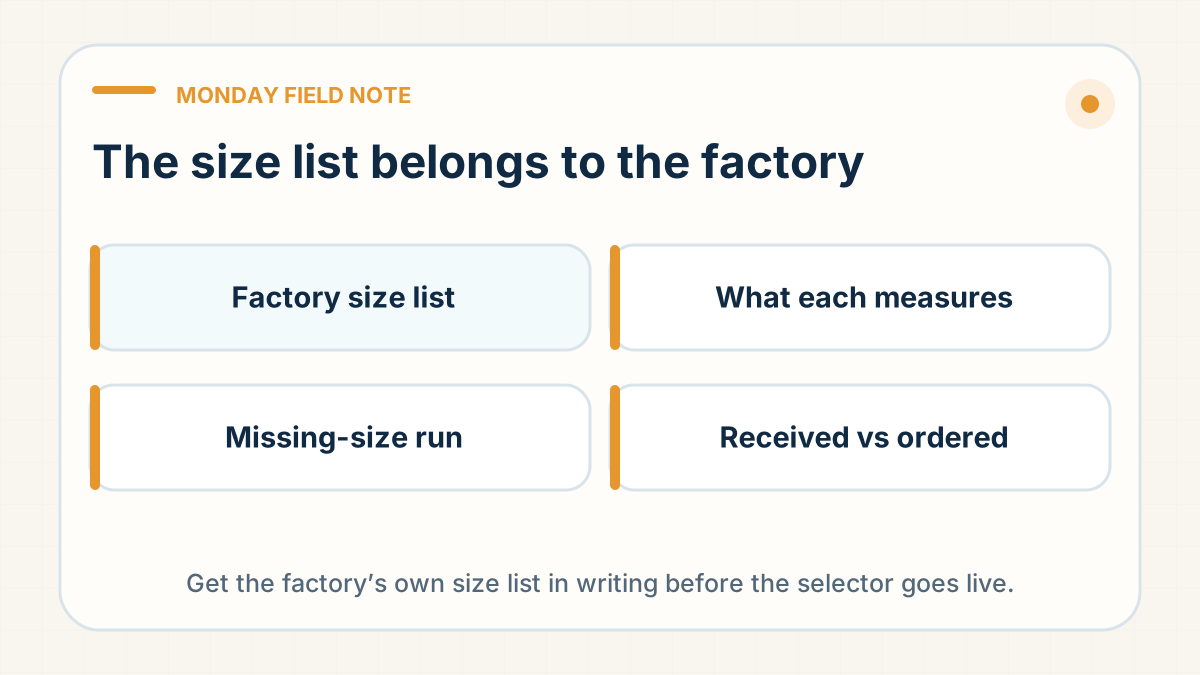
Asking for "available sizes" gets a list of letters. Ask instead for the factory's own size list with the measurement behind each size, taken from the version you were quoted. Where none exists, the listing has to say what customers should choose by. A children's apparel set came back with two selectable sizes and no measurements; the other set quoted the same afternoon gave a height range for each size, which a parent can use.
The sock's size picture carried a length for each size, which reads like a foot length. Two days later, asked directly, the supplier confirmed those lengths were of the sock itself, measured unworn, and that its stretch could not be put in figures until goods were in hand; what was offered was a stretching video once the sample reached the warehouse. A sock's length is not a foot length, so until a sample shows how far the fabric gives, any chart built on that picture is an estimate.
Turning a measured figure into a chart customers can read — centimetres, inches, foot length — is covered in getting sizing charts right when you don't hold stock; the step before it is knowing whether the figure describes the product or the body.
A missing size is a production run, not a longer search
A wider search did not turn missing sizes up either: when several suppliers were asked for two other sellers, none held the larger sizes of one item in stock, and none held another item at all. Both gaps came back as custom production, with a minimum in the hundreds of units (per size on the second item) and, on that item, a lead time of several weeks. The next day that seller was told such terms probably do not suit a product still in testing, and was invited to send a reference with a lower minimum instead.
A colour outside the range works the same way — a run of its own, with its own minimum — so ask for the per-size minimum and lead time before a missing size goes on the selector, and leave it off until those figures exist.
Check the run that arrives against the run you ordered
A size question can also turn up in the warehouse. An apparel run arrived over the weekend, and on Monday the arrival check found the supplier had sent the whole run one size up across the range. The proposal was to return it to the supplier that day for re-delivery, with the National Day closure only days away. The seller chose to keep it and sell the sizes received.
Kept, the store's size chart has to describe the run that arrived rather than the one ordered; returned, the re-delivery starts the supply clock again. What to check when goods land covers the rest of the arrival check; add the size run to it, received against ordered, size by size.
Get the size list in writing before the selector goes live
Before a size selector or size chart goes live, get three things from the factory in writing. Its own list of the sizes it makes for the version you were quoted. The measurement behind each size and whether it describes the product or the wearer, or a plain statement that none exists and what customers should size by instead. And, for any size it does not make, the per-size minimum and the lead time. Then order a sample in the sizes you will sell and check its fit against those figures before your first customer has to.