From the operations desk
What happens to a parcel is settled at the door
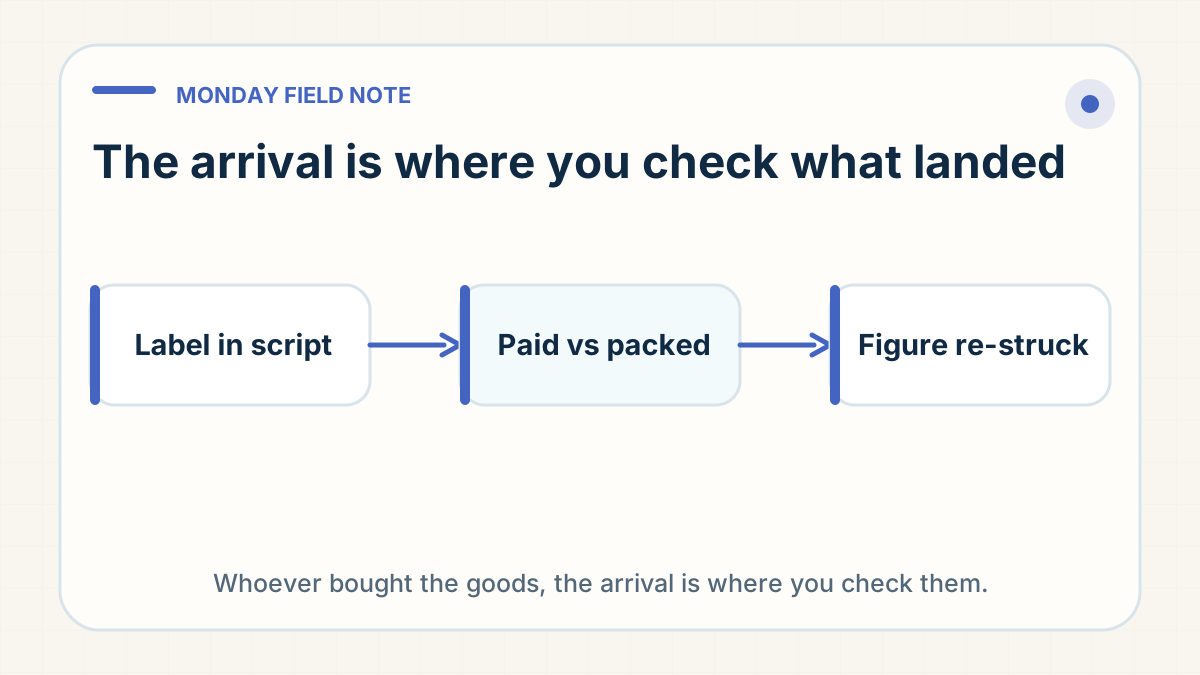
Goods land at a fulfilment warehouse in Guangzhou all day: a supplier posts the parcel, the warehouse receives it, and the decisions in between belong to whoever bought the goods. Goods were reported into the warehouse a dozen-odd times over this one Monday, whoever had bought them. Each arrival is settled at the door — the label the parcel arrives under, the record of the condition it arrived in, and the point at which the figure stops moving. In the morning a home-and-lifestyle seller shipping to the United States was handed the China warehouse address in Chinese characters, and replied that the characters meant nothing to them and asked for the Latin alphabet.
Inside China the label has to read in Chinese
The Latin-script version of a Chinese address exists for the overseas side of the job. Once a parcel is inside China the domestic last-mile couriers mostly work from Chinese characters, so a label carrying only pinyin invites delay or mis-delivery at the far end; the desk hands the address over in characters as a matter of routine, and says why when it is asked for the alphabet instead. The block it sends is an artefact, not a formality: the street line in Chinese, the consignee name and a Chinese phone number, each of which belongs on the label whoever posts the parcel prints. Copy that block onto the label unchanged rather than translating any part of it.
Read the order that was paid for against the order being packed
On a France-bound order the useful catch came in the morning, before anything landed. The desk read the size variant the seller had paid for against the size on the order export it would pack from, found that the two did not agree, and asked which one to pack instead of guessing. The goods reached the warehouse that afternoon with photographs and a video attached, and the seller's answer on the size came back after that. So the photographs date the arrival and record the state the goods arrived in, while the mismatch was caught by reading the order that was paid for against the order the desk is working from, which needs no photograph at all.
Settle separately whether photographs come with every order or only when you ask: the seller on that order wanted them for that order alone, and what belongs in a photo and video brief is a different question from evidence of what arrived.
When your own manufacturer ships in, the figure is struck on receipt
A seller onboarding that evening, whose own manufacturer would post the goods in, was told at the outset and before anything moved that the delivered figure he had been quoted was an estimate: on a standard route the quotation covers the costs to the door with nothing to pay on delivery, and the figure is recalculated once the goods are received and photographed on arrival.
On that arrangement, ask which measurement the figure was struck from, the product or the packed box, because that is why a shipping quote does not match the box weight.
A damaged inbound box is a decision, not a formality
The leg in also fails physically. In one footwear thread the desk disclosed that the box had arrived badly damaged and asked whether that was a problem. The seller set the tolerance himself: the damaged outer box was acceptable, provided the pairs inside were checked and in perfect condition before anything went out. That exchange exists only because the receiving side reported the condition instead of quietly repacking, and because the answer came back in writing. Inspection here means the goods are checked against the approved specification and the reference you supplied, plus visible damage, included parts and packing condition, so name the defect you care about while the stock is still in transit.
What the warehouse owes you once goods are inside is a separate, settled question — what a receiving contract has to record — and it is worth agreeing before the next parcel arrives.
Ask these before the next parcel reaches the warehouse
Get the answers while nothing is moving: the address block in Chinese characters, with the consignee name and phone number that belong on the label; if your own manufacturer posts the goods in, the point at which the quoted figure stops being an estimate and who measures the packed parcel; and who decides, and how you are told, when a box arrives damaged or the variant inside does not match the order you paid for.