From the operations desk
A price and an impossibility, a minute apart
Thursday ran thick with supply answers, and the sharpest took two messages. A seller shipping into the United States was waiting on answers he had asked for the previous evening. One came back in the afternoon as one all-in landed figure for a single unit. A minute later the next arrived: no stock now, and the restock date unknown. A price tells you what a supplier would charge if the item were there to buy. It is not evidence that it can be supplied. The same gap opened in several of Thursday's threads, on new products and on lines already selling.
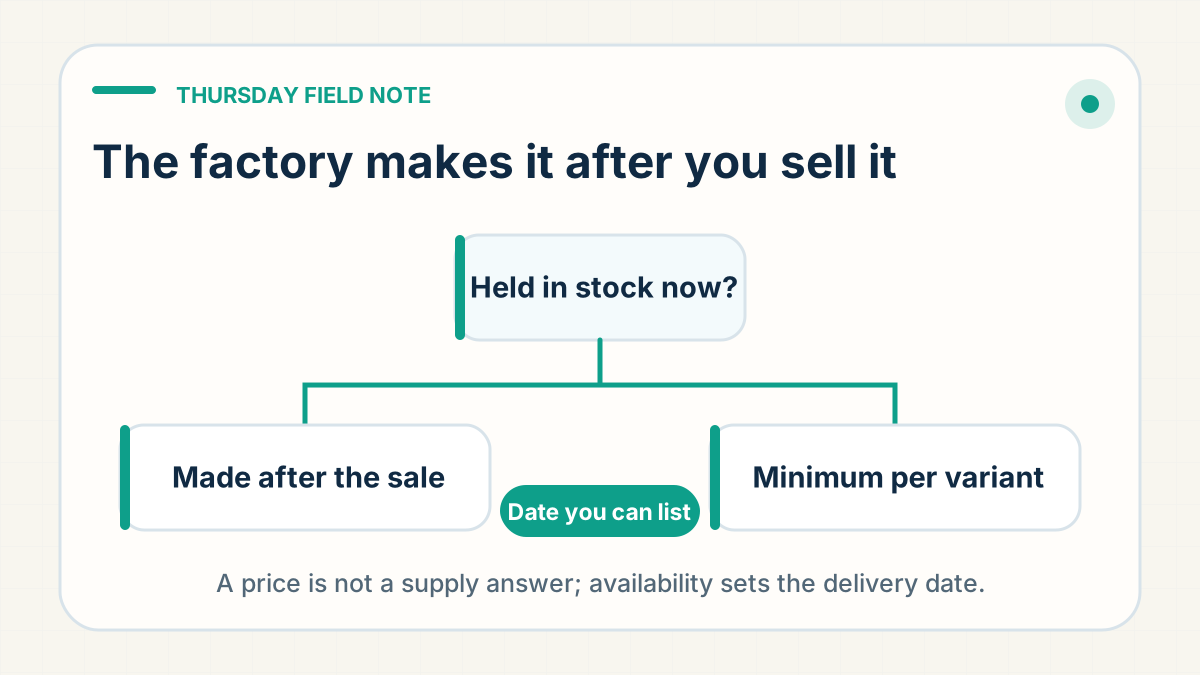
Stock now, or made after you sell it
A seller in Canada had not opened his store yet and asked whether a product with no stock behind it could be connected to it. The answer named both legs before any money moved: the supplier starts production once his order is placed, and the finished goods then travel from the factory to the warehouse before an international lane begins. They were restated when his payment came in.
The same day ran the other way. A referred prospect's marketplace listing came into the group that morning, and she confirmed she was selling it already, with orders taken and unfilled. Mid-afternoon the answer came back: the manufacturer holds no stock on hand, and the minimum order runs into the low thousands of units. That product could not be bought one order at a time, and she had already sold against it. A listing page is a reference, not a stock position; until someone checks it against the supplier, nothing about supply is established — what a sourcing agent can and cannot hold for you.
Every minimum that applies, and it is per variant
A repeat client in Europe held a production quotation and split his run unevenly between colourways. The quantity on that quotation was stated per colourway, and both sides of his split sat under it. On Thursday morning the factory's own condition came back: its floor applied to each variant separately, and it was a different number again. Which minimum actually governed was not settled until after he had named a split. A per-variant floor decides how many versions of a product you can offer, not merely how much you buy.
An apparel seller in Europe met it from the other direction: the colour she wanted was not in the current range; when she asked whether it could be produced, the terms came back inside ten minutes — a run of its own, with its own minimum. Until that figure exists, the colour is not a variant you can publish. Settle which minimum you are hitting, and whether it counts per order or per variant, before you build the options on your product page: which supplier minimum are you hitting sets out the four kinds.
An hour later the same thread carried the whole position. One message carried the count already in the warehouse, the quantity the factory itself held and the production lead time behind a fresh run, and asked whether to buy the factory's stock. It came back authorised the next morning, with nothing further asked.
Confirm the variants you named, not a catalogue
A craft-supplies seller named the colours she wanted in one size and asked for two things: confirmation that each was available, and one final total including shipping. What came back was a supplier's own colour vocabulary, trade shade names that did not line up with the plain colours she had named — she could not tell which was the black, even with the swatch photographs — and later a second supplier's list she had not answered. Days later the total she asked for still did not exist, and the thread was still trading colour names.
A colour name is not a specification, and a catalogue is not a confirmation. Ask for the answer against the variants you named, line by line, with a photograph set against your own reference wherever the shade decides the sale — a black can carry a glint of another colour in the finish, and a photograph alone may not show it — ask whether the shade carries a tone the picture will miss. Where one line is blocked and the rest is ready, ask for the ready part to move on its own — one blocked line should not hold the batch covers how to ask.
Ask who is holding it before the listing goes live
Before you list a product, put three things into one message. Whether the factory is holding the item now or will make it after your order. Every minimum that applies, per order and per variant, confirmed against the factory's own floor before you commit a split. And, for a made-to-order item, both legs that run before the international lane starts, so the delivery date on your product page rests on a supply answer rather than on a price. Then ask which thread the answer will arrive in, and when you should chase it.