From the operations desk
What was happening
Eight complete days, 3 to 10 October, from the closure's last weekend into full working days, with suppliers coming back one at a time. Roughly nine thousand messages ran across roughly five hundred conversations, carrying roughly twelve hundred direct client questions.
Prospect threads still deciding and active fulfilment groups split roughly half and half. Europe appeared in roughly three of five conversations naming a destination; the United States in roughly three in ten and France in roughly a quarter, the United Kingdom roughly one in seven and Australia roughly one in ten. Home and lifestyle led the product families at roughly a quarter, ahead of apparel at roughly a fifth, beauty at roughly one in seven and electronics at roughly one in ten.
The two holiday days, 3 and 4 October, carried about a tenth of the messages; the busiest day, as supplier answers came back in volume, carried roughly a sixth. The closure calendar for the season is in the autumn closures guide.
On the holiday Saturday, a few product-and-destination pairs were found to have no lane before any sample was paid for. On the holiday Sunday, queued claims, cancellations and address fixes were answered one line at a time. These are pooled patterns, not the story of one identifiable account.
The theme of the week
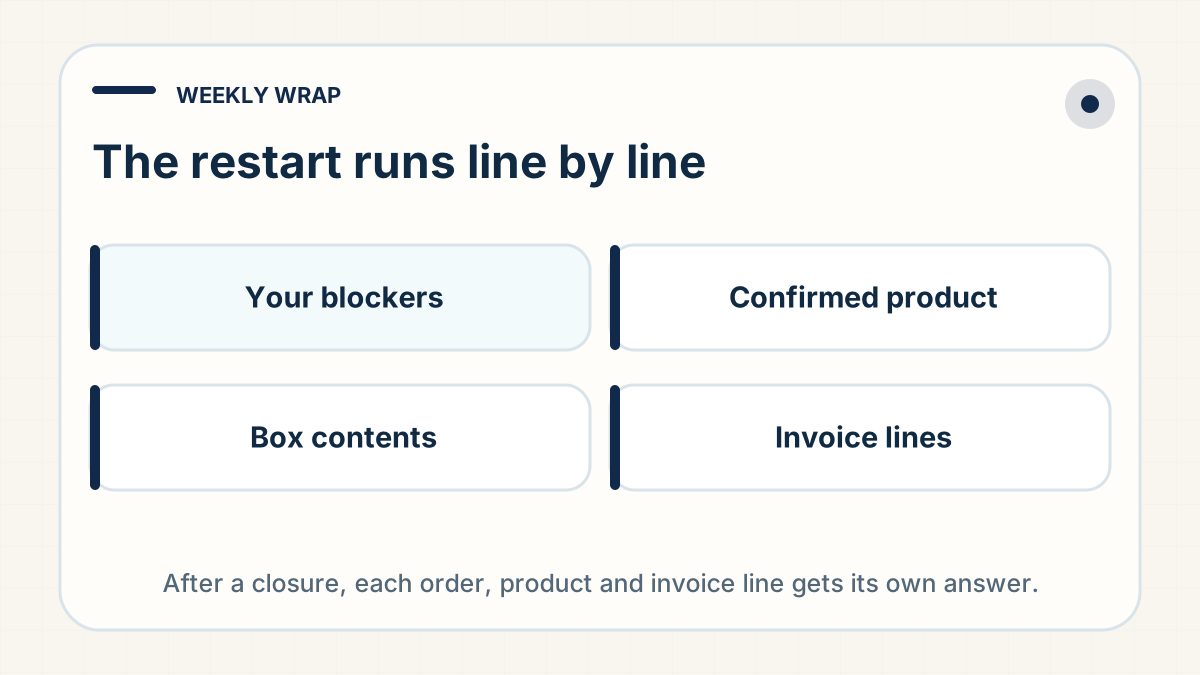
After a closure nothing restarts in bulk: each order, product and invoice line gets its own answer, so ask for it line by line. The restart runs line by line.
The holiday weekend
A holiday or supplier-closed note ran through roughly a third of the week's conversations. First contacts kept opening on both holiday days, many from prospects with no product link yet, and long requirement lists were asked for a few priority links first. Open with a few priority product links rather than a full list.
Clear what is waiting on you
A reopened agent can move only orders that are paid, bought and fully specified, so the first job after a closure is the list held up on your side, as Monday's note on clearing your own blockers sets out.
Advertise the product, not the calendar
Ad money goes back on a product once its supplier has reconfirmed that exact variant, and a bare date or a made-to-order reply is a reason to recheck; Tuesday's note on restarting ads turns that into written answers to collect per product.
A missing piece is a records question
When a customer reports something absent from the parcel, the record of what that version and order were meant to hold decides the case before anyone pays for a resend, which Wednesday's note on what the box should hold works through.
When the first answer is "out of stock"
Once suppliers were answering again, stock replies came back in three kinds: the item is not being restocked, it is made only once an order is placed, or only a similar item from another supplier exists. Friday was the week's peak for stock-outs, and sellers chose for each waiting order: buy now, wait, or offer the customer a swap.
"Not restocked" moves that line to another supplier or a swap, and merits one recheck when the factory is back; made-to-order needs its production time confirmed before a customer hears a date; a similar item from another supplier needs the buyer's yes before it ships. The published routine is in the stock-out answer in the FAQ, and stock in hand versus stock made after a sale in the note on factories that make it after you sell it.
Tie each invoice to your own figures
A payment request is settled once each line matches an order you sent, the store that sold it and a field your accountant files, so exclusions and expected totals belong in the order list itself, as Saturday's note on invoices that tie out explains.
What repeated across the week
Holding replies, a supplier closed or finished for the day, ran on all eight days. Address and recipient-phone exceptions held parcels on six of them. Questions about what a quoted figure covers, shipping alone, one piece or the whole parcel, also came up on six. Missing-piece reports and out-of-stock answers under orders already sold each came in on five days. When to put ad money back ran through four consecutive days, and what ships while branded packaging is not ready came up on four. A branded or lookalike request was declined every day.
Where the week's questions sat
Quote, price and minimum took roughly a quarter of the direct questions, and a mixed quarter, many of them product facts such as colour, size and material that only the factory holds. Branding and packaging, tracking, and requests to find a product each took roughly one in twelve. Shipping time and route took roughly one in twenty, stock and restock roughly one in twenty-five, payment and invoices roughly one in thirty.
Platform and store connection was smaller, roughly one in thirty-five, and its open strand, working with no store connected at all, is covered in sending orders by spreadsheet without a store connection. Over eight days rather than six, conversations and questions both rose; Europe's share of destinations fell from roughly three in four to roughly three in five, and the United States rose from roughly one in five to roughly three in ten.
What to carry into next week
Last week's restart list becomes a register: one row per waiting order or line until it ships or closes. Its columns: the order reference; what the line waits on (your own data, your payment, the supplier or stock); the supplier's own answer and the day it came (in stock, made only once ordered, not being restocked, or another factory's version); your decision (buy now, wait, an alternative the customer has agreed, or refund); what the customer has been told; and the invoice the line was billed on, so that invoice's range can be checked against the row.
Beside it, keep a product line card for each product and variant you will advertise. It holds the contents list of the version now shipping, the supplier's fitting or assembly instruction, and five supplier confirmations: stock of that variant, final price, production time, transit time to your market, and a factory back at full production.
No line moves because the closure is over; each moves when its own answer is in. The row logic is in the open action register guide. On your agent's next working day, send the register and ask for the stage of every open row and the party that acts next.