From the operations desk
The holiday ends on a date; a product restarts on an answer
Tuesday fell inside China's National Day closure, and dozens of the day's conversations carried a note that the supplier or factory was still closed for the holiday. It was also a day when sellers asked when to put ad money back. A seller of a decorative product for one EU market asked exactly that in the evening, a minute after turning down the only match found so far: a similar item, not the one the seller wanted. The reply named five things that still had to be reconfirmed with the supplier for that product. The spending decision is the seller's, and at that point there was not yet a confirmed product to advertise.
Ask whether the line you push is in stock or made to order
A home-textile seller asked overnight, before pushing extra ad spend, whether fulfilment could keep pace without delays or a drop in quality. The reply asked how far the seller expected sales to rise, so that stock could be checked against it. The seller could not give a figure, since it depended on how the ads performed, and named the lines to be pushed instead. That day the supplier of one of those lines said its stock was short and it would produce only once orders were placed, so the units ordered that day and the day before would reach the warehouse only after a production run.
The seller's own control is the one to copy: a matching add-on in preparation goes live on the store only once its stock has reached the warehouse. Before you raise spend on a line, ask whether the exact variant you will push is in stock now or made after you order, and give a rough range for the increase you expect, read from paid orders rather than parcels sent, so the stock can be checked against something.
Keep the ads off the version that is not ready
Another seller had paused campaigns while new custom packaging was made; the artwork was with the factory by that afternoon. Orders already coming in ship in the factory's own version meanwhile. For the new version, the seller set a condition for the ads: they start only once that version has been made and is sitting in the agent's China warehouse, a stock condition, not a date. If a closure catches you mid-change, write down for each version which one ships now and what has to be in the warehouse before the other is advertised.
Waiting customers get a date after the supplier gives one
A beauty seller came out of a call with orders already waiting on the store. The instruction sourcing received split the job in two: a decent-quality option from any supplier able to work through the holiday and dispatch quickly, for the waiting orders, and a higher-quality supplier for the long term. No dispatch day was to be promised to the seller until a supplier had confirmed it. Pass the same rule on to your own customers: until the five answers are in, keep ad spend on what is already in stock, and tell waiting buyers only what a supplier has confirmed.
A restart can come back discontinued
The same evening, an order placed during the closure came back from the supplier as discontinued: none of the suppliers checked had stock, and the product will not be made again. That order could not be filled on any date. A listing still running ads on that product needs a replacement or a pause, decided before the next customer pays for it.
Five answers to get before the ads go back on
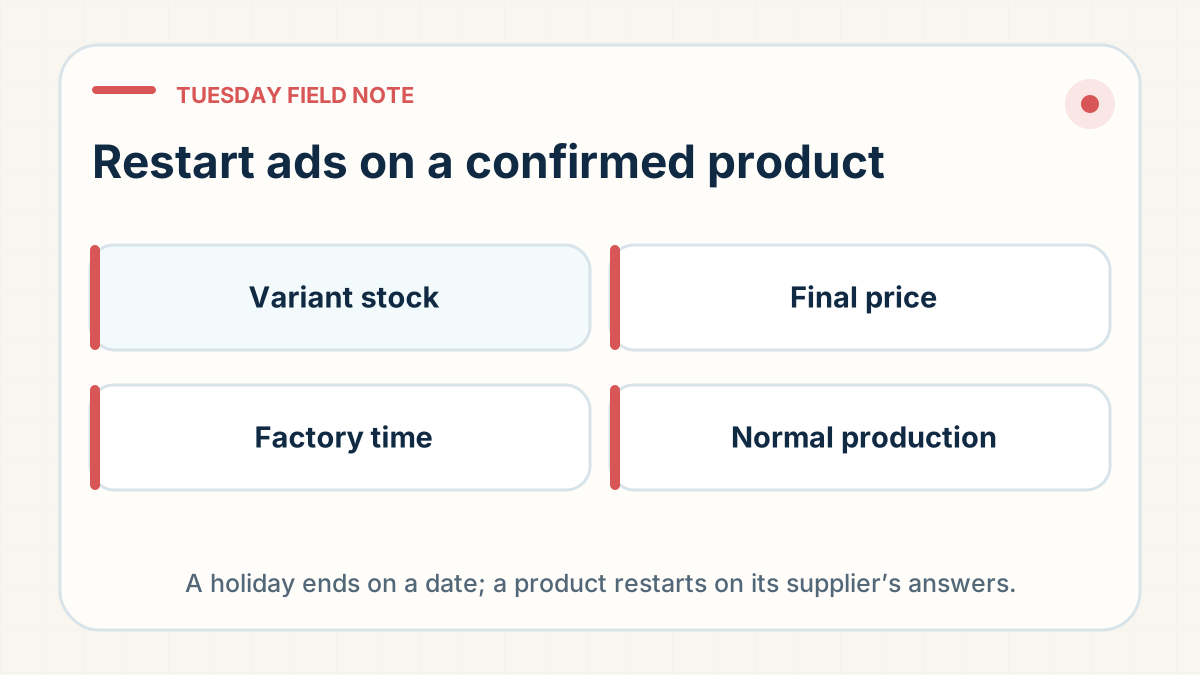
For each product and variant you plan to advertise after a closure, get these in writing through your agent: current stock for that variant, the final price, the factory's processing time, shipping time to your market on the quoted lane, and whether the factory is back at normal production. Stop and recheck if the answer is that it needs an order before producing, if all you have been given is a calendar date, or if the product comes back discontinued. For orders already waiting, get the supplier's confirmed answer before your customers get a date.