From the operations desk
The supplier can stop before the desk does
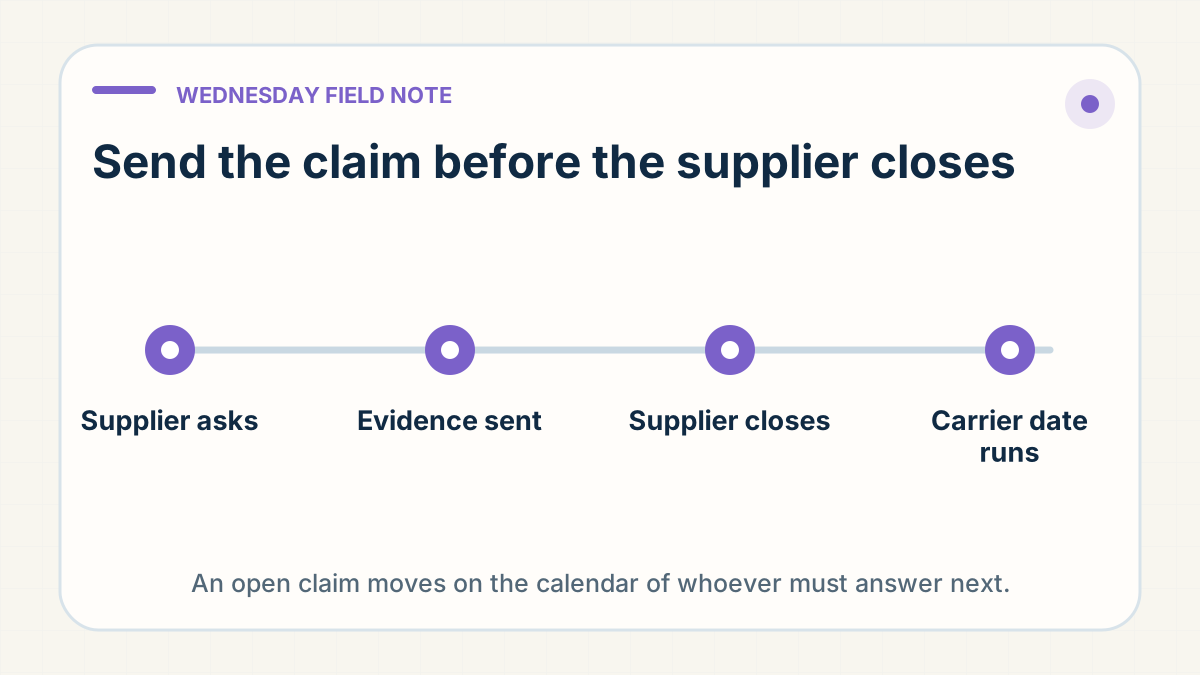
Wednesday 30 September was the last working day before China's 1–7 October national holiday, and the after-sales cases still open that afternoon sorted themselves by who had to answer next. On a home-appliance fault report, the supplier's technician had diagnosed a faulty receiver the evening before and asked for a photo of a barcode so a matching replacement could be prepared. The end customer found no barcode where the supplier said to look, found one on the control box instead, and the photo reached the thread on Wednesday evening. By then the supplier had finished work and started its holiday while the agent's desk was still answering, so the reply waits for the supplier's return.
Your agent's closure notice gives the agent's dates; a claim that needs the supplier moves on the supplier's, and they do not always match. The separate clocks for orders and stock are set out in planning for factory holidays and sudden demand; open claims need the same sorting, case by case.
Evidence the claim needs has to arrive while the supplier is working
An electronics seller's assistant sent a handful of claims overnight, each with a short video, and the supplier's diagnoses came back case by case late on the same Wednesday, before it closed. One of them had already been round once. On Monday the first video seemed to show that the removable part was not fitted, so the end customer was asked to test again. The second video arrived overnight on Wednesday, the supplier confirmed the part was damaged, and a replacement part is to follow after the holiday.
Footage that shows the part fitted and the fault happening avoids that second round; what belongs in a claim video is listed in the evidence to send for a product or delivery claim.
On a jewellery order the supplier sent the wrong item, and a replacement the supplier must send waits for its return: the correct goods had been requested by Wednesday and are to ship after the holiday.
What needs no diagnosis can move before the break
The cases that could move before the break needed no diagnosis from anyone. A seller asked on Wednesday morning for one more unit to go to a buyer, and it was booked out before the break. Another asked in the afternoon for a single size from an earlier order to be sent again, and it was booked for resend the same afternoon. A third was ordered on Wednesday instead of waiting for an unclaimed parcel's slow return to the destination warehouse. On the home-appliance account, parts already agreed for an earlier missing-accessory claim reached the warehouse on Wednesday morning, before the supplier closed, and were due out that day.
Some cases wait on you rather than on anyone in China. On Wednesday a parcel was reported back to the warehouse because its street did not match its city and postcode, and it cannot move until the seller sends the corrected address. On another order flagged that day for an incorrect address, the seller sent the correction in the afternoon and the order was updated before the break.
The carrier's reply date runs through the holiday
Exception notices relayed on Wednesday for parcels that had failed delivery set a reply-by date inside the holiday week, after which the parcel is destroyed. Send the complete address and a phone number the recipient answers before the party that forwards your answer to the carrier closes, not just before the carrier's date. One seller replied the same afternoon; another was still chasing the recipient the next day. How collection and disposal deadlines work is covered in what happens after a failed delivery.
Get each party's return date before the closure starts
Before a long closure, go through every open case with your agent and get, for each one, the party that must act next — the supplier, the warehouse, the carrier or you — and the date that party is back at work. Send anything the supplier has asked for before the supplier stops work, which can be earlier than the agent.