From the operations desk
Too high is a verdict on the total, not either line
Tuesday was when many of the quotes sent at the weekend and on Monday got their answer, and more than ten quote threads pushed back on a landed price on the same day. Where a figure moved afterwards, something had changed in the parcel, the lane or the source. None of the day's figures moved on a plain request to come down.
One seller pricing two pieces of bulky furniture for a European market asked whether product and shipping could be shown separately. They were. On both items the shipping line came to between five and seven times the goods, so a discount on the goods could only ever touch the smaller part of the figure. The next reply suggested a slower freight mode or a smaller version of the product; neither had been priced when the holiday began.
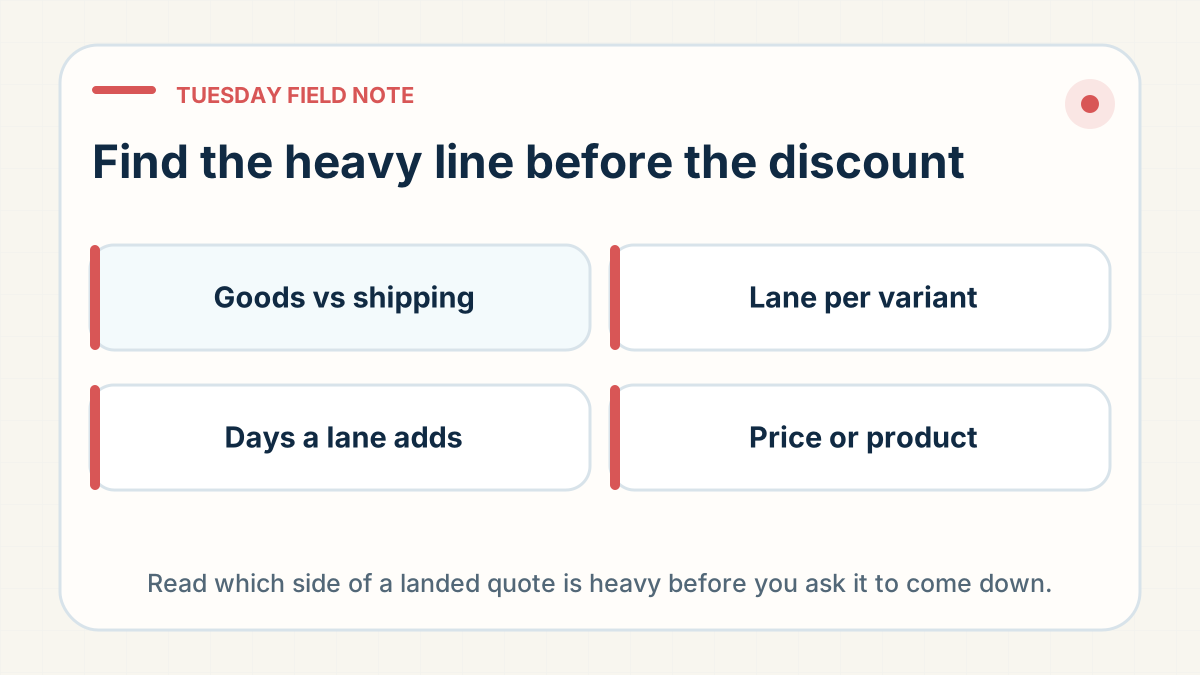
Before you reject a landed quote, ask for the goods-and-shipping split on that line and read which side is heavy before you choose what to push on.
A cheaper lane is paid for in days
Two sellers on EU lanes were offered the EU tax-inclusive route on Tuesday morning: €2 per-code pass-through and two to three extra working days.
One of them replied with her price and the delivery window she would accept in the same message. A channel was put forward and she kept it, but the price had not been confirmed when the National Day closure began, and neither had the window. The other weighed it and turned it down: delivery speed sells in her market, so she kept the faster route and planned to revisit cost once the product was selling.
The stock-holding idea raised for that later stage is a time lever, not a shipping-cost lever: stock in the warehouse removes the wait between factory and warehouse, and the parcel still has to travel. Decide first whether delivery speed or price sells in your market, then choose the lane; the lanes on offer belong to the product and the destination, and which shipping speeds a product can take explains why.
One component can decide the lane
A cleaning kit was called too expensive against a rival's all-in figure. The reply named the reason: the kit includes a powered dryer, so it could only travel on a battery-enabled channel. That evening the seller asked whether it could ship without the battery. The requote without the dryer came back the next day roughly halved, with a shorter transit.
In another thread, a personalised accessory quoted without its magnet came in slightly lower, because magnetic items cost more to ship. Ask which component decides the lane before you argue the price, then have the variant without it quoted on its own.
When shipping alone sits above your target
A roll-packed pillow for one EU market and a large baby product were both called too high, and on both the answer was that weight and package size set the figure; recalculating had not moved it. For the baby product, the desk's answer was a different, smaller product, quoted far lower; the seller had not replied when the holiday began. A battery-powered device met the same floor in another thread.
If the shipping line on its own is above the all-in figure your margin can carry, no discount on the goods closes the gap, and the product has to change. Before you shortlist a bulky item, check how package size sets a shipping quote against its packed dimensions.
Ask for a re-source of the same model
A seller whose ceiling came from what similar sets retail for asked whether another supplier or route could bring the same model down. The re-sourced quote came back lower. He then asked for the split, saw that shipping was most of the figure, and asked for one sample at the quoted price.
When your number comes from a rival listing rather than your own margin, run a like-for-like comparison of the rival price before asking for a re-source.
Three answers to get in writing before you reply to a quote
For the exact item and destination you are pricing, get the goods-and-shipping split; the lane each variant rides, with and without its battery, magnet or bulky part; and whether a cheaper lane exists and how many working days it adds. Then hold your own all-in ceiling against the shipping line first, and decide whether it is the price or the product that has to move.