From the operations desk
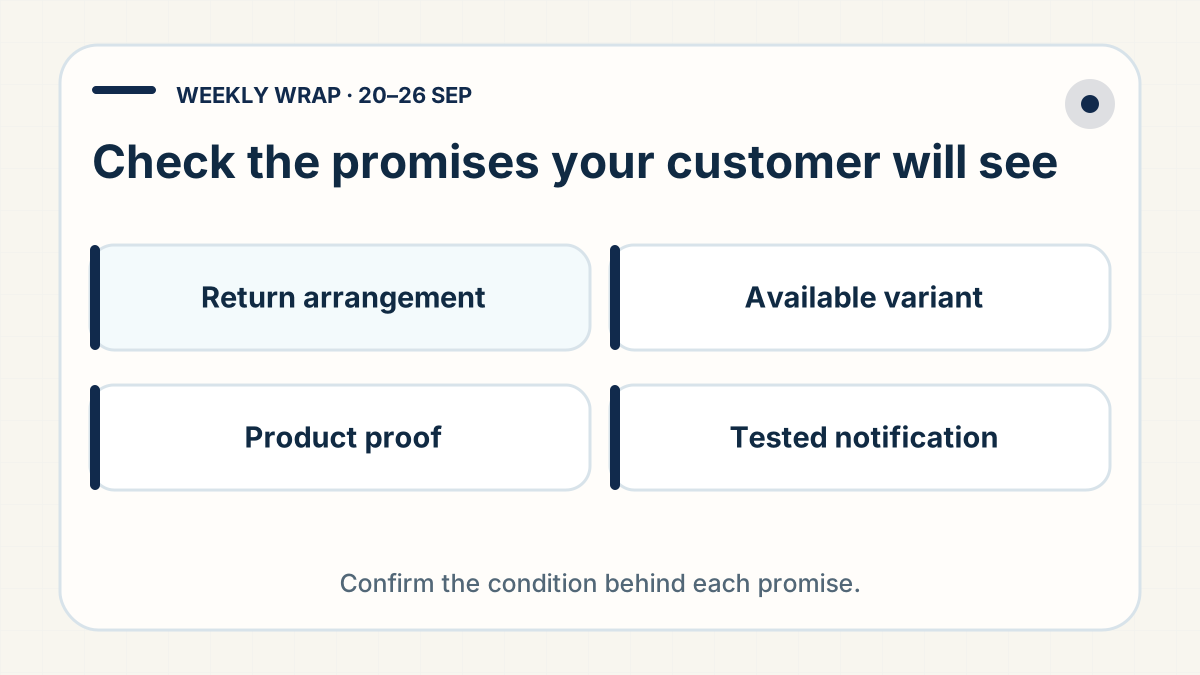
This wrap covers 20–26 September and brings the existing guidance together as a check on what a customer will read. Start with the sentence in your return policy, product page or shipment message. Then identify the confirmation that allows you to publish it. The useful output is a short release checklist beside the store copy, with a named person responsible for each missing answer.
A return address needs a receiving arrangement
Before publishing a customer-return address or offering return handling, ask the fulfilment team to confirm whether an arrangement can be agreed for your product and destination; the return and refund answer keeps this separate from remedies for a lost or damaged parcel.
Put the proposed receiving address and the handling requested on the checklist. Leave them pending until the team confirms the arrangement. An answer about a defective item does not fill those fields, and a remedy should not become an implied default receiving service in your store policy. Keep the agreed answer beside the wording it supports.
The arrangement needs an owner as well as an address. Ask who would receive the parcel, which handling has been agreed and who would report its receipt. Record any limitation that affects the wording offered to the customer. These are questions to settle before publishing a receiving instruction; listing an address does not by itself establish who will accept the item or what happens afterwards.
Available stock and replenishment support different promises
A quote needs to distinguish stock available for the required variant from the minimum quantity and lead time for replenishment, as set out in the updated product sourcing brief.
Use separate fields for those answers before presenting availability to customers. The current stock answer supports a different decision from the next production commitment. If replenishment remains unconfirmed, keep that gap visible when deciding what the store can offer. Recheck the variant and supply position when the planned offer changes rather than carrying an earlier quotation into new copy.
Keep the product reference and included parts beside the stock answer so that availability applies to the version being offered. Record the available units by required variant, then the replenishment minimum and lead time separately. Ask the sourcing team to identify which answers are confirmed and which still depend on the supplier. A quotation for a unit does not settle whether the planned offer can continue once the currently available stock is gone.
A product representation needs the right proof
Tie a product image or demonstrated feature to an approved physical version and the evidence needed for that claim; the photo and video brief separates warehouse proof from creative production and records permission to use the files.
On the checklist, name the version, the property the customer will infer and the image, measurement or functional sequence that supports it. Ask the person holding the product to confirm what can be captured. Then record approval and usage rights. A polished asset can explain a verified feature, but its appearance alone does not verify the product or authorise publication.
Write the requested check in observable terms: the dimension to measure, the included component to show or the function to demonstrate. State whether the output is evidence for approval or creative for a listing. Confirm availability and timing before relying on it. Keep the original evidence and its version reference with the approval, and record the allowed publishing or editing use separately. A visual check must not imply a laboratory result or complete testing of every unit.
A shipment message needs a tested trigger
Use a controlled order to check the exact workflow and the event that produces the customer-facing shipment notification, following the platform preflight checklist.
The record should show the order state, tracking returned to the store and the intended notification result. A connected screen does not complete those checks. Ask the store operator and fulfilment team to agree which physical milestone justifies the message, then confirm the configured flow against that milestone before relying on it for customer communications.
Check order import, tracking return and customer notification separately. The test record should identify the correct variant and address fields, the release state, the tracking shown in the store and the notification event observed. Confirm that the intended notification is enabled in the relevant store and fulfilment settings. If the message fails to appear, keep the notification check open; a returned tracking number alone does not prove that an email reached the customer.
Keep unconfirmed copy out of the release
Mark each proposed statement as confirmed or pending beside its supporting answer. Where evidence supports only part of a statement, narrow the copy to that part. Where the missing answer determines whether the offer can be made at all, hold the statement rather than fill the gap with a broad service description. Assign the missing confirmation to its owner and identify the document or test result needed to clear it.
What to carry into next week
Take the checklist to the people who can supply its missing values: the fulfilment team for the named receiving arrangement and handling owner, the person checking the exact product version for its proof, and the store operator for the tested notification record. Beside each customer-facing sentence, record who confirmed it and where the confirmation can be found. Keep any sentence dependent on a missing answer pending or narrow it to what has actually been confirmed.